

Hyderabad: Andhra Pradesh Heavy Machinery and Engineering Limited (APHMEL) recorded a net profit of Rs 23.33 crore in 2025-26, marking the highest annual profit in its 50-year history. The performance extended the recent APHMEL profit growth under Singareni’s ownership.
The company had once accumulated losses of about Rs 21 crore nearly three decades ago and faced the threat of closure. However, after Singareni took control in 1998-99, the company moved into profit over time.
APHMEL’s cumulative profits from 1998-99 through 2025-26 reached Rs 60.85 crore, according to the figures provided. Significantly, Rs 34.20 crore of that total came from the last three financial years alone.
The company earned a net profit of Rs 1.05 crore in 2023-24. It then increased the figure to Rs 9.87 crore in 2024-25. In 2025-26, the net profit rose further to Rs 23.33 crore. The three-year sequence reflected a sharp improvement in APHMEL profit growth.
APHMEL profit growth accelerated over three years
APHMEL had earlier operated as a public sector company in undivided Andhra Pradesh. At one stage, heavy losses had raised questions over its continued survival. The company later came under Singareni’s control in 1998-99. Since then, its cumulative profits reached Rs 60.85 crore by the end of 2025-26.
The source said the company’s financial performance improved markedly over the last three years. It linked the improvement to measures taken after the State government assumed office in December 2023.
According to the source, the government aimed to expand Singareni and develop APHMEL into a nationally competitive company. The measures were described as giving fresh momentum to the engineering firm.
APHMEL manufactured and supplied machinery and spare parts to Singareni. It also supplied equipment and components to other large industries. The company’s 2025-26 result was described as a record in its five-decade history. The Rs 23.33-crore net profit was more than double the previous year’s figure.
Singareni ownership shaped APHMEL profit growth
The source credited Chief Minister A. Revanth Reddy and Deputy Chief Minister and Energy Minister Bhatti Vikramarka with pushing measures to strengthen APHMEL. It said Singareni’s leadership was working to make the company competitive at the national level.
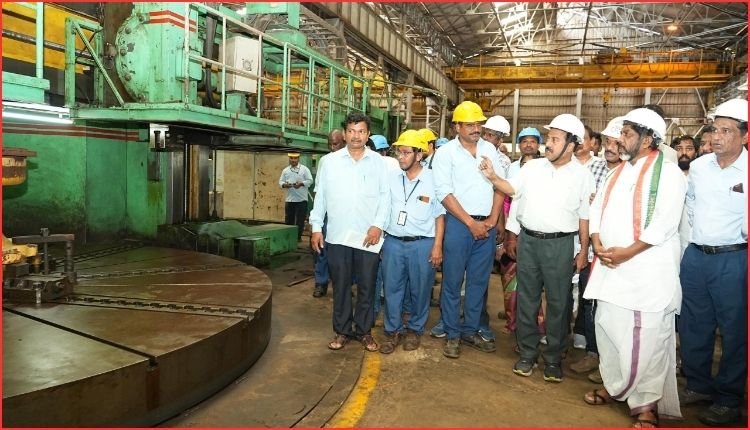
Bhatti Vikramarka had visited the APHMEL plant in August last year. During the visit, he reviewed the company’s performance and its development plans. The review formed part of the broader effort to improve the subsidiary’s operations. The source said the company had gained fresh momentum under the new approach.
APHMEL’s recent results showed a steady rise in yearly earnings. From Rs 1.05 crore in 2023-24, profit climbed to Rs 9.87 crore in 2024-25. It then reached Rs 23.33 crore in 2025-26. Together, those three yearly figures totalled Rs 34.25 crore.
However, the source separately stated that the company earned Rs 34.20 crore in net profits over the last three years. The Rs 0.05-crore difference reflected the figures supplied in the source material.
Record year capped APHMEL profit growth
The company’s turnaround was significant because it had once faced possible closure after building up losses of about Rs 21 crore. By 2025-26, its cumulative profits since coming under Singareni had reached Rs 60.85 crore.
The record 2025-26 result also marked a major change from the company’s earlier financial position. APHMEL continued to serve Singareni and other heavy industries through machinery and spare-parts manufacturing.
The source presented the recent performance as evidence of stronger operations and closer strategic support from Singareni. It also linked the improvement to the State government’s push for expansion and better performance.
The government’s stated objective was to position APHMEL as a national-level engineering company. The recent rise in earnings was cited as part of that effort.
The figures showed that APHMEL profit growth had become particularly strong from 2023-24 onward. The company moved from a Rs 1.05-crore profit to a record Rs 23.33 crore within three financial years.