
Union Budget 2026–27 lays out youth-focused roadmap with reforms and ₹12.2 lakh crore capex

Hyderabad: Union Finance Minister Nirmala Sitharaman presented the Union Budget 2026–27 in Parliament on February 1. She outlined an ambitious growth strategy rooted in economic resilience, public investment, and inclusive development.
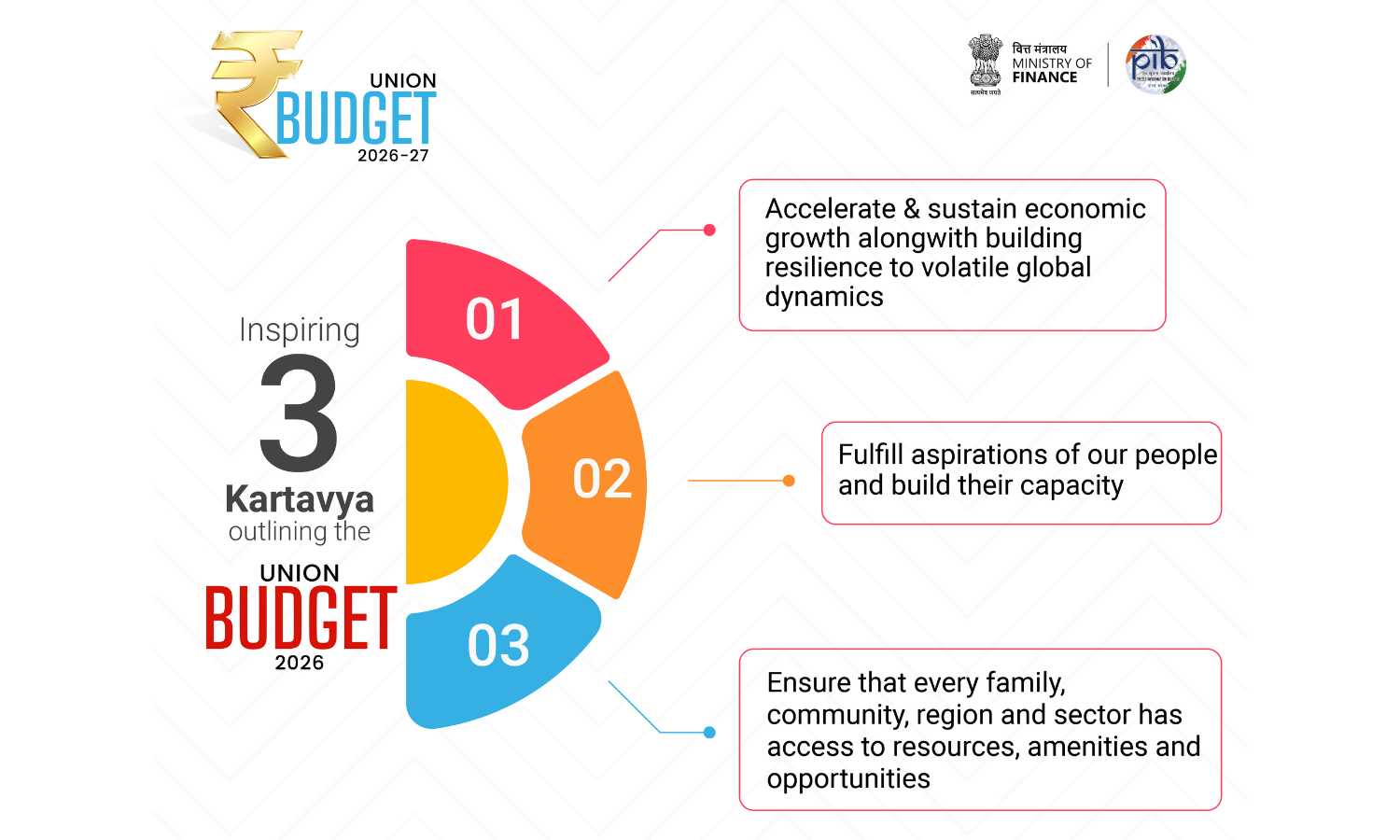
Notably, officials prepared the Budget at Kartavya Bhawan for the first time. The framework rests on three national kartavyas—sustaining growth, empowering citizens, and ensuring inclusive development. At the same time, the government fixed the fiscal deficit target at 4.3 per cent of GDP and raised capital expenditure to a record ₹12.2 lakh crore. Together, these steps signal a long-term focus on youth, infrastructure, and innovation.
Fiscal outlook and borrowing plans
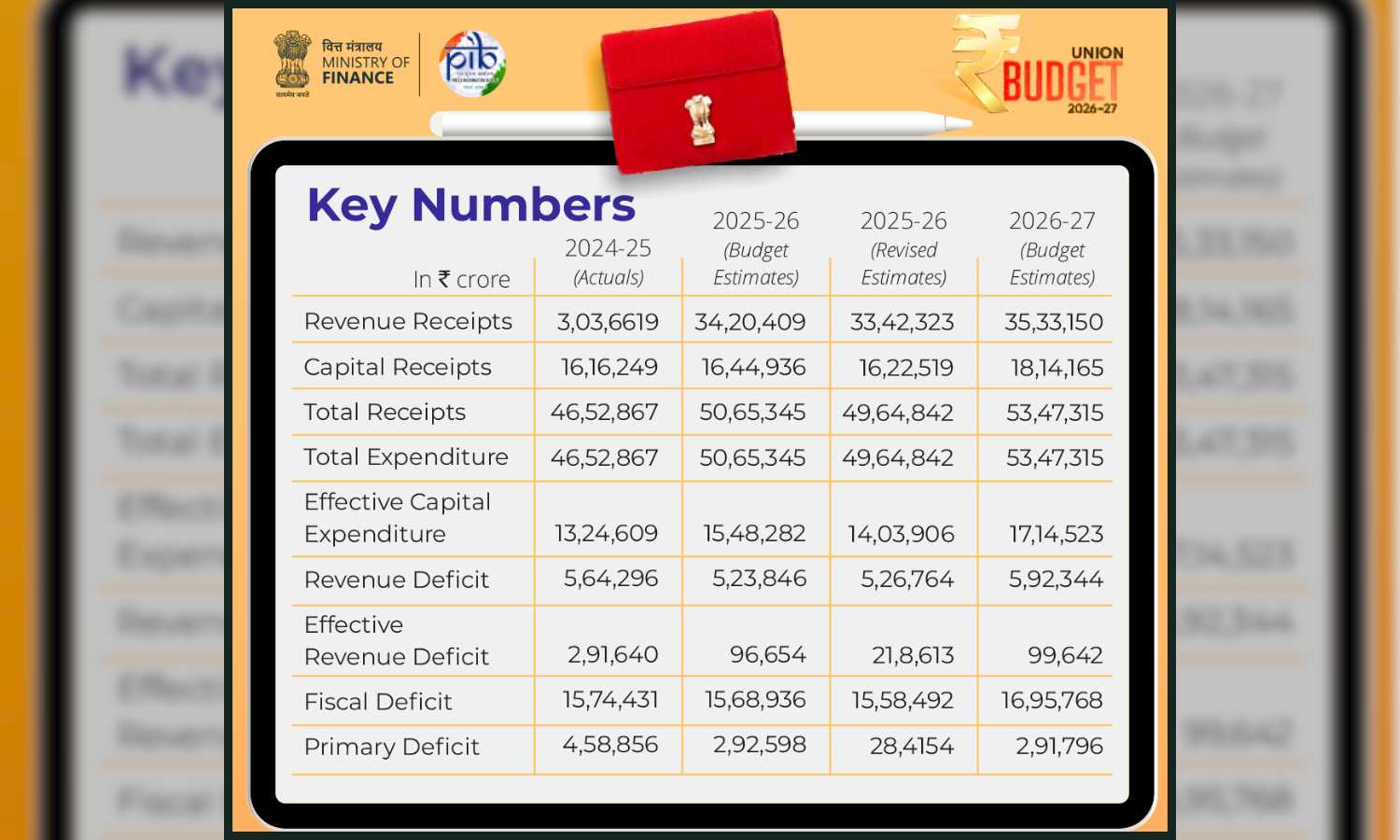
The government has projected non-debt receipts at ₹36.5 lakh crore for FY27. It has also pegged total expenditure at ₹53.5 lakh crore under the Budget Estimates. Meanwhile, gross market borrowings may reach ₹17.2 lakh crore. The debt-to-GDP ratio is likely to stand at 55.6 per cent, reinforcing the government’s commitment to fiscal consolidation.
Income tax reforms and compliance relief
One of the most awaited reforms remains the rollout of the New Income Tax Act, 2025, from April 2026. Alongside this, the government will introduce redesigned forms and simplified rules to ease compliance.
In addition, the Budget cuts TCS on overseas tour packages and education or medical remittances to 2 per cent. The government has also proposed a one-time foreign asset disclosure scheme for small taxpayers. These measures aim to widen compliance while reducing friction.
Furthermore, the government has rationalised penalty and prosecution provisions. Authorities will now issue integrated assessment orders and offer immunity options in misreporting cases after full tax payment. At the same time, several decriminalisation steps will reduce litigation burdens.
Growth and investment driven by ₹12.2 lakh crore capex
Under the first Kartavya, the government announced six strategic pillars for economic growth. These include Biopharma Shakti, with an outlay of ₹10,000 crore over five years, and India Semiconductor Mission (ISM) 2.0. In addition, the government enhanced the Electronics Components Manufacturing Scheme to ₹40,000 crore.
Moreover, the government will develop Dedicated Rare Earth Corridors in Odisha, Kerala, Andhra Pradesh, and Tamil Nadu. It will also establish three new Chemical Parks under a challenge-mode model. A new scheme will promote container manufacturing and high-tech construction equipment.
The Integrated Programme for the Textile Sector will combine capital support, mega textile parks, and skill development under Samarth 2.0. Meanwhile, the government announced a revival plan for 200 legacy industrial clusters and a ₹10,000 crore SME Growth Fund to support MSMEs.
Public capital expenditure has risen sharply from ₹2 lakh crore in FY15 to ₹11.2 lakh crore in FY26. Now, the government will scale it up to ₹12.2 lakh crore in FY27. In addition, the Budget proposes an Infrastructure Risk Guarantee Fund and plans to monetise CPSE assets through REITs.
The government will also operationalise 20 new National Waterways and expand Dedicated Freight Corridors, starting with NW-5 in Odisha. A Coastal Cargo Promotion Scheme will further encourage inland and coastal shipping.
Human capital, skills, sports, and healthcare
The second kartavya focuses on capacity-building. A Standing Committee on “Education to Employment and Enterprise” will guide the services sector agenda. At the same time, the government will expand AYUSH by setting up three new All India Institutes of Ayurveda.
In education, the Budget supports University Townships near industrial corridors and plans one girls’ hostel per district. Meanwhile, the Indian Institute of Creative Technologies, Mumbai, will launch AVGC Content Labs in 15,000 schools and 500 colleges.
The government will replace the National Council for Hotel Management with a National Institute of Hospitality. In addition, a guide training scheme will upskill 10,000 individuals across 20 tourist destinations.
On healthcare, the Budget proposes five Regional Medical Tourism Hubs and expanded veterinary colleges. Over the next five years, the government will also add 1 lakh Allied Health Professionals.
The Khelo India Mission will expand its focus on sports infrastructure, talent identification, coach training, and sports science integration.
Inclusive development under ‘Sabka Sath, Sabka Vikas’
The third kartavya advances inclusive growth. The Budget targets agriculture, mental health, the Divyangjan, and the underdeveloped regions. Accordingly, the government announced high-value crop promotion for coconut, sandalwood, cocoa, and cashew. It also unveiled an integrated development plan for 500 reservoirs.
In agriculture, the Bharat-Vistaar AI platform will integrate agri-data to deliver customised advisory services. Meanwhile, the government will establish NIMHANS-2 in North India and upgrade mental health institutes in Ranchi and Tezpur.
The Divyangjan Kaushal Yojana will provide skill training in hospitality, IT, and AVGC sectors. For the northeast and Purvodaya states, the Budget allocates 4,000 e-buses, proposes an East Coast Industrial Corridor with a hub at Durgapur, and plans new Buddhist tourism circuits.
Tax incentives and investment-friendly measures
To attract global technology players, the Budget offers a tax holiday till 2047 for foreign cloud service providers using Indian data centres. In parallel, the government raised safe harbour thresholds for IT services to ₹2,000 crore.
For non-residents, the Budget grants a five-year tax exemption for supplying capital goods to toll manufacturers in bonded zones. It also exempts presumptive taxpayers from MAT.
The government proposes to treat MAT as a final tax at a reduced rate of 14 per cent, down from 15 per cent. Companies shifting to the new regime can offset MAT credit up to 25 per cent of tax liability.
Buyback income will now attract capital gains tax, with promoters facing rates between 22 and 30 per cent. In addition, the government has raised STT on futures and options to 0.05 per cent and 0.15 per cent, respectively.
Customs reforms and export facilitation
To ease trade, the Budget reduces the tariff on personal imports from 20 per cent to 10 per cent and grants duty exemption on 17 medicines. It also removes excise on biogas blended with CNG. Furthermore, exemptions now cover capital goods used in lithium-ion batteries, solar glass, and aircraft manufacturing.
The government will shift to a warehouse operator-centric customs system with electronic tracking and self-declaration. It has also extended duty deferral for Tier-2 and Tier-3 AEOs to 30 days.
Over the next two years, the Customs Integrated System (CIS) will unify all customs processes. Meanwhile, a single digital window for cargo clearance will go live by the end of the fiscal year.
Courier exports will get a boost after the government removed the ₹10 lakh cap per consignment. Fish caught by Indian vessels in the EEZ or high seas and landed at foreign ports will now qualify as exports with zero duty.
Finally, revised baggage rules and higher duty-free allowances will ease travel. Honest taxpayers can now close disputes by paying an additional amount instead of penalties.