

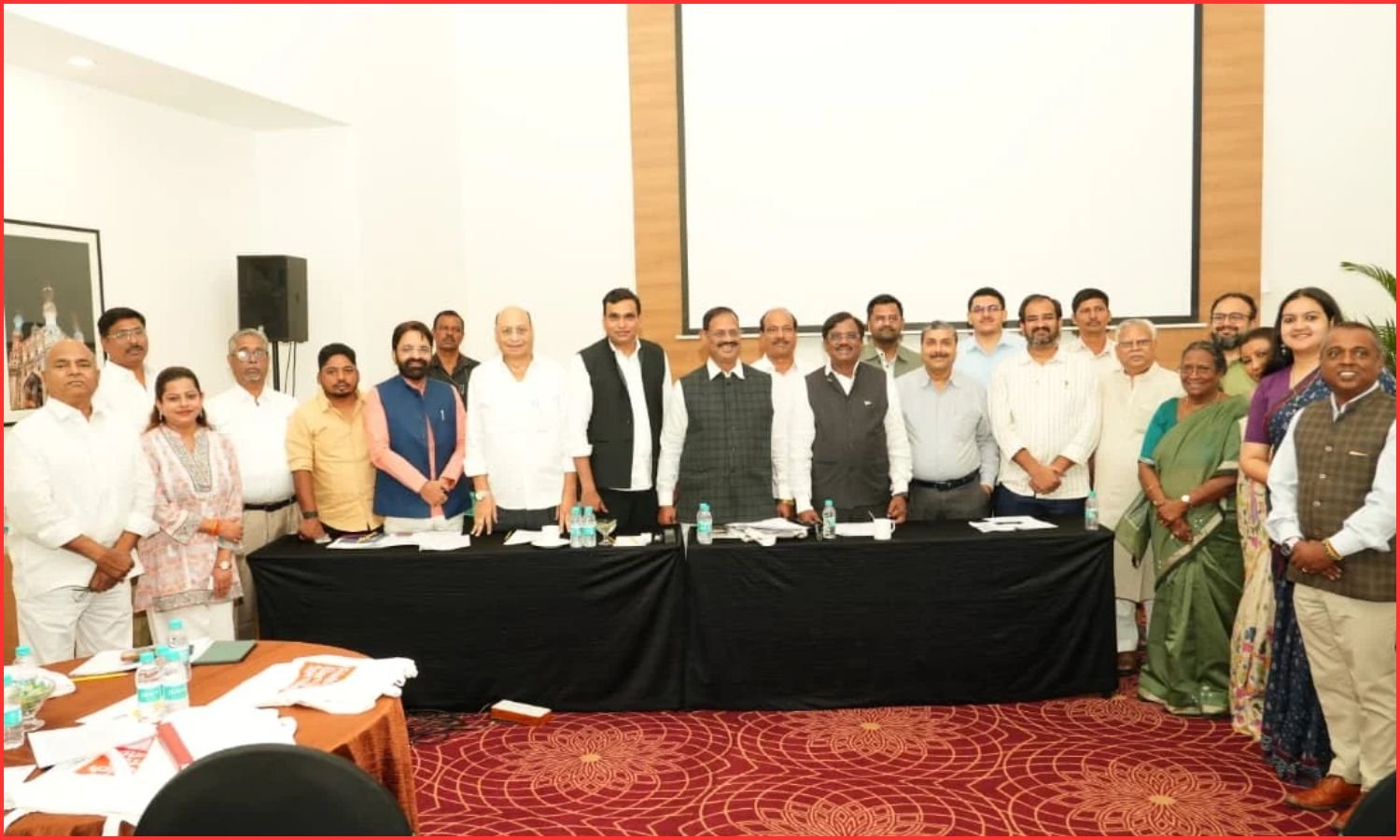
Hyderabad: Telangana will establish separate welfare boards for hamali and domestic workers to strengthen social security and protect their rights, State Power and Mines Minister Gaddam Vivek Venkataswamy said. The government was also preparing measures to safeguard gig and platform workers. Officials would announce the relevant rules soon, he said.
The minister spoke at a conference on “Social Democracy, Political Leadership and Trade Unions: Rebuilding the Architecture of Social Dialogue” at Lemon Tree Hotel in Hyderabad on Friday. Participants discussed democratic institutions, workers’ rights and the need to prepare the labour sector for changing employment patterns.
Vivek said nearly 93 per cent of India’s workforce operated in the unorganised sector. Organised-sector employees could use trade unions to pursue their demands. However, unorganised workers lacked comparable representation and protection. He called for wider consultations and policy measures to address their problems.
Recalling his father, Gaddam Venkataswamy’s work for labour welfare, the minister said he had supported workers’ interests despite opposition from industrial groups. The opposition arose during the introduction of pension benefits for private-sector employees, Vivek said.
Welfare boards for workers to expand social security and workplace protection
Vivek credited Congress leader Rahul Gandhi with taking the initiative to protect gig workers. He said Telangana had introduced legislation for their welfare following Gandhi’s intervention. The state had also established a board to safeguard their interests. The government would announce the relevant rules soon, he added.
The minister said the government was pursuing separate welfare boards for hamali and domestic workers. It was also prioritising fair wages, social security and workplace safety for gig and platform workers.
Vivek said Telangana had not announced minimum wages for ten years. After taking charge of the Labour Department, he announced minimum wages following consultations with industry representatives. He said the government sought to balance industrial requirements with workers’ interests.
According to the minister, fair wages and dignified living conditions would improve productivity and promote industrial peace. Cooperation between employers and workers would also help attract investment and expand employment opportunities.
He cautioned against neglecting worker safety in the name of ease of doing business. Referring to the Sigachi industrial accident, which killed 54 workers, Vivek said factory owners must implement safety measures recommended during inspections.
He urged companies to discuss inspection reports at board meetings and correct identified safety deficiencies. Industrial managements must accept responsibility for protecting workers’ lives, he said.
The minister also linked skill development to Telangana’s target of becoming a $3 trillion economy by 2047. The state was upgrading Industrial Training Institutes (ITIs) into Advanced Technology Centres (ATCs). These centres would provide modern training aligned with industry requirements.
He said the programme aimed to prepare young people for emerging industries, including defence and aerospace. The government had also introduced a monthly stipend of Rs 2,000 for ITI students.
German-language training aims to connect Telangana youth with overseas jobs
Vivek said Telangana youth were receiving German-language training to access overseas employment. During discussions with German organisations, he said, around five lakh job opportunities had been mentioned. He did not provide further details about those opportunities.
In his constituency, 70 young people in Mandamarri were receiving German-language training. The minister said his organisation was also providing them with stipends. Efforts were under way to help trainees secure employment in Germany after completing their courses.
He urged young people to learn foreign languages and acquire modern skills to meet changing employment needs in Europe, Japan and other countries.
Vivek said workers should have a greater role in policy decisions. Strong trade unions, responsible political leadership, fair wages, social security and meaningful dialogue could help build a more inclusive society, he said.
He asked trade union leaders, political representatives and experts to bring ground-level labour issues to the government’s attention. Labour reforms, he said, should support industrial growth while protecting workers’ rights. The government was willing to examine practical recommendations from the conference and implement feasible measures in workers’ interests.
MP Chamala Kiran Kumar Reddy, Minimum Wages Advisory Board chairman Janak Prasad, former MP Khuntia and Telangana Gig and Platform Workers Union president Shaik Salauddin attended the conference. Representatives of various trade unions also participated.