

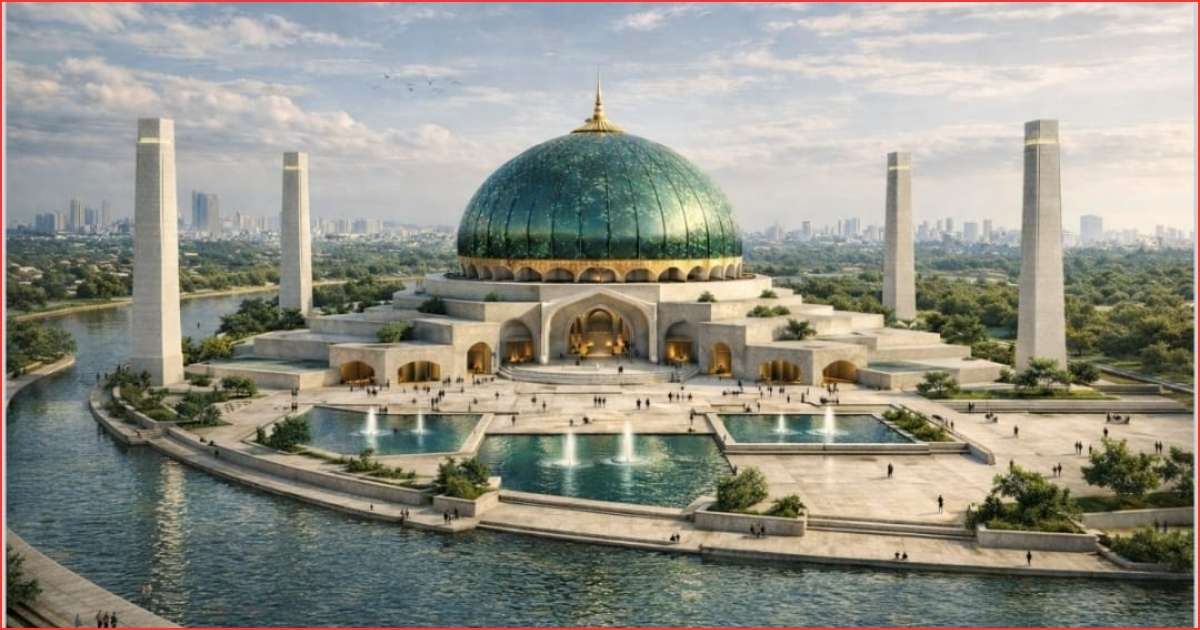
Hyderabad: The government conceptualised a grand mosque under the Musi riverfront mosque plan near Puranapul, aiming to combine global Islamic architecture with Hyderabad’s cultural heritage.
Officials proposed a design that draws from European symmetry, Turkish domes and the spiritual aesthetics of Medina. At the same time, planners integrated elements rooted in Hyderabad’s historical identity.
The concept links architectural traditions from the Qutb Shahi dynasty to the refined styles of the Asaf Jahi dynasty. As a result, the structure aims to connect the city’s past with its present through design.
Musi riverfront mosque plan highlights architectural vision
The Musi riverfront mosque plan focuses on creating a landmark that reflects both faith and artistic excellence. Designers proposed a structure that blends international influences with local heritage.
They incorporated domes and symmetry inspired by global Islamic architecture. At the same time, the plan retained design elements associated with Hyderabad’s historic monuments.
Officials said the mosque would stand as a symbol of cultural continuity. Therefore, the project seeks to balance modern vision with traditional identity.
Musi riverfront mosque plan includes cultural hub
The Musi riverfront mosque plan also outlines a broader cultural role for the site. Authorities proposed a marketplace offering religious materials, including Qurans and prayer mats.
In addition, the plan includes spaces dedicated to Urdu literature and calligraphy. These sections aim to promote Hyderabad’s linguistic and cultural traditions.
Bookstores and cultural centres will display rare manuscripts, Urdu poetry and historical narratives. These features intend to highlight the city’s syncretic evolution over time.
Musi riverfront mosque plan aims to boost cultural tourism
The mosque plan is expected to strengthen spiritual and cultural tourism in Hyderabad. Officials said the project would serve as a centre for faith, history and community engagement.
By integrating heritage with modern infrastructure, the plan aims to preserve Urdu culture while attracting visitors. The project positions the mosque as both a religious space and a cultural destination.