

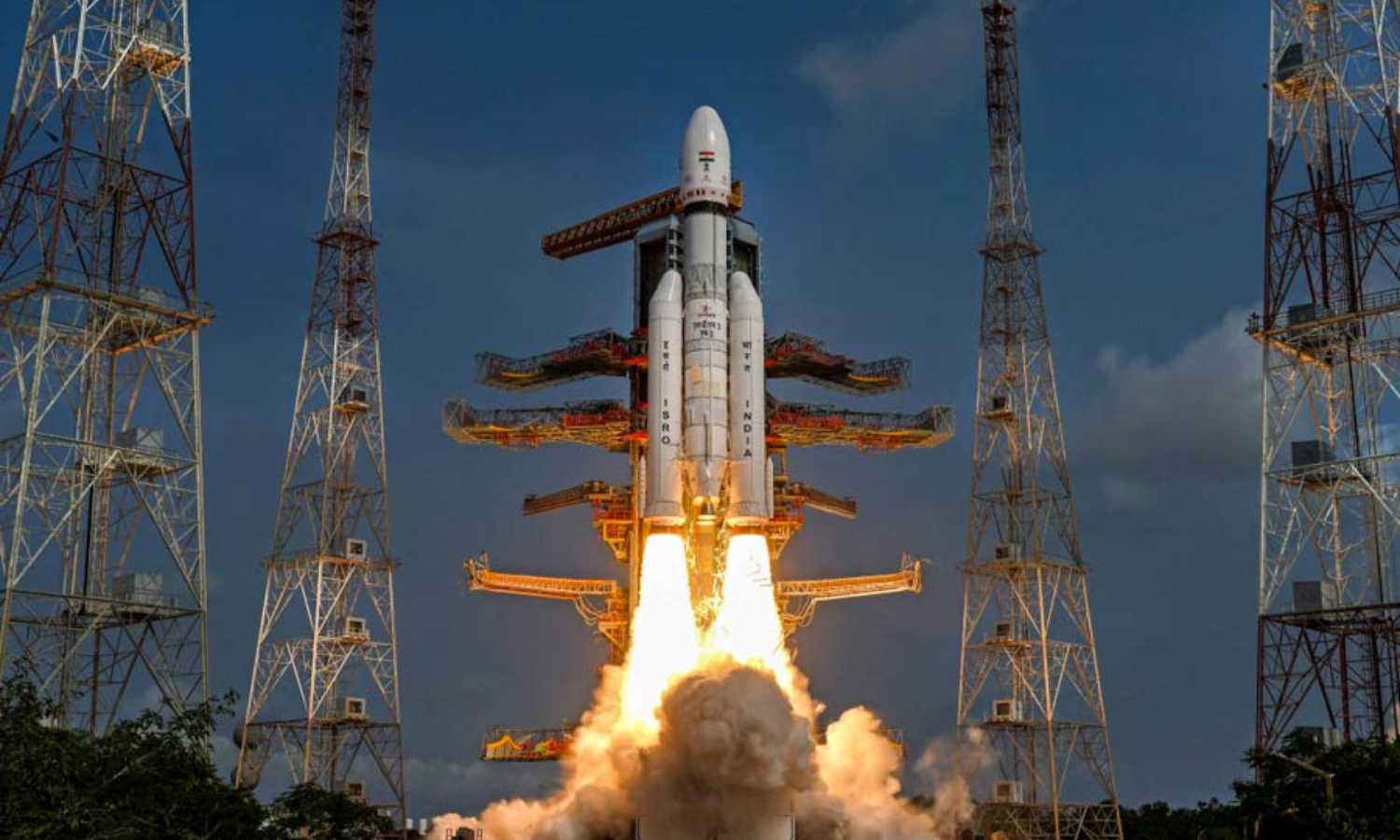
Hyderabad: The Indian Space Research Organisation (ISRO) unveiled plans for its Bahubali Rocket, a 40-storey launch vehicle that can carry a 75,000 kg payload into low-Earth orbit. ISRO Chairman Dr. V. Narayanan announced this at the 84th convocation of Osmania University (OU) on Tuesday. He attended as the chief guest and also received an honorary doctorate.
Narayanan said ISRO is working on several major projects this year. These include the launch of the NAVIC satellite, the NI rocket, and a U.S. communication satellite weighing 6,500 kg. ISRO will also send a Technology Demonstration Satellite (TDS) and GSAT-7R for the Indian Army. The new GSAT-7R will replace GSAT-7 (Rukmini), which currently serves the Indian Navy.
Space station by 2035, ambitious goals ahead
Narayanan revealed that ISRO aims to build a 52-tonne space station by 2035. The agency is also advancing on the Venus Orbiter Mission. He compared India’s progress to the early rockets designed by Dr. A.P.J. Abdul Kalam. Those rockets carried only 35 kg satellites with a 17-tonne liftoff, whereas the Bahubali Rocket will lift 75,000 kg.
He said India has launched over 4,000 rockets since 1975, when Aryabhata went into orbit with international support. So far, the country has placed 133 satellites into space. India now maintains 55 active satellites, and this number may triple within four years.
Narayanan highlighted India’s space achievements. These include the Mars Orbiter Mission succeeding on its first attempt, the record launch of 104 satellites in one mission, and lunar imaging at 32 cm resolution.
State Governor Jishnu Dev Verma conferred the honorary doctorate on Narayanan. OU also awarded gold medals to 121 students. In addition, 1,258 scholars received PhD degrees at the convocation.
Narayanan recalled an incident from June when astronaut Shubhamshu Shukla detected a leak a day before launch. His quick response prevented a major accident.