

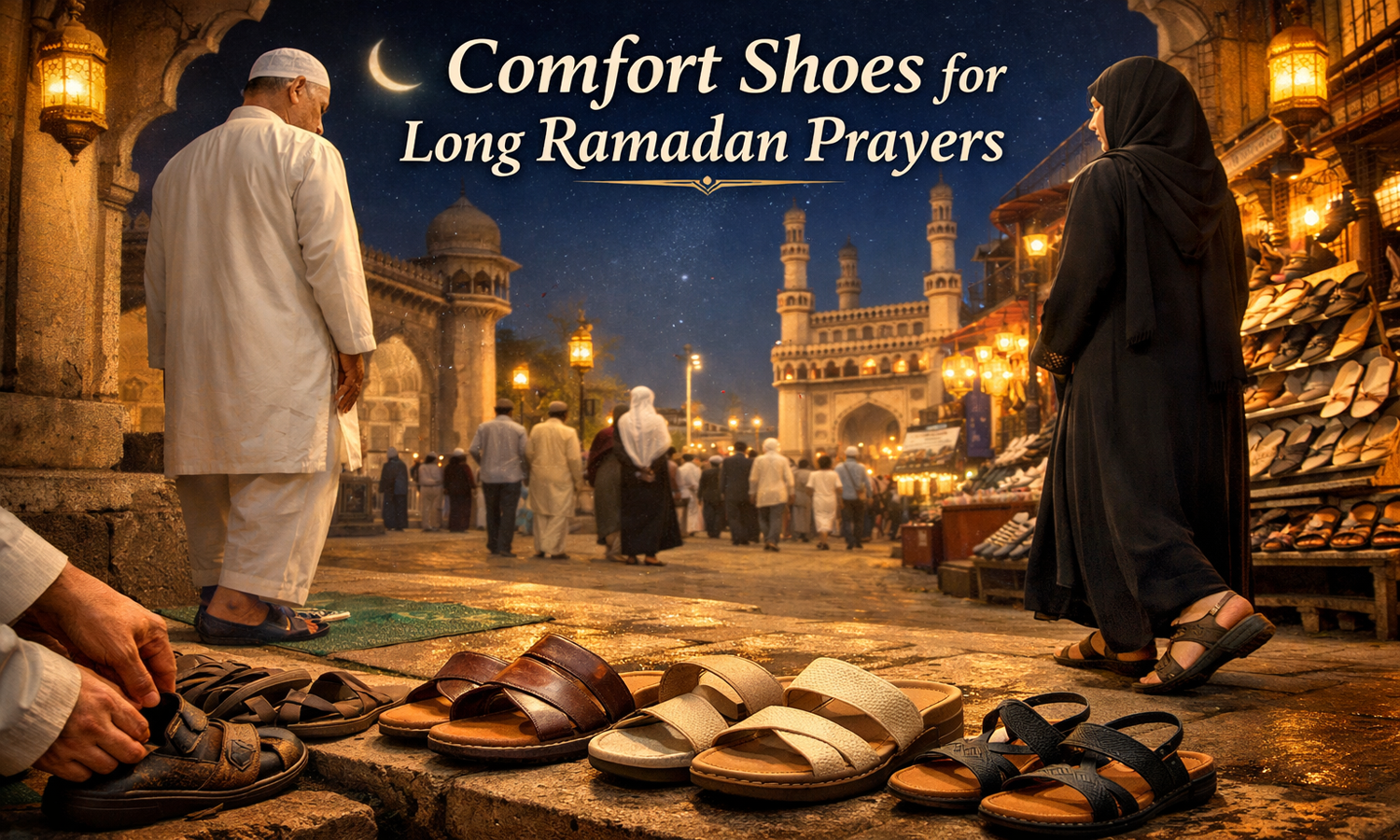
Hyderabad: The Hyderabad Ramadan footwear demand rose sharply as worshippers sought comfortable shoes suited for long nightly prayers during the holy month.
Retailers across the city reported a noticeable shift in consumer preference. Buyers prioritised comfort and foot support over style. This change directly linked to extended hours of Taraweeh and Tahajjud prayers, where individuals stood for long durations.
The trend transformed Ramadan nights into a mix of devotion and commerce. Markets across Hyderabad remained crowded from evening until early morning. Consequently, the Hyderabad Ramadan footwear demand emerged as a key seasonal economic driver.
Hyderabad Ramadan footwear demand driven by long prayer routines
Ramadan altered daily schedules across Hyderabad. Major mosques, including Mecca Masjid, saw large gatherings from the first night of Taraweeh. Worshippers often stood for one to two hours continuously.
During the last ten days, prayer durations increased further. This placed pressure on feet, ankles, and lower back. Medical experts noted that such prolonged standing resembled moderate aerobic activity.
However, improper footwear increased the risk of heel pain and inflammation. Individuals with diabetes or joint issues faced higher discomfort. As a result, residents began choosing functional footwear designed for support and cushioning.
A senior resident from Aghapura said standing in one place caused severe foot pain. He added that soft-soled sandals helped him continue prayers with less discomfort.
Hyderabad Ramadan footwear demand reshapes women’s preferences
Women increasingly sought footwear combining comfort and simple design. This shift became more visible among those attending mosques or long prayer gatherings.
Flat sandals, foam slippers, and low-heel orthopedic footwear gained traction. Breathable straps also became a preferred feature. Buyers avoided heavy or rigid designs during Ramadan nights.
A resident from Tolichowki stated that footwear must remain simple, attractive, and comfortable during prayers. This preference highlighted how the Hyderabad Ramadan footwear demand influenced fashion choices.
Hyderabad Ramadan footwear demand boosts key retail hubs
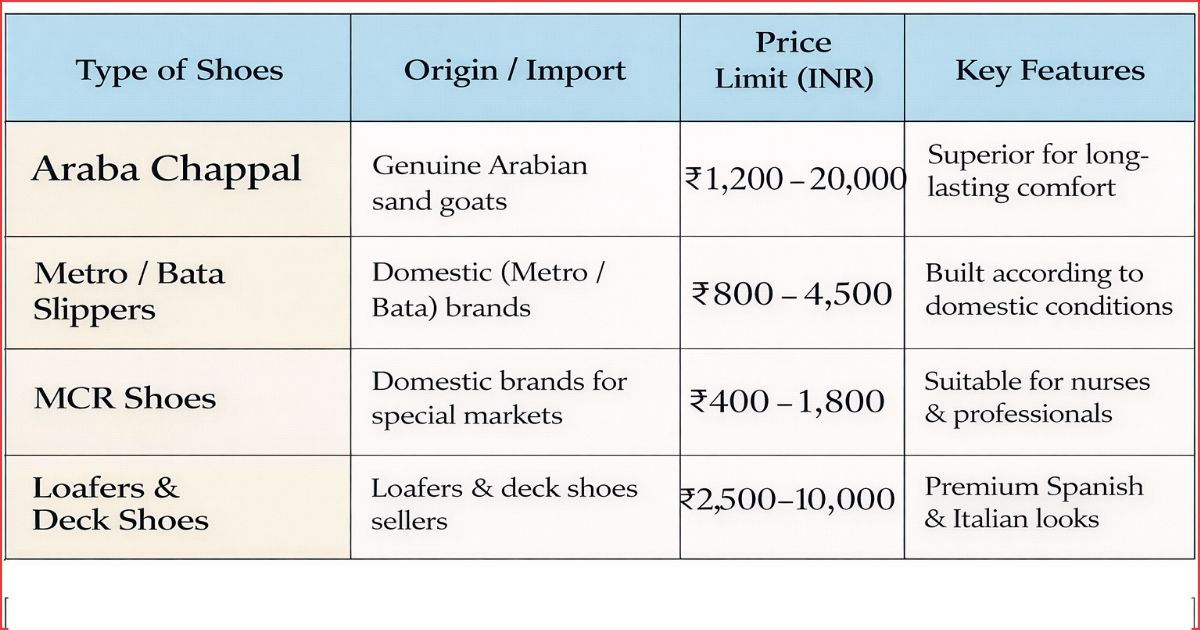
Different markets across Hyderabad catered to varying consumer needs. Abids and Koti emerged as hubs for branded and orthopedic footwear. Stores introduced memory foam and arch-support categories to meet rising demand.
Meanwhile, Barkas gained attention for traditional imports. Traders sourced footwear from Gulf countries, including Yemen and Saudi Arabia. The ‘Araba chappal’ remained a top-selling product due to its durability and comfort.
Foldable slippers and lightweight footwear also gained popularity. These suited mosque visits where easy removal and re-wear remained essential. Anti-slip and breathable materials became standard requirements.
Tolichowki and Mehdipatnam offered imported fashion options. Younger buyers preferred these markets for combining style with comfort.
Hyderabad Ramadan footwear demand linked to medical awareness
Growing health awareness changed buying behaviour significantly. Footwear selection shifted from aesthetic appeal to medical necessity.
Experts emphasised arch support and cushioning for prolonged standing. Proper footwear reduced joint strain and improved balance. Clinics specialising in foot care reported increased consultations during Ramadan.
Specialised centres offered gait analysis and custom orthotics. Doctors recommended deep heel cups and soft soles for better support. Flat-footed individuals required additional arch reinforcement to avoid discomfort.
Hyderabad Ramadan footwear demand expands expo and online sales
Ramzan expos contributed to this growing trend. These events allowed shoppers to compare multiple brands under one roof. Sales of inserts and support pads increased notably at such venues.
At the same time, online platforms gained traction among younger consumers. E-commerce sites saw higher footwear orders during Ramadan. However, older buyers continued to prefer physical markets like Charminar.
Retailers estimated a 25–30% rise in comfort footwear sales during the season. This growth reinforced the scale of the Hyderabad Ramadan footwear demand.
Hyderabad Ramadan footwear demand supports local craftsmanship
Local artisans continued to play a key role despite global competition. Workshops in the Old City produced handmade leather footwear.
Demand for handcrafted shoes increased due to the slow fashion trend. These products adapted to foot shape over time, improving comfort. Artisans also integrated cushioned soles into traditional designs.
New materials such as micro cellular rubber improved flexibility and softness. Manufacturers combined leather with synthetic foam to create lightweight footwear.
Hyderabad Ramadan footwear demand drives economic activity
The seasonal surge boosted Hyderabad’s retail economy. Footwear sales contributed significantly to Ramadan trade volumes.
Shops hired temporary workers to manage increased demand. Logistics and delivery services also expanded during the period. Orders from other states further supported local businesses.
Digital marketing played a major role in sales growth. Retailers used social media platforms to promote products. Affordable alternatives to branded footwear attracted younger buyers.
Hyderabad Ramadan footwear demand reflects evolving market shift
The Hyderabad Ramadan footwear demand highlighted a broader transition in consumer priorities. Buyers increasingly valued comfort, health, and usability over pure fashion.
Experts indicated that future trends may include smart footwear and sustainable materials. Technological integration could further reshape the sector.
The current trend demonstrated how religious practices influenced market evolution. It showed a clear alignment between tradition, health awareness, and modern retail dynamics.