

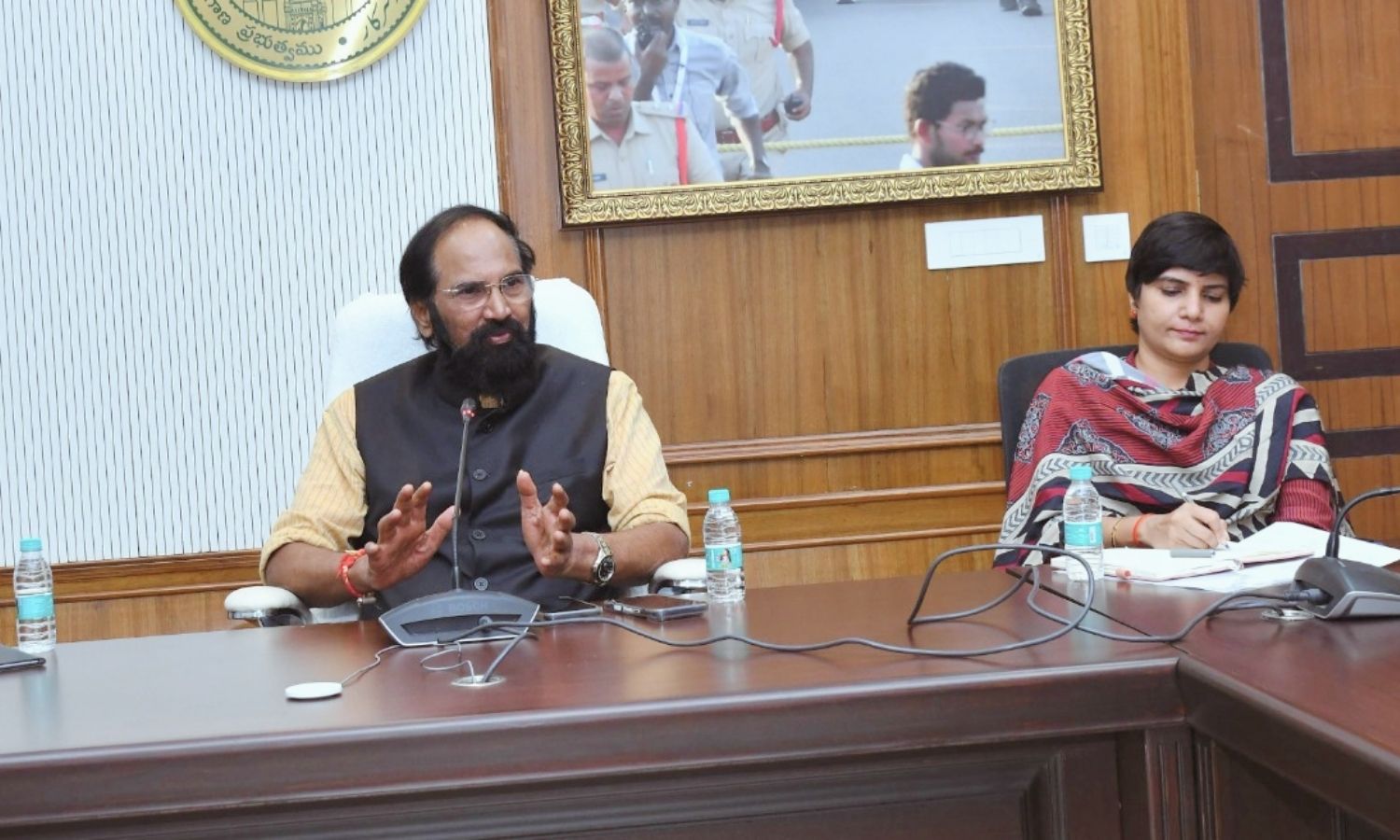
Hyderabad: Civil Supplies and Irrigation Minister N. Uttam Kumar Reddy reviewed measures to address the Auto LPG shortage impacting urban transport in Hyderabad and explored options to strengthen public transport.
He chaired an emergency meeting with senior officials and LPG suppliers, including IOCL, Go Gas, Total Energies, Super Gas and Prime Gas. During the review, Uttam Kumar Reddy examined ways to expand public transport operations to ease commuter pressure.
The meeting followed reports of disruption in urban mobility, with auto drivers staging protests in parts of the city. Therefore, the Minister said the government would assess ground conditions before finalising contingency measures.
Uttam Kumar Reddy assesses LPG supply and transport response
He said the government would take a final decision after consulting the Chief Secretary and briefing the Chief Minister. Meanwhile, Civil Supplies Commissioner Stephen Ravindra wrote to Union Minister Hardeep Singh Puri seeking urgent intervention to improve supply.
Public sector companies such as IOCL and HPCL were asked to increase supply to bridge the gap created by private players. At the same time, officials were directed to engage with auto unions and explain the situation while urging them to remain calm.
In addition, the Minister instructed departments to scale up operations of Hyderabad Metro Rail and TSRTC buses. This step aimed to reduce dependence on auto rickshaws during the shortage.
Officials said the city required about 202 metric tonnes of Auto LPG daily. However, current supply stood at 147 metric tonnes, resulting in a shortfall of around 55 metric tonnes.
The shortage largely affected the private sector, which controlled nearly 75 percent of the market. In contrast, PSUs maintained relatively stable supplies, with IOCL alone supplying about 35 metric tonnes daily through its outlets.
Hyderabad had 143 Auto LPG outlets, including 116 within the Outer Ring Road and 27 outside. Currently, about 25 outlets remained non-functional, including 17 within the core city.
Officials said delays of two to three days in LPG vessel arrivals triggered the shortage. Moreover, geopolitical developments in the Middle East disrupted global supply chains.
Private firms sourced LPG from ports such as Krishnapatnam, Jaigad, Mumbai and terminals in Tamil Nadu. While companies explored alternative international sources, timelines for stabilisation remained uncertain.