

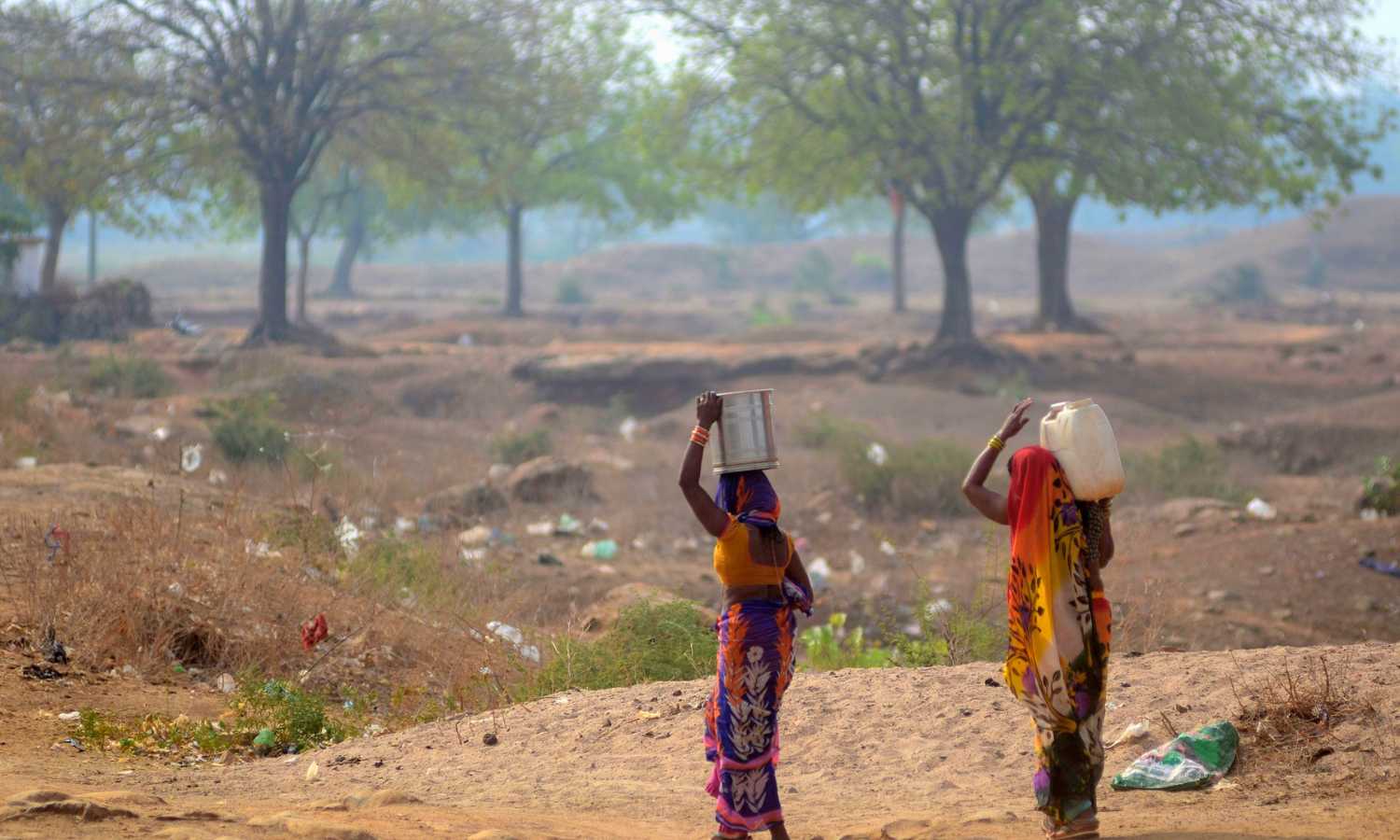
Hyderabad: Groundwater levels across Telangana are slipping fast, and scientists say the state’s future water security is on shaky ground.
A new study by the National Geophysical Research Institute (NGRI) blames the twin pressures of unpredictable monsoons and relentless extraction—especially for paddy farming—for pushing groundwater reserves into dangerous territory.
The research, which tapped into nearly two decades of satellite data from NASA’s GRACE mission, paints a worrying picture. Even a modest 10–20% drop in seasonal rainfall has led to a sharp fall in recharge rates, with some years seeing up to 50% less water soaking into the ground.
It’s not just the rain. Telangana’s rocky terrain doesn’t help—its hard-rock surfaces struggle to retain water, and most of the state’s 110 billion cubic metres of annual rainfall simply runs off. Only about 15% makes it underground, and of that, paddy cultivation alone consumes around 15 billion cubic metres each year.
“In some parts of the state, 85% of the water used comes straight from the ground,” said Dr. Abhilash Kumar Paswan, one of the study’s authors. “That kind of dependence isn’t sustainable, especially when recharge rates are falling.”
Despite a network of lakes and reservoirs, much of Telangana’s water storage sits on impermeable rock, limiting how much can seep through to deeper aquifers. And while climate models suggest rainfall might rise by 15–50% by the end of the century, temperatures are expected to climb as well—by up to 2.9°C—which could cancel out any gains.
Paswan and his co-authors—Narakula Srinivasarao, L. Raghu, and Virendra Mani Tiwari—warn that unless the government reins in water-guzzling crops and boosts public awareness, large swaths of the population could be at risk. “We’ve seen groundwater usage triple in the past 30 years,” Paswan said. “This isn’t just a farming issue—it’s a survival issue.”
The study was published recently in the Journal of the European Association of Geoscientists and Engineers.