
Supreme Court reserves interim order on pleas against Waqf Amendment Act 2025

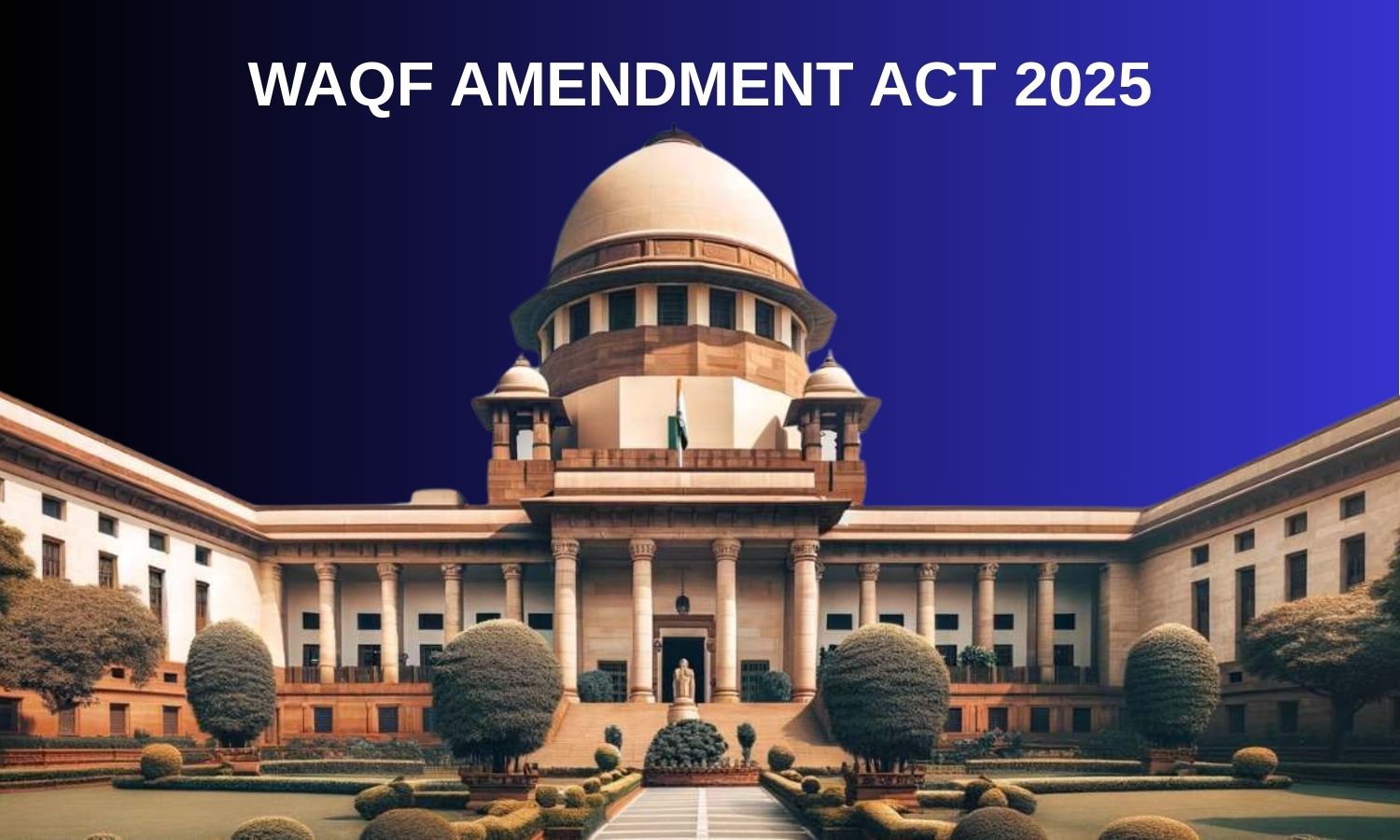
New Delhi: The Supreme Court on Thursday reserved its interim order on three contentious aspects of the Waqf (Amendment) Act, 2025, following a series of hearings on petitions challenging the legislation’s constitutionality.
A Bench comprising Chief Justice B.R. Gavai and Justice Augustine George Masih concluded three consecutive days of arguments, during which senior advocates Kapil Sibal, Rajeev Dhavan, and Abhishek Manu Singhvi represented the petitioners, while Solicitor General Tushar Mehta appeared for the Union government.
The petitioners have asked the court to issue an interim directive on three issues: the power to de-notify properties classified as Waqf by user or deed, the composition of State Waqf Boards and the Central Waqf Council, and a clause that removes Waqf status from properties under investigation to determine if they are government land.
During Thursday’s hearing, Sibal argued that once an inquiry is launched into whether land is Waqf, its designated status is effectively nullified. He questioned whether centuries-old graveyards could now be reclaimed as government land. Chief Justice Gavai responded by asking why such properties had not been registered, prompting Sibal to counter that the responsibility lay with the state. He said the government could not now penalise the community for its own administrative lapses.
In Wednesday’s session, Solicitor General Mehta insisted that no individual or institution could claim ownership of government land, even under the concept of ‘Waqf by user’.
The Centre strongly opposed any stay on the new law, maintaining that the concept of Waqf is inherently secular and constitutionally valid. Mehta argued that the legislative framework passed by Parliament should not be impeded by judicial intervention.
Petitioners, however, labelled the Act as unconstitutional, warning that it enables the government to take control of properties through a non-judicial process. They also argued that only Muslims, barring ex-officio members, should be allowed to serve on Waqf bodies.
The court has yet to announce a date for its ruling. On 25 April, the Ministry of Minority Affairs had filed a 1,332-page affidavit defending the Act, stating that its provisions met constitutional standards.