

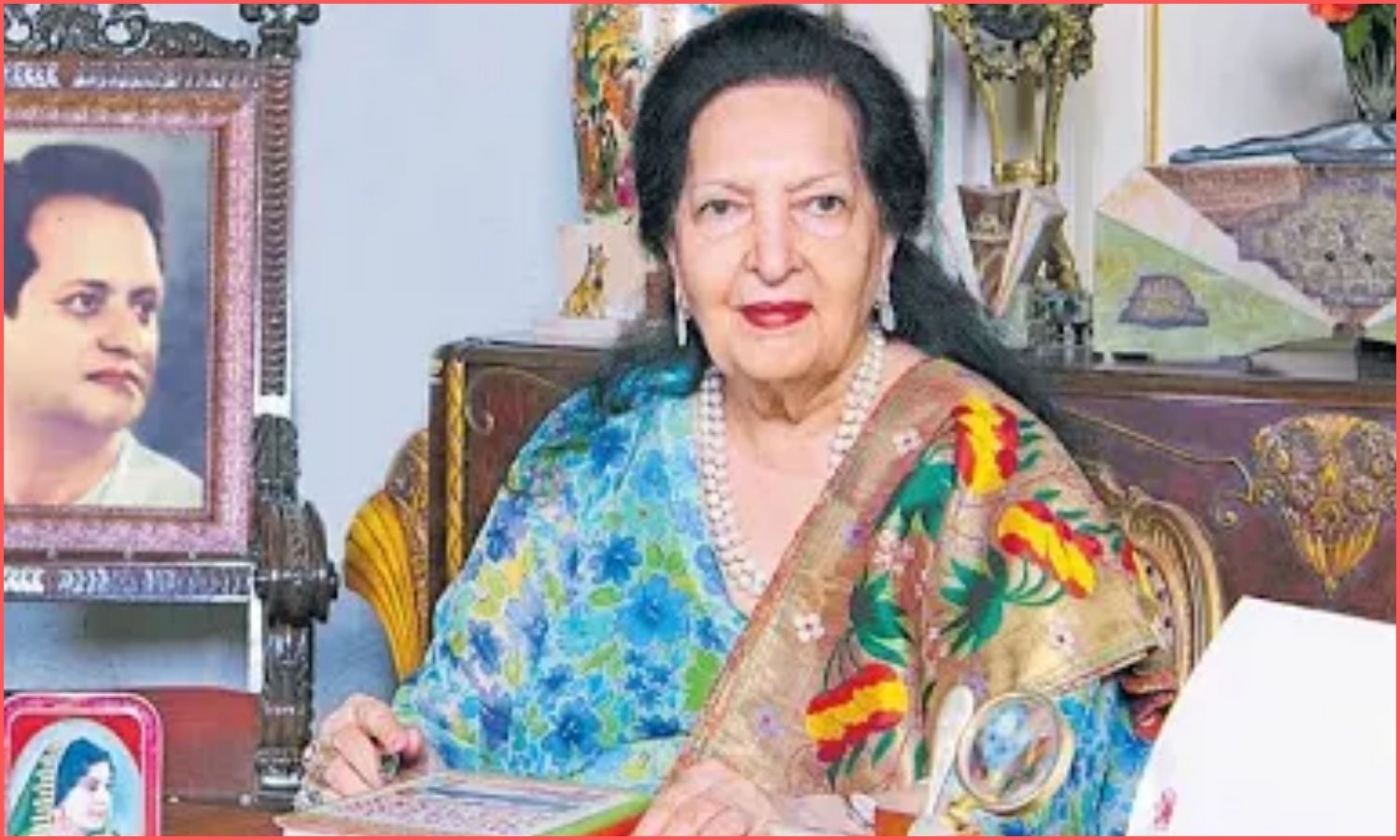
Hyderabad: Indira Devi Dhanrajgir, renowned poet, artist and writer, and the wife of late Mahakavi Gunturu Seshendra Sharma, passed away at the age of 96 at Jnan Bagh Palace in the Goshamahal area of Hyderabad.
Moreover, she earned wide recognition for her multi-faceted contribution to literature and the arts. From an early age, she drew inspiration from the writings of Allama Iqbal, Mirza Ghalib and Sri Aurobindo, which strongly shaped her creative outlook.
In 1964, she published her first poetry collection, The Apostal. Subsequently, she brought out additional literary works in 1965 and 1966, which helped establish her distinct poetic voice.
Indira Devi Dhanrajgir’s literary and cultural legacy
Beyond her creative pursuits, Indira Devi also played a prominent role in literary institutions. Notably, she served as the first president of the Hindi Academy in undivided Andhra Pradesh.
Later, she took charge as chairperson of the Urdu Academy and, through this role, strengthened engagement across languages and cultures. As a result, she contributed significantly to fostering literary dialogue and cultural harmony.
Most significantly, Indira Devi made history as the first Indian woman to be nominated for the Nobel Prize in Literature. In 1973, World Poetry Society Intercontinental (WPSI) president Krishna Srinivas nominated her for the prestigious honour.
Therefore, as a poet, painter and writer, she leaves behind a rare and enduring legacy. Even today, scholars regard her work as a bridge between Indian literary traditions and global thought.