

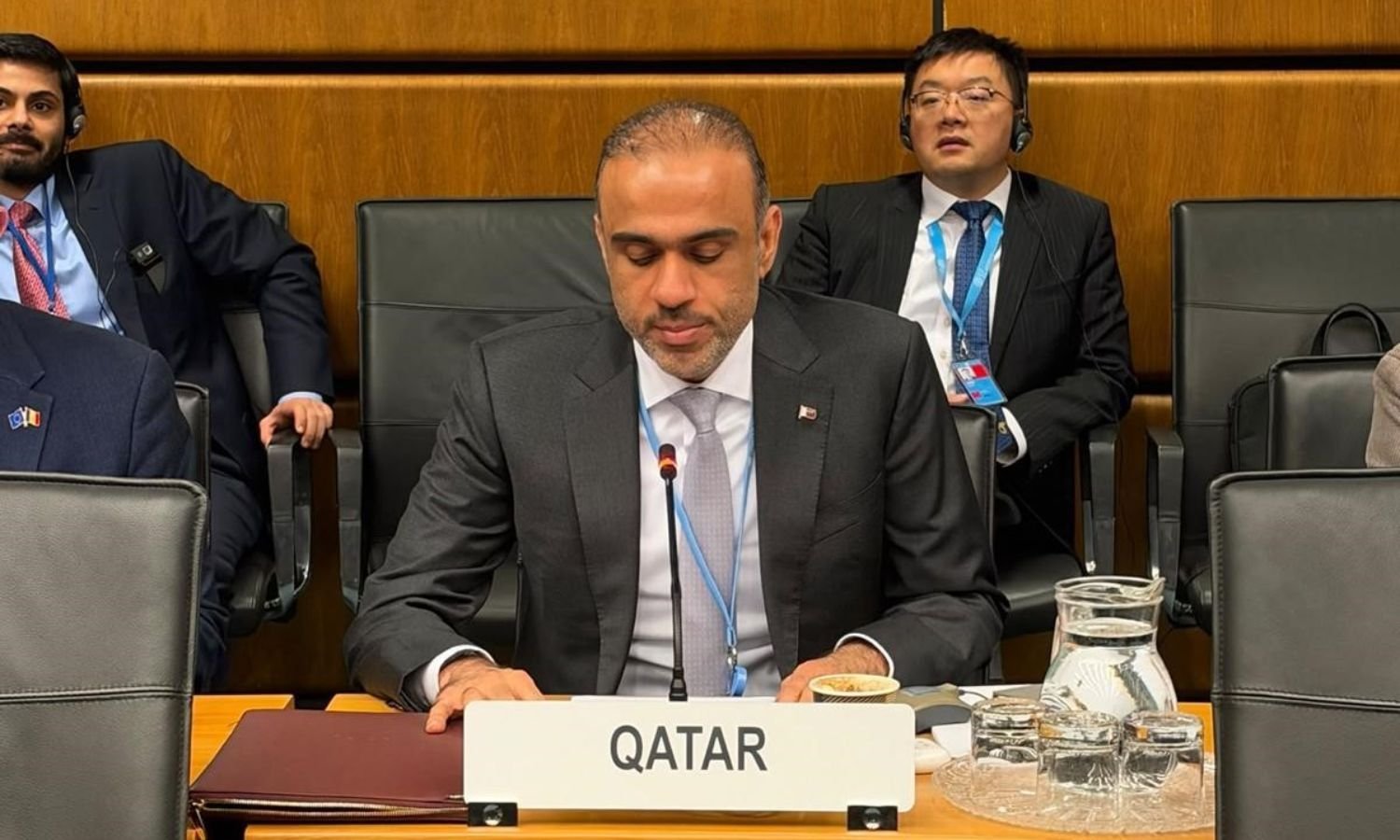
Vienna: Qatar has called for decisive international action against Israeli military operations while condemning attacks attributed to the Houthi movement and Iran against Gulf countries. In a statement delivered at the International Atomic Energy Agency’s Board of Governors meeting in Vienna on November 20, the government warned that continued violations of national sovereignty and international law posed a serious threat to regional and international security. It urged international institutions to respond to the conflicts affecting the Middle East and uphold established principles governing relations between states.
The Qatar regional security statement was delivered by Jassim Yaqoub Al Hammadi, the country’s Ambassador to Austria and Permanent Representative to the United Nations Office and other international organisations in Vienna. He accused Israel of undermining international legal principles through its military actions and continued occupation of Palestinian and other Arab territories. The ambassador argued that the international community’s failure to prevent such actions raised serious questions about its commitment to the UN Charter, justice and the rules governing international relations.
Qatar reiterates demand for Palestinian statehood
Addressing developments in the Palestinian territories, Al Hammadi referred to Israeli military operations in Gaza, violence and land seizures involving Israeli settlers in the West Bank, and Israel’s continued occupation of Syrian territory and parts of Lebanon. He called on international institutions to take effective action over these developments, which Qatar described as violations of international law. The statement also emphasised the need to address the wider political issues underlying the Israeli-Palestinian conflict.
Qatar reiterated its support for the establishment of an independent Palestinian state based on the June 4, 1967 borders, with East Jerusalem as its capital. The government maintained that such an arrangement should follow the two-state solution and relevant United Nations resolutions. Its statement placed Palestinian statehood alongside the broader requirement for international accountability and respect for territorial sovereignty.
Doha condemns Houthi and Iranian attacks
The government also strongly condemned attacks attributed to the Houthi movement against Saudi Arabia, particularly those targeting civilians, civilian facilities and infrastructure. Qatar described the attacks as violations of Saudi sovereignty and international law, while emphasising that the Kingdom’s security formed an integral part of the collective security of Gulf Cooperation Council member states. It reaffirmed its support for legitimate measures taken by Saudi Arabia to safeguard its territory and called for an immediate end to the attacks.
Qatar: Continued Israeli Aggression Poses Grave Threat to Regional and International Security
Vienna | November 20, 2026
The State of Qatar called on the international community and its institutions to take swift, decisive action to deter Israeli aggression, warning that Israel’s continued undermining of the values, rules, and norms governing international relations, coupled with its impunity, poses a grave threat to regional and international security.
This came in a statement delivered by HE Ambassador of the State of Qatar to the Republic of Austria and Permanent Representative to the United Nations Office and other international organizations in Vienna, Ambassador Jassim Yaqoub Al Hammadi, during the current session of the International Atomic Energy Agency (IAEA) Board of Governors held in Vienna.
Addressing the situation in occupied Palestine, HE the Ambassador stressed that the international community must respond decisively to the crimes committed by the Israeli army in the Gaza Strip, the violence and land seizures carried out by Israeli settlers under military protection in the West Bank, and Israel’s continued occupation of Syrian territory and parts of Lebanon.
His Excellency added that these practices place the collective commitment to international law, the UN Charter, and the principles of justice and equity under serious test, calling for the establishment of an independent Palestinian state on the June 4, 1967 borders, with East Jerusalem as its capital, in line with the two-state solution and relevant United Nations resolutions.
In the context of regional security, the State of Qatar expressed its strongest condemnation of the ongoing attacks by the Houthi group against the sisterly Kingdom of Saudi Arabia, which target civilians, civilian objects, and infrastructure. It described them as shameful, aggressive behavior and a blatant violation of the Kingdom’s sovereignty and international law.
The State of Qatar affirmed that Saudi Arabia’s security is an integral part of the collective security of the Gulf Cooperation Council states, reiterating its full solidarity with, and support for, all legitimate measures the Kingdom takes to safeguard its security and sovereignty, while stressing the need to end these attacks immediately and to resolve the Yemeni crisis through dialogue and diplomacy.
The State of Qatar also condemned the continued Iranian attacks on Arab states, most recently those affecting the sisterly State of Kuwait and the sisterly Kingdom of Bahrain, describing them as a flagrant violation of Arab states’ sovereignty and territorial integrity and a clear breach of international law, the UN Charter, and the principles of good-neighborliness. It reaffirmed its full solidarity with, and support for, all measures taken by Kuwait and Bahrain to protect their security and sovereignty.
#MOFAQatar
— Ministry of Foreign Affairs – Qatar (@MofaQatar_EN) November 20, 2026
At the same time, Doha maintained that the conflict in Yemen required a political settlement through dialogue and diplomacy. Its position combined support for Saudi Arabia’s security with a call for peaceful efforts to resolve the Yemeni crisis. The statement did not provide a detailed account of individual Houthi attacks or specify casualty figures associated with the incidents.
Qatar separately condemned attacks it attributed to Iran against Arab countries, including recent incidents affecting Kuwait and Bahrain. It described these actions as violations of sovereignty, territorial integrity and the principles of good-neighbourly relations. The government reaffirmed its solidarity with Kuwait and Bahrain and supported measures taken by both countries to protect their security and sovereignty.
The Qatar regional security statement brought together the government’s positions on several conflicts affecting the Middle East. While its criticism of Israel focused on international accountability and Palestinian statehood, its response to attacks attributed to the Houthis and Iran emphasised Gulf security and national sovereignty. The accusations against the parties concerned represented Qatar’s official position and were not independently established by the statement.