
Nagi Reddy takes charge as Civil Supplies Commissioner, prioritises transparent paddy procurement

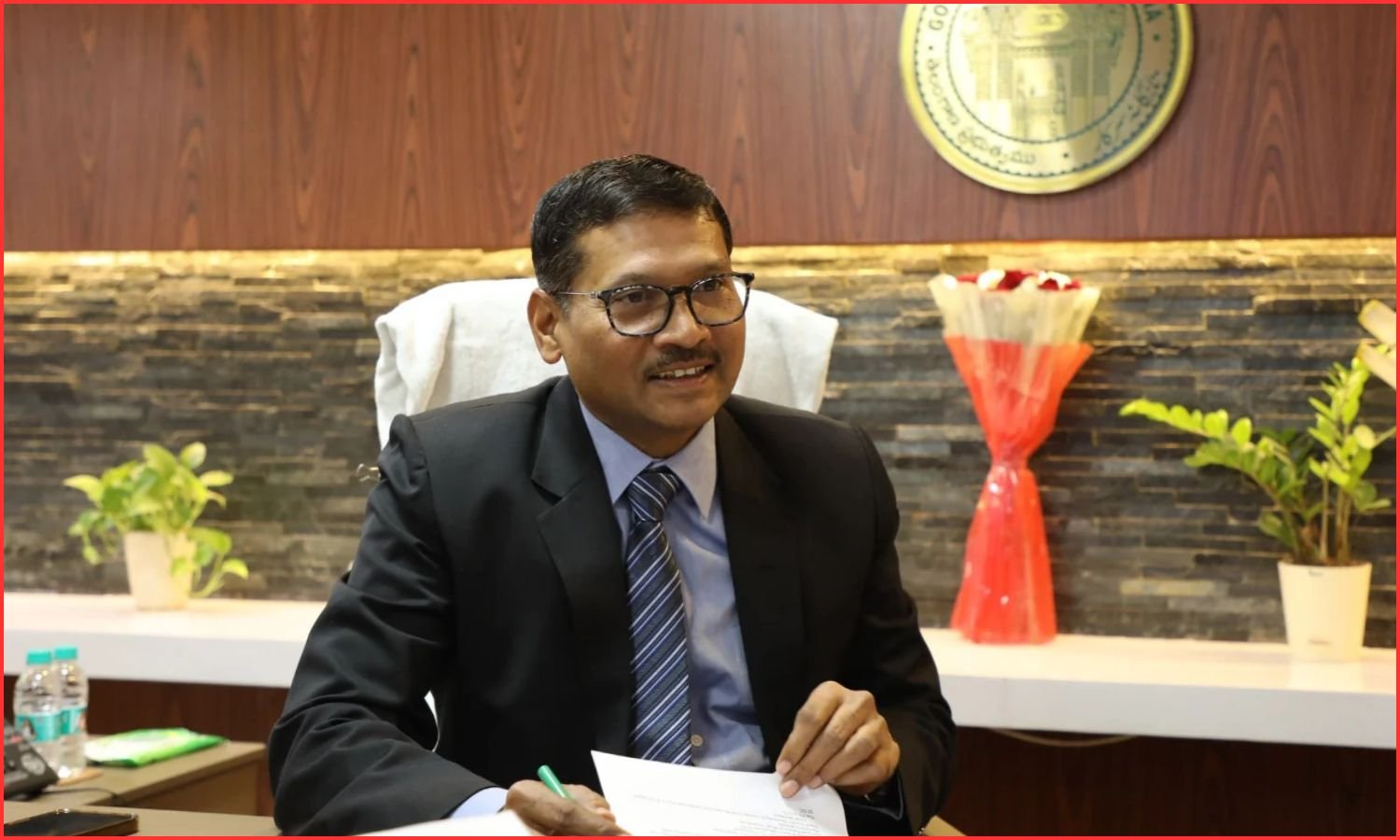
Hyderabad: Senior IPS officer Y. Nagi Reddy assumed charge as Telangana Civil Supplies Commissioner on Saturday, November 14. He identified transparent paddy procurement, timely farmer payments and stronger monitoring of rice mills as his immediate priorities.
He also took charge as Vice-Chairman and Managing Director of the Telangana State Civil Supplies Corporation and Controller of Legal Metrology.
After assuming office, Nagi Reddy directed officials to prevent disruptions in paddy procurement and protect farmers’ interests. He also called for greater accountability in the distribution of essential commodities.
Transparent paddy procurement and timely farmer payments
Nagi Reddy said uninterrupted procurement operations across Telangana would remain a priority. He instructed officials to monitor field-level activities closely and address operational bottlenecks without delay.
He stressed that transparent paddy procurement required accurate weighing, proper documentation and timely payments to farmers. Furthermore, he directed officials to strengthen monitoring systems and ensure that procurement operations continued without avoidable interruptions.
The Commissioner also emphasised the need to reconcile paddy and rice stocks accurately throughout the procurement and milling process. Nagi Reddy said paddy supplied to rice mills for custom milling constituted public property. Therefore, millers must maintain proper accounts of every quantity entrusted to them.
He warned that deliberate diversion of stocks, false declarations and repeated defaults would attract appropriate legal action. The Commissioner called for strict accountability in custom milling operations to safeguard public resources.
He also instructed officials to strengthen financial discipline and improve operational efficiency in procurement, storage, transportation, milling and distribution. Transporters, warehouse operators and Fair Price Shop dealers must fulfil their contractual responsibilities, he said.
Commissioner prioritises ration delivery and PDS reforms
Nagi Reddy also stressed strengthening the Public Distribution System (PDS) to ensure eligible families received their full ration entitlements. He directed officials to expedite pending ration card applications and corrections.
Additionally, he identified the prevention of essential commodity diversion as a major priority for the department. The Commissioner said monitoring must improve across the distribution network to prevent irregularities and ensure timely services.
He also stressed that procurement, storage and transportation operations required stronger coordination and financial oversight. On consumer protection, Nagi Reddy called for strict monitoring to prevent hoarding, black marketing and diversion of essential commodities.
He also directed stronger enforcement concerning petrol, diesel, LPG and other regulated petroleum products. Through the Legal Metrology Department, officials would monitor the accuracy of measurements at fuel stations and in packaged commodities.
The Commissioner said consumer protection measures must remain firm while ensuring fair treatment for businesses complying with regulations. He emphasised that enforcement should protect consumers without unnecessarily affecting compliant traders.
Nagi Reddy warns against negligence and false reporting
Addressing departmental officials, Nagi Reddy assured full support to honest officers performing their duties in good faith. However, he warned that negligence, false reporting and avoidable delays would invite accountability.
He directed officials to remove operational bottlenecks, strengthen monitoring mechanisms and maintain accurate records of paddy and rice stocks. The Commissioner reiterated that transparent paddy procurement and efficient delivery of essential commodities required coordinated action across departments.
He called upon officials to work with firmness and fairness, protect public resources and provide timely services to farmers, ration beneficiaries and consumers.