

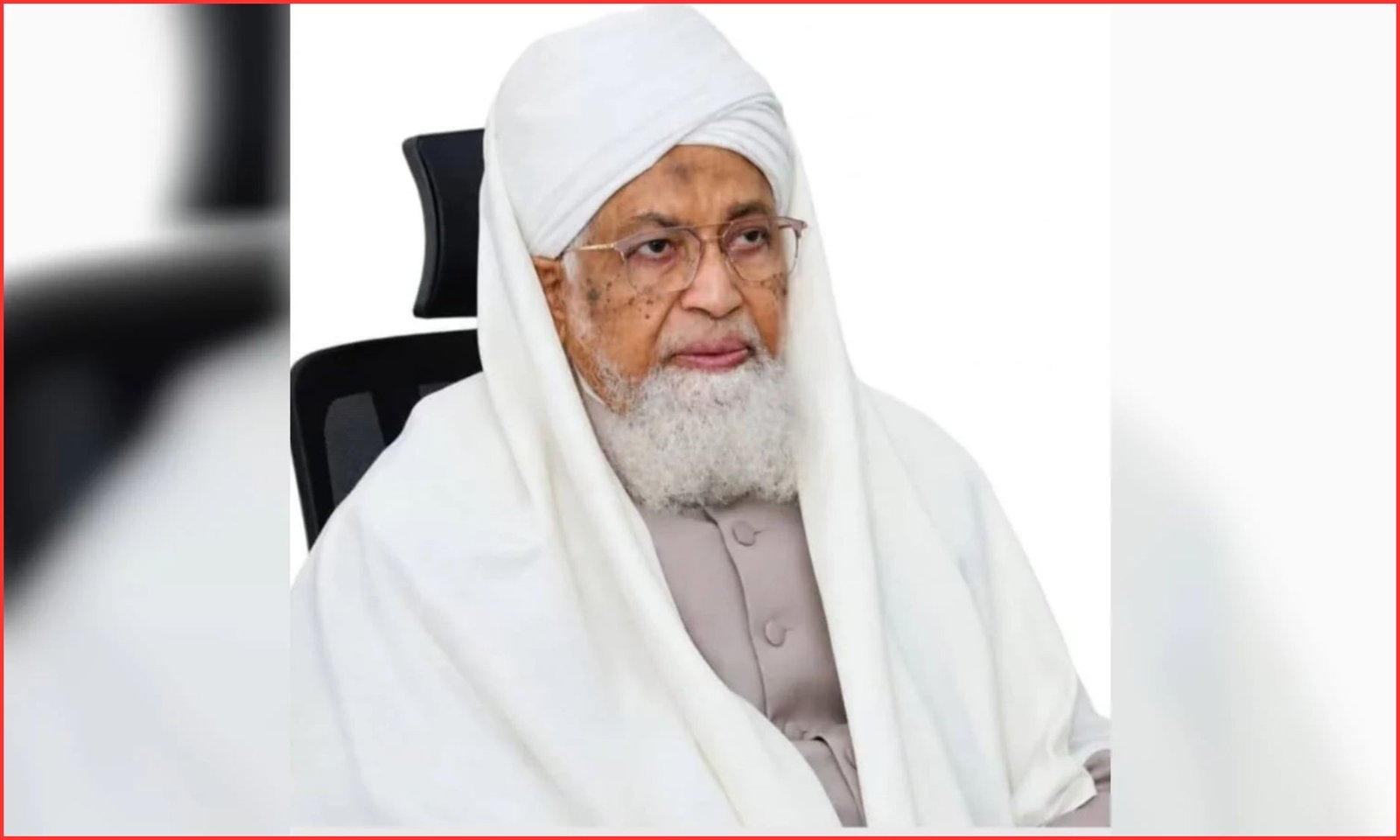
Hyderabad: Renowned Islamic scholar and former Jamia Nizamia deputy mufti, Allama Mufti Hafiz Qari Syed Sadiq Mohiuddin Faheem, passed away. His death prompted widespread mourning among religious, educational and community organisations across Hyderabad, Telangana, the Deccan and other parts of India.
Mufti Sadiq Faheem’s demise was described by religious and community circles as a major loss to Islamic scholarship. His death particularly affected scholars and institutions associated with the Deccan’s religious and educational traditions.
He was widely known for his expertise in Islamic jurisprudence, religious teaching and community affairs. He also served as president of the United Muslim Forum, where he worked to promote cooperation among different Islamic schools of thought.
Throughout his career, he devoted himself to Islamic education, Quranic studies, religious guidance and the promotion of Muslim unity.
Mufti Sadiq Faheem’s demise leaves a void at Jamia Nizamia
Mufti Syed Sadiq Mohiuddin Faheem maintained a longstanding association with Jamia Nizamia, Hyderabad’s historic Islamic educational institution. As its former deputy mufti, he spent several years addressing religious questions and providing guidance on matters involving Islamic law.
His work covered religious, family, social and jurisprudential issues affecting members of the Muslim community. Scholars and religious leaders respected his approach to interpreting Islamic principles and addressing complex questions of Sharia.
He was recognised for carefully examining religious matters before offering guidance based on established Islamic teachings. In addition, he emphasised the importance of connecting religious knowledge with everyday conduct and social responsibilities.
He believed that religious guidance should extend beyond academic discussions to include moral development and community welfare. His teaching activities also contributed to the religious education of students seeking knowledge of Islamic jurisprudence and theology.
Besides his jurisprudential expertise, he was a Hafiz of the Quran and an accomplished Qari. He was also regarded as a dedicated teacher who combined religious instruction with personal guidance for students.
Those associated with him remembered his simplicity, humility, courteous behaviour and willingness to engage with people from different backgrounds.
United Muslim Forum leadership and efforts for Muslim unity
One of his major contributions was his work as president of the United Muslim Forum. In that position, he sought to bring Islamic scholars, religious leaders and representatives of different schools of thought onto a common platform.
He consistently advocated consultation, cooperation and collective action when addressing issues affecting the Muslim community. His approach emphasised the need to maintain dialogue despite differences in religious interpretations and institutional affiliations.
Consequently, he gained respect among scholars and community representatives belonging to different schools of thought. Through the United Muslim Forum, he worked to highlight religious, social, educational and constitutional issues concerning Muslims.
He also encouraged closer coordination among community organisations and religious institutions. His leadership focused on creating opportunities for collective discussion and developing common approaches to community concerns.
Moreover, his moderate outlook and willingness to engage with differing perspectives helped him maintain relationships across religious groups. He believed that internal differences should not prevent Muslim organisations from cooperating on matters of shared concern.
His efforts to encourage dialogue and consultation remained a significant part of his public and religious activities.
Religious scholars mourn Mufti Sadiq Faheem’s demise
Mufti Sadiq Faheem’s demise drew expressions of grief from scholars, religious teachers, intellectuals, community leaders, students and followers. His association with Jamia Nizamia and the United Muslim Forum had brought him into contact with different sections of Muslim society.
Religious circles across Hyderabad and the Deccan recalled his contributions to Islamic education, jurisprudence and community leadership. His students remembered his teaching, personal guidance and commitment to explaining religious principles.
Meanwhile, community representatives highlighted his efforts to strengthen cooperation among Muslim organisations and leaders. His religious work combined Quranic education, Islamic legal guidance, teaching and participation in community affairs.
He was also known for encouraging ethical conduct and responsible social behaviour through religious instruction. His work as a scholar and community leader earned him recognition among both religious institutions and the wider Muslim community.
The news of his death also prompted condolences from people associated with his educational and religious activities. Deccan Files expressed condolences to his family, relatives, students, associates and followers.
The publication offered prayers for his forgiveness, divine mercy and a place in Jannatul Firdaus. It also prayed for strength and patience for his family, students and all those mourning his death.