

Hyderabad: Operators of private sewage treatment plants (STPs) have 30 days to fix lapses before joint inspections begin. The Hyderabad Disaster Response and Asset Protection Agency (HYDRAA) set the deadline. It applies to plants in apartment complexes, gated communities and commercial premises.
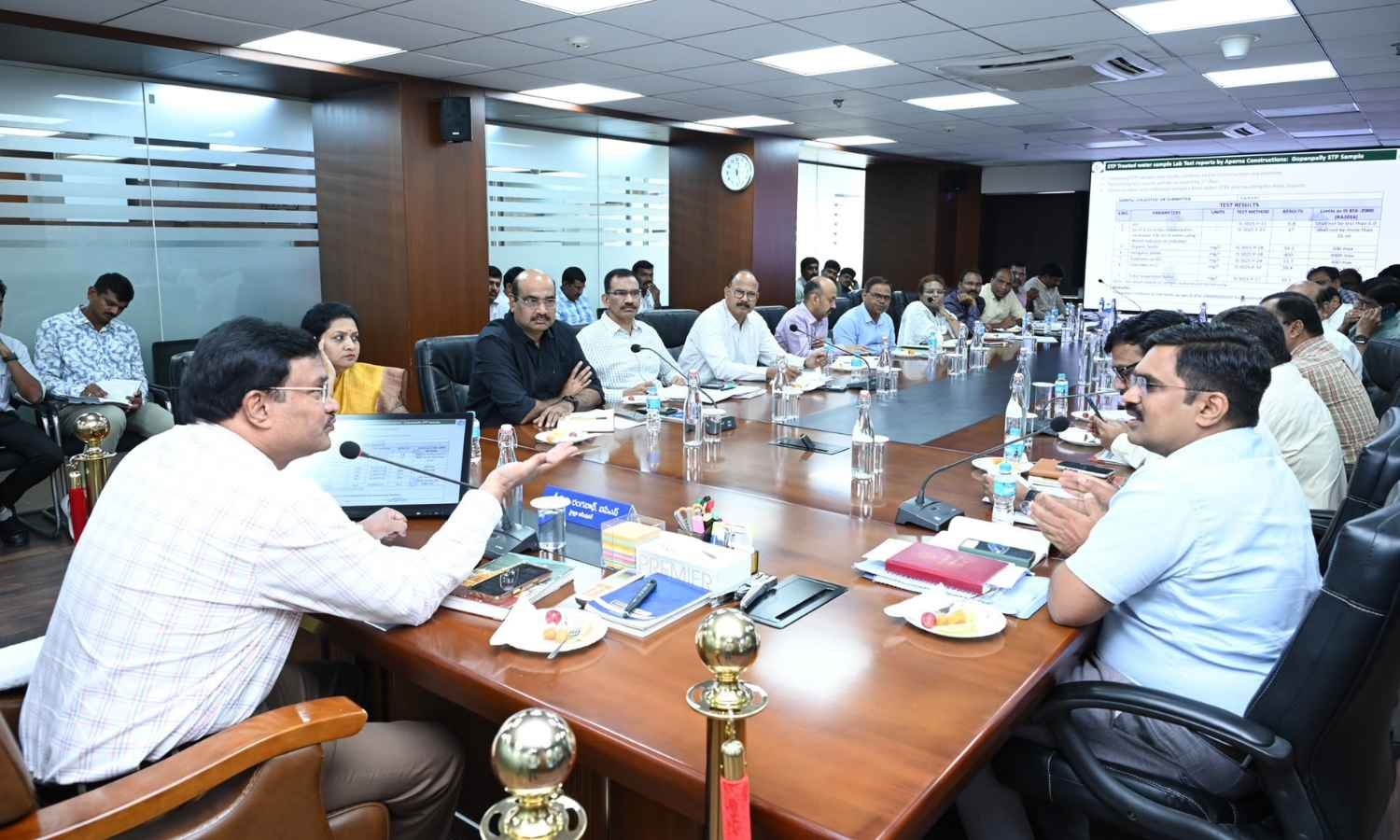
HYDRAA Commissioner A.V. Ranganath said the one-month window gives operators time to bring their plants up to the prescribed standards. After that, joint teams will check how the plants function and test the quality of the treated water. Facilities that break the norms will face action, he said.
The Hyderabad Metropolitan Water Supply and Sewerage Board (HMWSSB) and the municipal corporations will join HYDRAA in these inspections. The Telangana Pollution Control Board (TGPCB) will take part as well.
Ranganath announced the deadline after he met residents’ welfare associations, STP operators and officials of the partner agencies. His order follows an incident in Bachupally, where three workers recently died at an apartment complex. They inhaled toxic gas as they cleaned an STP tank there.
The move also follows concerns that sewage, either untreated or poorly treated, continues to reach the city’s lakes.
Private STP operators must run plants round the clock
Under the directive, every plant must work 24 hours a day instead of standing idle or running under capacity. In addition, each operator must register its plant’s details on HMWSSB’s platform.
Private STP operators have to reuse treated wastewater on the premises for non-drinking needs such as gardening and flushing. Surplus water must go to nearby users through mutual agreements or HMWSSB. Operators cannot waste it or release it into drains.
Every day, operators must log how much sewage flows in and how much treated water comes out. Electricity use and the volume of treated water reused must go into the same logs. Operators must then upload these records to HMWSSB every month.
Every STP must have its own electricity meter as well, so that monitoring of power use stays transparent. Apartment managements and gated communities remain accountable even when they hand over plant operations to private agencies.
The directive for private STP operators is part of a wider push to keep sewage out of lakes. It also aims to protect workers and make full use of treated water, given water scarcity and El Niño-related rainfall concerns.
Earlier this month, Ranganath inspected an STP near Nallagandla Lake. Preliminary tests there found that the quality of its treated water exceeded statutory limits. Following the tests, he ordered the plant to run at full capacity and reuse all its treated water.