
Hyderabad Ramadan fashion trends shifted toward comfort and modest wear

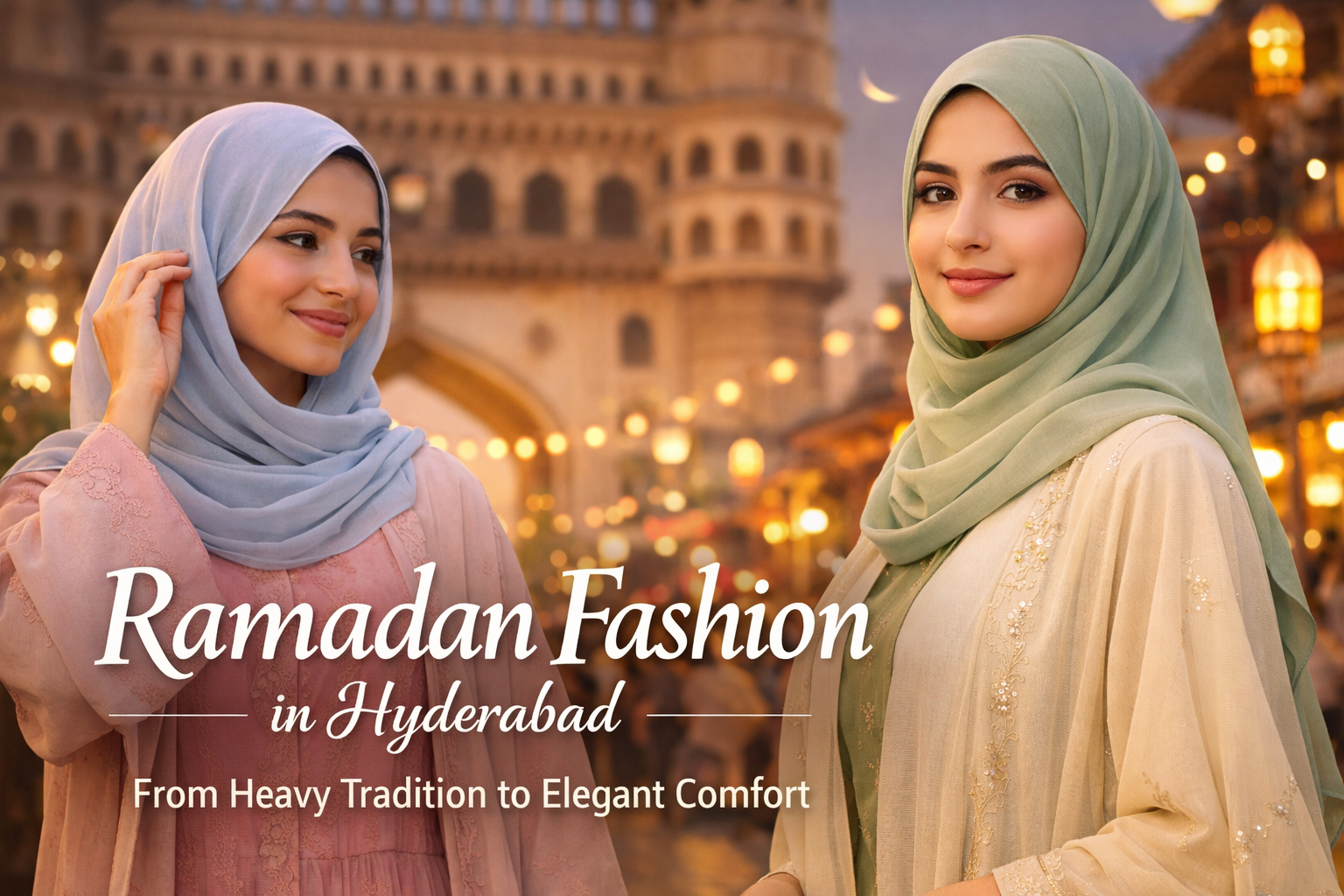
Hyderabad: The Hyderabad Ramadan fashion trends moved away from heavy traditional outfits and toward lighter, breathable and modest clothing, reflecting changes in climate, consumer behaviour and styling preferences across the city.
The shift marked a clear change in Hyderabad’s Ramadan fashion market. Heavy zari work, thick silks and weighty festive garments gave way to softer fabrics, pastel shades and practical silhouettes. The change did not emerge as a passing fad. Instead, it followed rising heat, the spread of global modest fashion and a wider preference for comfort with dignity.
The transition also showed how Hyderabad’s old cultural codes adapted to new realities. The city retained its emphasis on refinement and decorum during Ramadan. However, shoppers increasingly defined elegance through simplicity, ease and functionality rather than through visual heaviness alone.
Hyderabad Ramadan fashion trends remained rooted in Asaf Jahi heritage
Hyderabad’s fashion history stayed closely tied to the Asaf Jahi period, when clothing signalled status, etiquette and social standing. During Ramadan and festive occasions, garments such as the khara dupatta, kali-dar kurtas and ghararas remained part of the city’s traditional vocabulary.
Earlier versions of these outfits used pure silk, Banarasi brocade and metallic threadwork. They often carried substantial weight and demanded effort from the wearer. Over time, the city preserved these forms but changed their execution.
That adaptation shaped the current Hyderabad Ramadan fashion trends. Fashion observers in the source said Hyderabadi tehzeeb still guided clothing choices. Yet the idea of refinement shifted from heaviness to restraint, balance and poise. The growing demand for unstitched dress materials also reflected this change, because buyers wanted more control over cuts, fabric weight and finishing.
Hyderabad Ramadan fashion trends changed under heat pressure
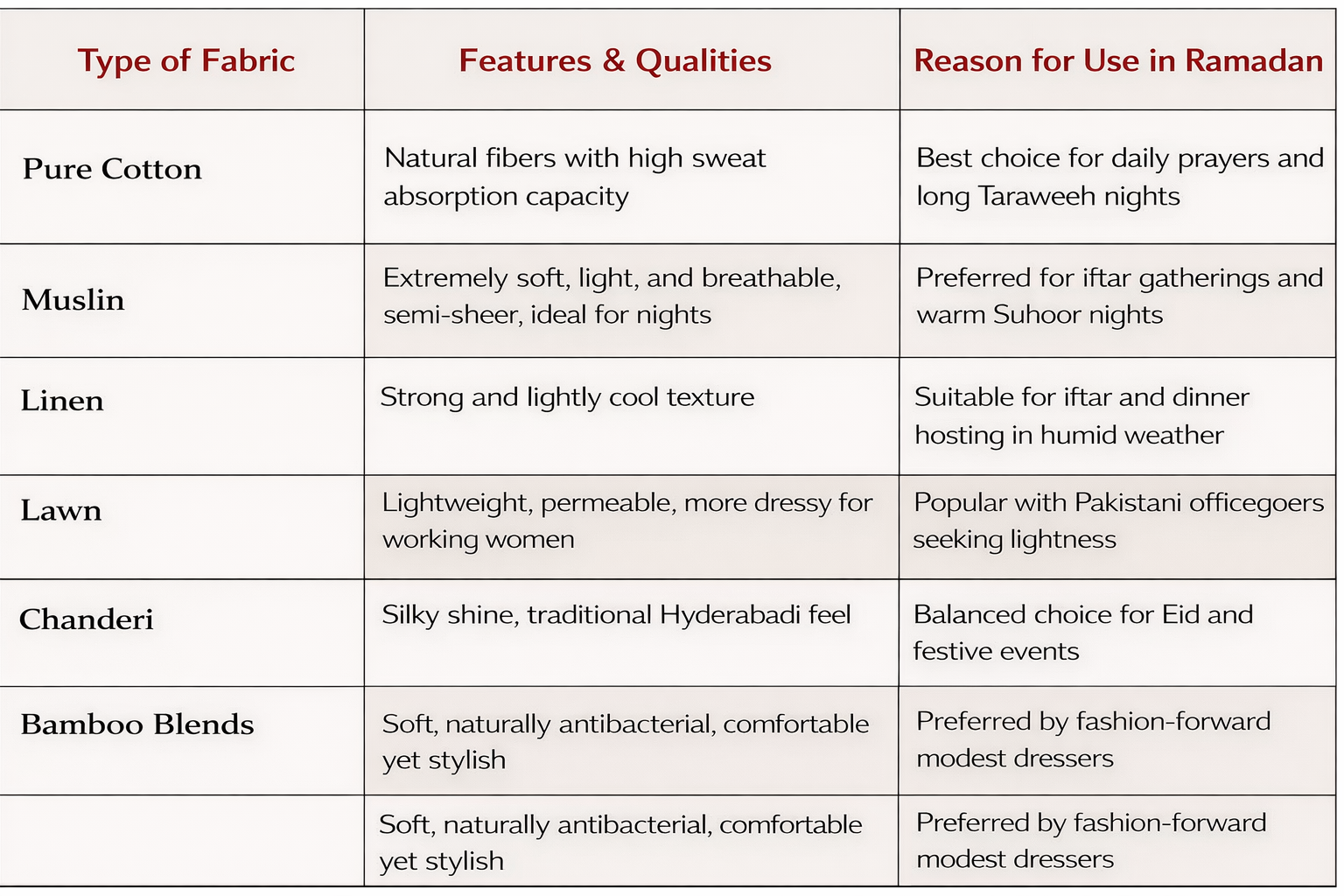
Climate played a major role in the transformation. In Hyderabad and across Telangana, Ramadan now coincided with the start of warmer months, especially February and March. During this period, temperatures climbed to between 35 and 40 degrees Celsius.
In that weather, heavy silk and velvet became uncomfortable and, in some cases, physically difficult to wear for long periods. The source said this made breathable fabrics a practical need rather than a luxury.
As a result, cotton, muslin and linen moved to the front of the market. Designers and textile sellers increasingly highlighted airflow, softness and ease of movement. These qualities suited long days of fasting, evening outings and repeated prayers. Therefore, Hyderabad Ramadan fashion trends aligned comfort directly with seasonal reality.
Pastel colours reshaped Hyderabad Ramadan fashion trends
Colour choices also changed sharply. Traditionally, festive dressing in Hyderabad favoured deep maroon, emerald green and rich gold. These shades carried a strong ceremonial appeal and stayed linked to older festive styling.
However, between 2024 and 2026, pastel shades gained clear momentum in the market. Lighter tones such as lavender, mint green, powder blue and dusty rose appeared more often in Ramadan collections. The source connected this to both psychology and climate.
Lighter colours looked softer on the eye and also reduced the visual impression of heat. They reflected light rather than absorbing it, which made them more suitable for warm conditions. Designers in Hyderabad reportedly introduced collections in soft shades described through nature-linked names such as mushroom, rose and buttercup.
The same shift appeared in modest wear retail. The source said brands and online sellers known for abayas and kaftans recorded up to a 50 percent rise in demand for pastel tones over black in some categories. This showed that Hyderabad Ramadan fashion trends had begun to treat modest dressing as expressive, seasonal and contemporary.
Modest silhouettes led Hyderabad Ramadan fashion trends
The city’s Ramadan wardrobe also changed through the broader rise of modest fashion. The concept no longer functioned only as a religious requirement. It also operated as a style choice that balanced coverage, trend awareness and urban identity.
In markets such as Shah Ali Banda, Tolichowki and nearby fashion hubs, simple black abayas no longer dominated on their own. Younger buyers turned toward kimono-style abayas, cape cuts and front-open jacket silhouettes. These designs used lighter fabrics such as nida and georgette, which worked better in Telangana’s heat.
Kaftans also gained ground because of their loose fit and ease during Iftar gatherings. At the same time, coordinated sets with matching tops and trousers became more visible. Designers gave these sets a festive finish through light embroidery and chikankari work, allowing them to move from casual wear into Eid and Ramadan social use.
This combination of coverage and ease became central to Hyderabad Ramadan fashion trends. Buyers wanted garments that looked polished but did not create strain during long evenings or religious activity.
Functional dressing defined Hyderabad Ramadan fashion trends
Functionality emerged as another major factor. Ramadan involved repeated movement for prayer, including ruku and sujood. That made tight pyjamas and churidars less practical for daily use.
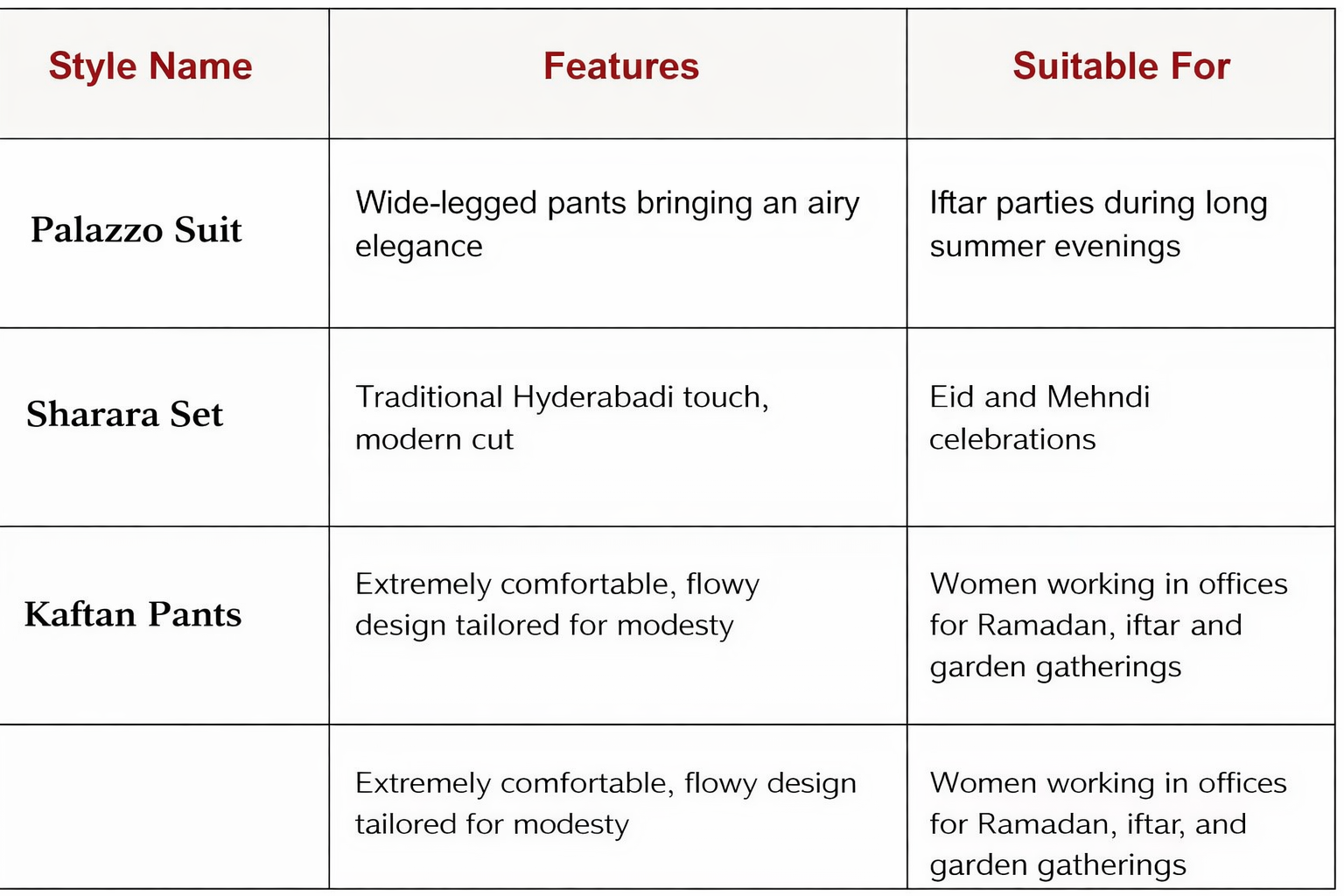
The source said women increasingly preferred wide-leg trousers, palazzos and loose shalwars. These garments allowed easier movement and supported a single outfit for shopping, social visits and prayer. That two-in-one preference reflected a wider shift in urban behaviour, where convenience carried greater value than before.
As a result, Hyderabad Ramadan fashion trends moved beyond appearance alone. Clothing had to work across multiple settings in one evening. It needed to remain modest, stay comfortable and still look presentable in public.
Markets drove Hyderabad Ramadan fashion trends in different ways
Ramadan shopping in Hyderabad unfolded across two broad zones. The Old City continued to serve tradition-led buyers, while the newer parts of the city catered more to branded, curated and designer-led demand.
Pathergatti and Madina remained major centres for unstitched fabrics and dress materials. Stores there offered options across price ranges, which helped the market serve both budget buyers and premium shoppers. The source also noted the strong presence of Pakistani lawn-inspired designs in these areas.
Abids presented a different mix by combining classic refinement with newer styling. Tolichowki and Mehdipatnam, meanwhile, saw the growth of shops selling imported abayas, attar and fashion linked to Pakistani labels and Gulf-influenced tastes. These changes showed how Hyderabad Ramadan fashion trends responded to both local tradition and transnational style flows.
Ramadan expos added another layer to the city’s retail map. Platforms such as festive bazaars and seasonal exhibitions brought together sellers from Hyderabad as well as from Delhi, Kashmir and Mumbai. These venues reduced the burden of traffic and crowding while giving buyers wider access under one roof.
Pakistani lawn influenced Hyderabad Ramadan fashion trends
The source described Pakistani lawn as one of the strongest outside influences on Hyderabad’s Ramadan market. Its appeal rested on a fine weave, delicate embroidery and digital prints that matched the city’s new demand for light yet festive clothing.
Television dramas and streaming content also shaped this demand. Outfits worn by actors became reference points for local shoppers looking for similar cuts and prints. Even when direct trade faced obstacles, sellers sourced comparable stock through Dubai routes or through wholesalers in Delhi and Surat who reproduced the same design language.
These suits ranged from about Rs 1,500 to Rs 15,000, according to the source. That wide band expanded their reach across income groups and helped embed them firmly within Hyderabad Ramadan fashion trends.
Khara dupatta returned in lighter form
The khara dupatta remained Hyderabad’s most recognisable heritage garment. While once associated mainly with weddings, it also returned during Ramadan gatherings and Eid events in updated forms.
Traditionally, the garment extended to around six metres and required a specific drape. Its earlier versions were often heavy and difficult to manage. Designers later reworked it with net, tissue and chiffon to reduce weight while preserving its ceremonial appearance.
They also replaced dense zardozi with lighter embellishments such as gotta patti and smaller sequinned work. This kept the regal look intact but made the outfit easier to wear. The source said public figures such as Sania Mirza and Soha Ali Khan helped renew interest in the style among younger buyers. That revival showed that Hyderabad Ramadan fashion trends did not reject heritage. Instead, they edited heritage for present-day use.
Hyderabad Ramadan fashion trends widened economic impact
The Ramadan fashion trade contributed significantly to Hyderabad’s seasonal economy. The source said the sector added billions of rupees to Telangana’s wider market activity. Rising female workforce participation and the influence of social media widened this consumer base further.
Online shopping and digital discovery increased the speed with which new trends spread. Buyers no longer depended only on neighbourhood markets or tailors. They could compare designs, fabrics and colour palettes across sellers before making a purchase.
The source also said fashion was expected to become more sustainable and personalised by 2026. It pointed to possible growth in eco-friendly fabrics such as organic cotton and bamboo fibre. It also anticipated stronger demand for minimalist design and more digital customisation, allowing buyers to select colours and details remotely.
That shift created both pressure and opportunity for Hyderabad’s traditional tailoring sector. Digital ordering could challenge older ways of doing business, yet it could also expand access to custom work if local artisans adapted.
The overall picture showed that Hyderabad Ramadan fashion trends had moved from display toward ease, from weight toward wearability and from rigid formality toward functional elegance. Heavy festive clothing did not disappear completely, but it moved closer to heritage and special occasions. In everyday Ramadan use, breathable fabrics, soft colours and modest silhouettes took its place.
The change reflected several forces at once. Heat pushed buyers toward cotton, muslin and linen. Consumer psychology favoured calm and physically comfortable dressing. Global modest fashion opened new design possibilities. Social media and online retail widened access to these choices.
In that sense, the evolution of Ramadan dressing in Hyderabad acted as a bridge between spirituality and modern life. It allowed worship, public presence and cultural continuity to exist in the same wardrobe. The source also stressed that clothing during Ramadan was not chosen only to look attractive. It was also selected to reflect respect for tradition, faith and Hyderabadi cultural etiquette. That remained true for both younger and older residents as the city’s fashion language continued to change.