

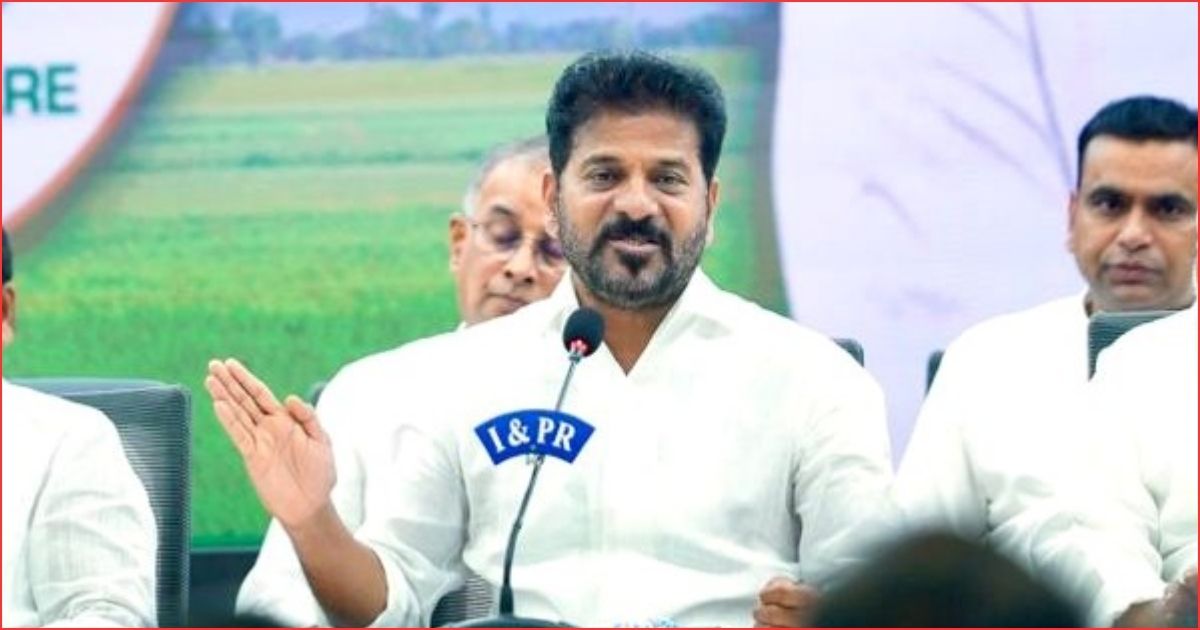
Hyderabad: Chief Minister A. Revanth Reddy proposed a Hybrid delimitation model for reorganising parliamentary constituencies and called for a national debate involving Parliament, state Assemblies and political parties. He said an expert committee should examine the issue before any decision.
Addressing a press conference at the Secretariat on Monday, Revanth Reddy criticised Narendra Modi for linking delimitation with the Women’s Reservation Bill. He said both issues were distinct and should be discussed separately.
He proposed that of the 272 additional seats under consideration, 136 seats should be allocated on a pro-rata population basis. The remaining 136 seats, he said, should be distributed based on Gross State Domestic Product. He added that priority should go to states contributing more to national output. According to him, the Hybrid delimitation model would ensure balanced representation.
Hybrid delimitation model raises seat disparity concerns
The Chief Minister opposed the proposal for a 50 per cent increase in seats based purely on population. Revanth Reddy said such a move would harm national balance and federal structure.
He cited disparities between states to support his argument. Revanth Reddy said the current gap between Kerala, which has 20 seats, and Uttar Pradesh, which has 80 seats, stood at 60 seats. However, with a 50 per cent increase, the gap would rise to 90 seats.
He also said the difference between Telangana and Uttar Pradesh would widen to 94 seats. Southern states, which would collectively have 130 seats after the increase, would reach only 195 seats. In contrast, northern states would rise from 413 seats to 621 seats.
Revanth Reddy said the Hybrid delimitation model addressed these imbalances by factoring in economic contribution along with population.
Hybrid delimitation model flags southern states concerns
The Chief Minister raised concerns over declining population growth in southern states due to family planning. At the same time, he pointed to higher population growth in northern states.
He alleged that the Centre’s approach could reduce southern states to a politically weaker position. He also warned that smaller states like Delhi and Punjab could lose relevance.
Revanth said he would write to Chief Ministers of southern states and leaders of smaller states to seek support. He said the aim was to resist discrimination in the delimitation process.
Revanth Reddy also questioned the urgency shown by the Centre in calling a special Parliament session. Revanth Reddy alleged that the move created an impression that opposition parties were against women’s reservation.
Referring to the Women’s Reservation Bill, he said it should be implemented after the 2026 Census. Revanth Reddy added that reservations could then be applied in the 2029 Lok Sabha elections and Assembly polls.
He said the Congress had supported the Bill earlier. Revanth Reddy noted that 181 women could have been elected in 2024 if a 33 per cent quota had been implemented. He also recalled that the Bill had passed in the Rajya Sabha during Congress rule under Sonia Gandhi but did not become law due to lack of support.
The Chief Minister questioned why the Centre was proceeding with delimitation based on the 2011 Census instead of waiting for updated data. He reiterated that the Hybrid delimitation model offered a balanced and fair alternative.
Deputy Chief Minister Bhatti Vikramarka and several ministers and MPs attended the press conference.
దేశంలో నియోజకవర్గాల సీట్ల పెంపు, పునర్విభజన ప్రక్రియ జీఎస్డీపీ ఆధారిత హైబ్రీడ్ మోడల్లో జరగాలని ముఖ్యమంత్రి శ్రీ @revanth_anumula గారు డిమాండ్ చేశారు. “చట్టసభల్లో మహిళలకు 33 శాతం సీట్ల రిజర్వేషన్లను తక్షణమే అమలు చేయడానికి సంపూర్ణ మద్దతునిస్తాం. కానీ లోక్సభ, అసెంబ్లీ… pic.twitter.com/OclwBigLO2
— Telangana CMO (@TelanganaCMO) April 13, 2026