

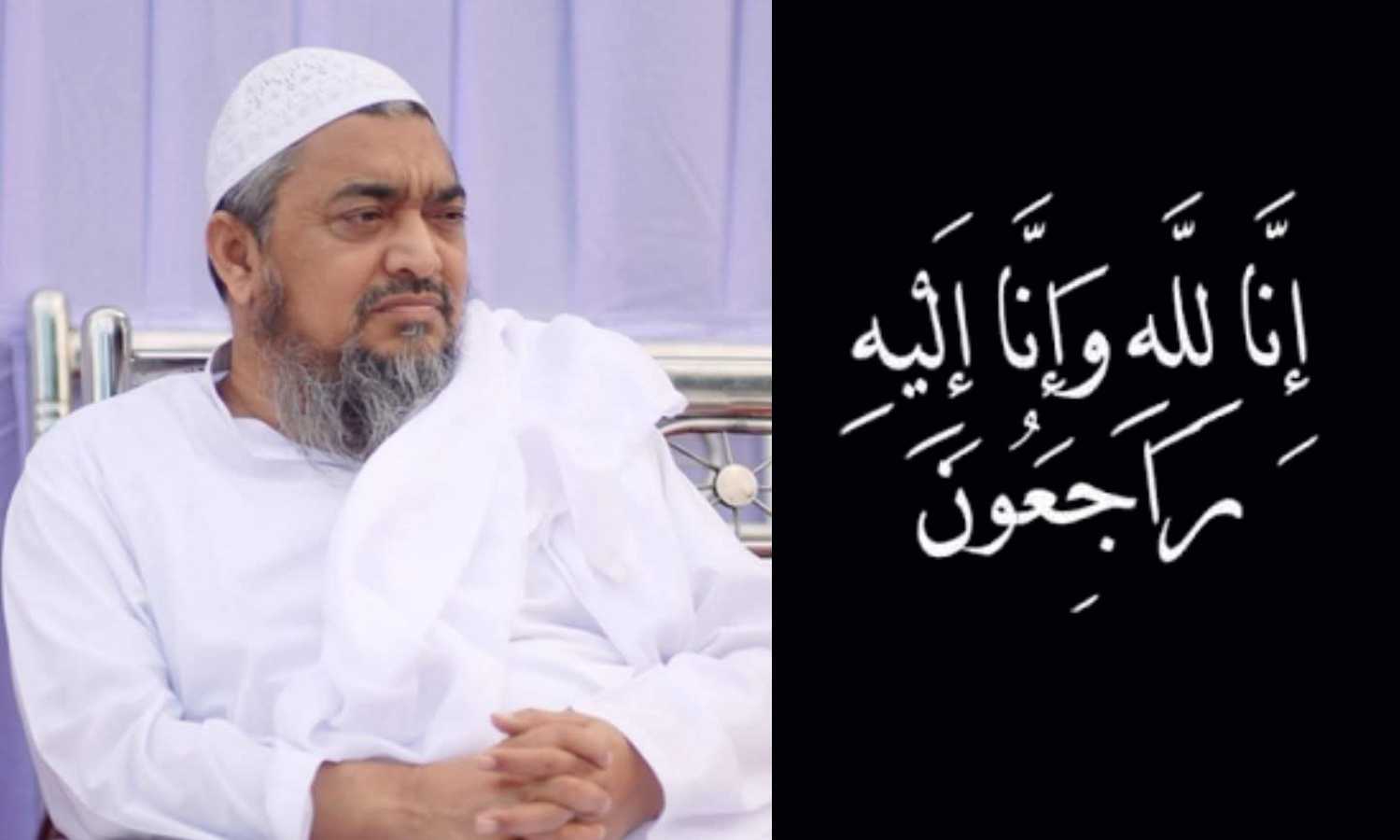
Hyderabad: Ghulam Mohammad Vastanvi, a leading Islamic scholar and educationist known for pioneering the integration of religious and modern education in India, passed away on Sunday at the age of 75. His demise has left a deep void in religious, academic and public circles, with tributes pouring in from across the country.
Vastanvi, often recognised as a reformist figure in traditional Islamic scholarship, founded the Jamia Islamia Ishaatul Uloom in Akkalkuwa, Maharashtra. Under his leadership, the institution evolved into a major centre of learning that not only imparted traditional Islamic education but also hosted India’s first minority-run medical college accredited by the Medical Council of India.
His career was defined by a commitment to modernising madrasa education. A brief stint in 2011 as Vice Chancellor (Mohtamim) of Darul Uloom Deoband further brought him into national prominence. Though his tenure was short-lived, it sparked significant debate on the role of modern education in Islamic seminaries.
Born on 1 June 1950 in Kosadi, Surat district of Gujarat, Vastanvi was later associated with the village of Vastan, from which he derived his surname. His early education began at Madrasa Qawwatul Islam in Kosadi, where he memorised the Quran. He pursued further studies at Madrasa Shamsul Uloom in Baroda, and in 1964, enrolled in Darul Uloom Falah Darain in Tadkeshwar, where he studied for eight years and completed his traditional Islamic studies by early 1972.
He later joined Mazahir Uloom in Saharanpur, Uttar Pradesh, and graduated in 1973 after completing the Daur-e-Hadith programme, including a direct study of Sahih al-Bukhari under the notable scholar Mohammad Yunus Jawnpuri. Alongside his religious education, he also earned an MBA, reflecting his commitment to administrative excellence.
Throughout his student years, Vastanvi maintained spiritual guidance under renowned scholars. He first aligned with Muhammad Zakariya Kandhlawi in 1970, continuing this connection until the latter’s death in 1982. Subsequently, he received authorisation in Sufi disciplines from Syed Siddiq Ahmad Bandwi and spiritual guidance from Mohammad Yunus Jawnpuri.
After a short teaching assignment in Bodhan, Surat, he began a longer tenure at Darul Uloom Kantharia in Bharuch district, where he taught various levels of Persian and Arabic texts. But his most enduring legacy began in 1979, when he established Jamia Islamia Ishaatul Uloom in Akkalkuwa.
Starting with just six students and one teacher, the institution has grown exponentially. It now offers programmes ranging from primary education to professional degrees in engineering, pharmacy, and medicine, alongside courses in IT, office administration, tailoring, and software development. It stands as a model for harmonising religious instruction with contemporary professional training.
Apart from his pioneering work in Akkalkuwa, Vastanvi was instrumental in founding several educational and charitable institutions across India. He played an active role in managing and supporting institutions nationwide, ensuring access to both Islamic and modern education for underprivileged communities.
As tributes continue to pour in, Ghulam Mohammad Vastanvi is remembered not just for his scholarship but for transforming the landscape of Muslim education in India. His contributions are likely to be felt for generations.