

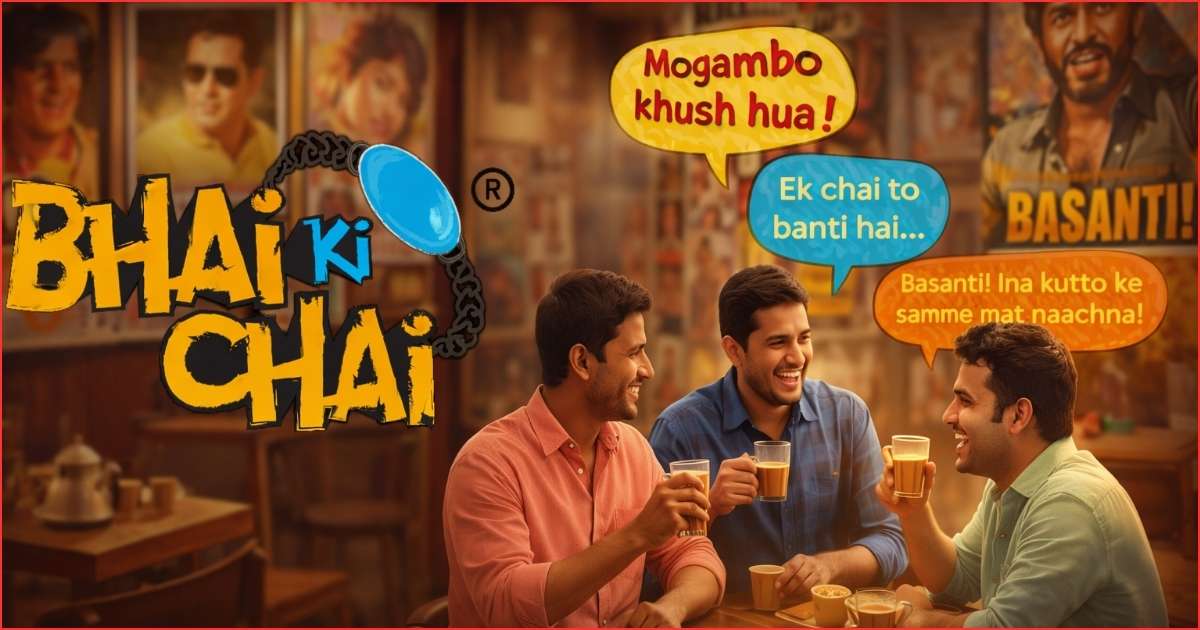
HYDERABAD: At BHAI ki CHAI , Bollywood is not treated as a decorative theme but as a familiar cultural language. The use of film references, dialogues and visual cues reflects an understanding of how cinema has shaped everyday conversation in India, much like chai itself. By combining the two, the brand created an atmosphere that feels instantly recognisable.
Bollywood occupies a unique space in Indian society. Its dialogues often become part of daily speech, quoted casually in offices, homes and public spaces. BHAI ki CHAI tapped into this shared habit by integrating cinema-inspired elements that customers already understand. The intent was not nostalgia alone, but familiarity – the same comfort that a regular cup of tea provides.
The brand’s interiors and visual identity subtly draw from popular cinema without overwhelming the experience. Film posters, lines and expressions serve as conversation starters rather than focal points. Customers often engage with these references instinctively, using them to break ice or continue discussions already in motion. In this way, Bollywood becomes a background language rather than a dominant feature.
Bollywood as a shared cultural language
This approach works because chai and cinema share a common social function. Both are experienced collectively, often accompanied by discussion and opinion. Watching a film or recalling a famous dialogue is rarely a solitary act, just as drinking chai is often a shared ritual. BHAI ki CHAI positioned itself at this intersection, allowing conversations to flow naturally.
Importantly, the brand avoided limiting itself to a specific era or genre of cinema. The references remain broad and inclusive, ensuring that customers across age groups can relate. Older patrons recognise familiar expressions from classic films, while younger visitors connect with more contemporary cultural cues. This balance prevents the brand from appearing dated or overly trend-driven.
Bollywood also offers emotional accessibility. Its language is informal, expressive and widely understood, mirroring the tone of chai stalls and neighbourhood cafés. By adopting this language, BHAI ki CHAI reinforced its positioning as approachable rather than aspirational. The café feels less like a curated space and more like an extension of everyday social life.
Another strength of this branding choice lies in its adaptability. As cinema continues to evolve, so can the references used within the brand. This allows BHAI ki CHAI to remain culturally relevant without changing its core identity. The language can refresh itself while the foundation remains familiar.
Chai and cinema as social experiences
Customers often respond to this approach subconsciously. They may not actively analyse the branding, but they recognise the comfort it provides. The environment feels lived-in, not staged. This subtlety ensures that the brand does not compete for attention, but instead complements the primary experience – tea and conversation.
In a café landscape where themes are often adopted for novelty, BHAI ki CHAI ’s use of Bollywood stands apart for its restraint. Cinema is used as a shared reference point rather than a spectacle. This restraint aligns with the brand’s broader philosophy of simplicity and repetition.
Ultimately, Bollywood works as a branding language for BHAI ki CHAI because it reflects how people already communicate. It supports the experience without distracting from it. Much like chai, it is familiar, widely understood and woven into daily life. Together, they create a space where customers feel comfortable staying a little longer, guided by a language they already speak.