

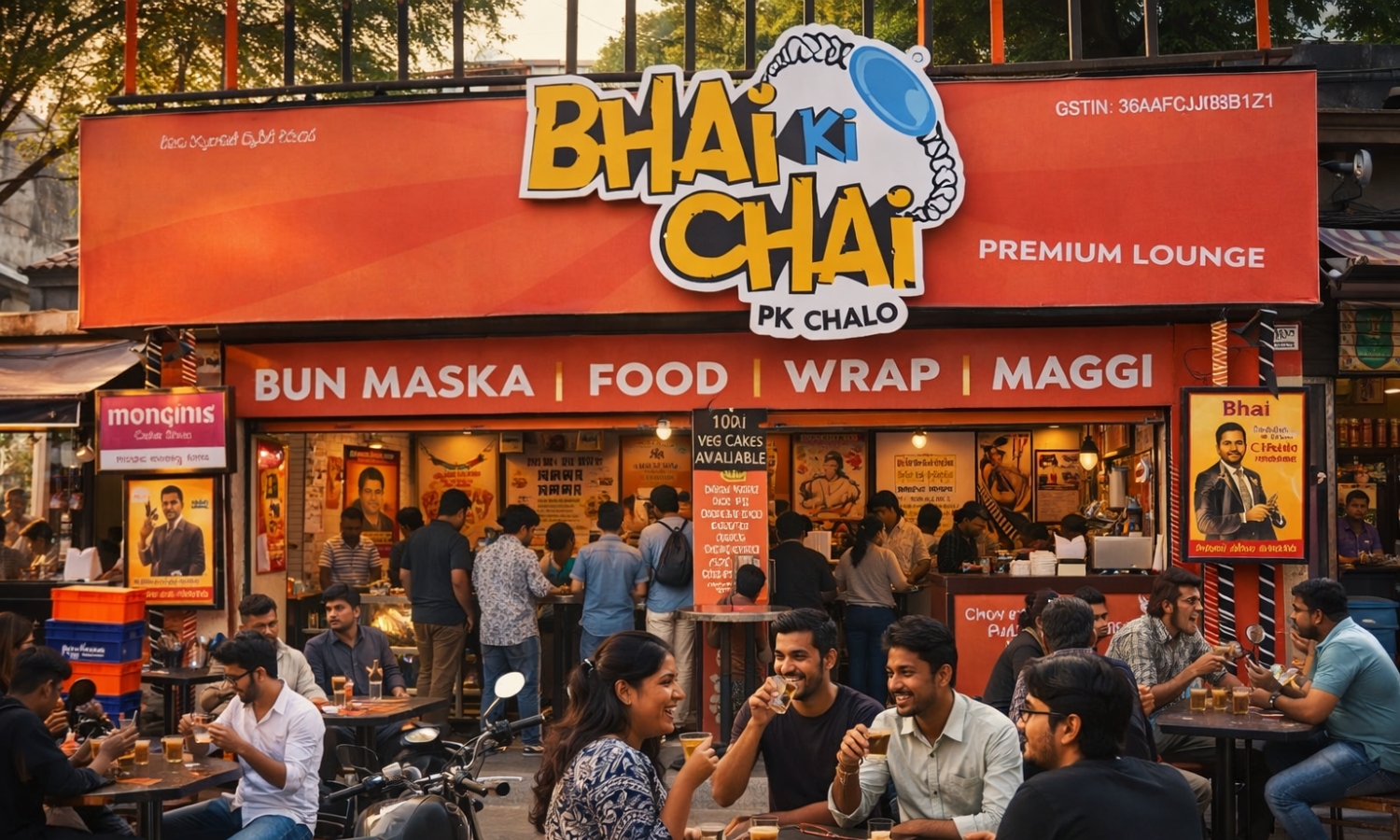
HYDERABAD: BHAI ki CHAI began its journey in 2017 with a simple idea rooted in everyday Indian life – that a cup of tea is rarely just about taste. It is about pause, conversation and familiarity. What started as a modest initiative in Hyderabad gradually evolved into a recognisable chai destination that blends popular culture with a deeply ingrained social habit.
In a city known for its layered food culture, BHAI ki CHAI did not attempt to reinvent tea. Instead, it focused on restoring its everyday relevance. The founders believed that chai already held emotional value across generations and communities, and that the task was to create a space where this value could be experienced collectively. This approach shaped the brand’s identity from the outset.
Unlike conventional cafés that emphasise exclusivity or novelty, BHAI ki CHAI positioned itself as accessible and familiar. The setting was informal, the menu remained focused, and the experience centred on lingering rather than quick consumption. Customers were encouraged to sit, talk and return – not for variety, but for consistency. Over time, this predictability became a strength.
The brand’s visual and cultural language leaned heavily on Bollywood references, tapping into a shared cultural memory that cuts across age groups. Film dialogues, posters and playful expressions were used not as decoration alone, but as conversation starters. This helped create an atmosphere where strangers could feel comfortable, and regulars could feel recognised.
BHAI ki CHAI Hyderabad and the everyday tea ritual
Chai, at BHAI ki CHAI, was treated as a daily ritual rather than a speciality product. The emphasis remained on balance – neither too strong nor too light – appealing to a wide range of preferences. This focus on taste neutrality allowed the brand to attract office-goers, students, shopkeepers and families alike. The tea became a common denominator in a diverse urban setting.
As the brand expanded to multiple locations across Hyderabad, including full cafés and compact kiosks, it retained its core philosophy. Each outlet adapted to its neighbourhood while maintaining a consistent identity. In busy commercial areas, the kiosks served as quick pause points. In residential or mixed zones, the cafés became informal meeting spaces. This flexibility enabled growth without dilution.
Another distinguishing factor was the emphasis on conversation over consumption. BHAI ki CHAI did not position itself as a destination for long menus or constant innovation. Instead, it relied on repetition and familiarity. Regular customers often returned not for something new, but for something dependable. In an era of fast-changing food trends, this constancy resonated strongly.
The brand also recognised that chai culture extends beyond physical spaces. By introducing packaged blends for home consumption, it allowed customers to recreate the experience in their own routines. This extension did not replace the café experience but complemented it, reinforcing the brand’s presence in everyday life.
BHAI ki CHAI ’s journey reflects a broader shift in urban food habits, where people seek spaces that offer comfort rather than spectacle. Its growth has been gradual, shaped by customer behaviour rather than aggressive marketing. Word-of-mouth, repeat visits and cultural familiarity played a larger role than advertising campaigns.
Nearly a decade after its inception, BHAI ki CHAI continues to occupy a distinct place in Hyderabad’s tea landscape. It stands as an example of how a simple product, when anchored in social understanding, can evolve into a shared habit. The brand’s story is less about scaling quickly and more about staying relevant – one cup, one conversation at a time.