
Asthma patients can fast safely with proper medical planning during Ramzan
Pulmonologist Dr Mohd Vaseem advises asthma patients to plan treatment before observing Roza

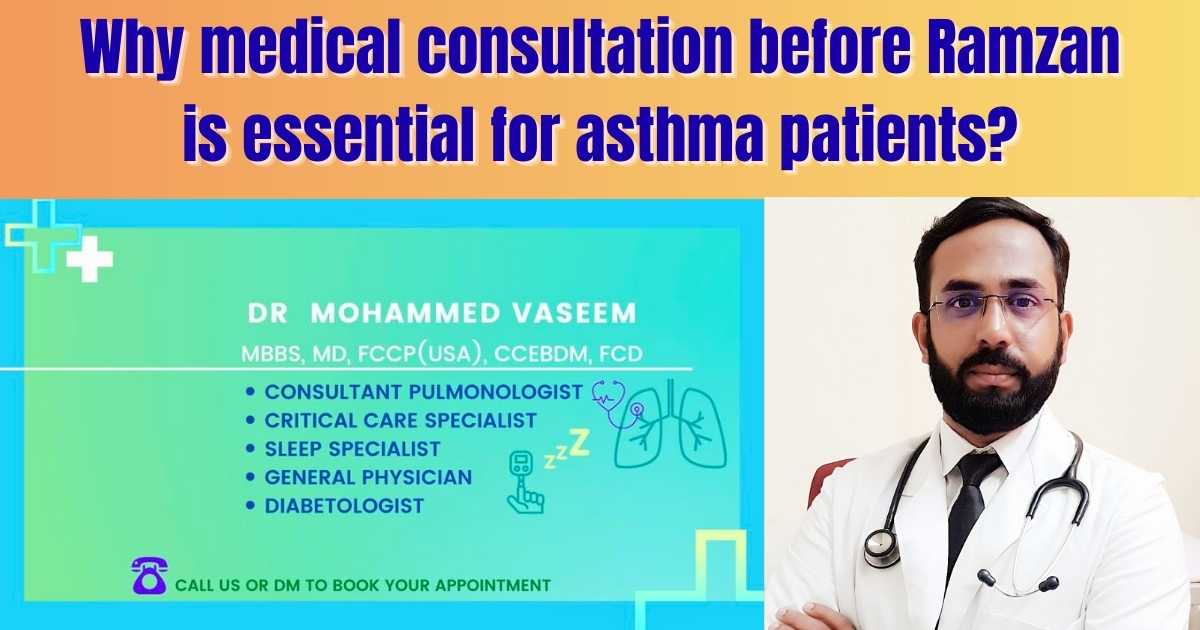
Hyderabad: As the holy month of Ramzan commenced, asthma patients often faced uncertainty about whether they could safely observe fasting. Senior pulmonologist Dr Mohd Vaseem said most asthma patients could fast without complications if their condition remained stable and they took medications as prescribed under medical supervision. He explained that fasting from dawn to sunset altered daily routines, hydration levels, sleep cycles and medication timing. These changes directly influenced respiratory health.
According to Dr Mohd Vaseem, patients whose asthma remained well controlled and who had not experienced recent severe attacks could usually observe Roza safely. However, those who frequently suffered from wheezing, persistent cough, breathlessness or repeated emergency episodes should consult their doctor before deciding to fast. Asthma severity differed from person to person. Doctors might need to adjust treatment plans before Ramzan to prevent avoidable complications.

Why medical consultation before Ramzan is essential?
Dr Mohd Vaseem said many patients worried about inhaler use during fasting hours. Inhalers deliver a measured dose of medication directly into the lungs. They help prevent serious asthma attacks. Skipping inhalers due to misconceptions can worsen symptoms and raise the risk of emergencies. He advised patients not to stop preventive or rescue inhalers without consulting a doctor. In many cases, doctors can adjust medication schedules. Patients can take long-acting inhalers during Sehri and Iftar to maintain control throughout the fasting period.
Managing dehydration and environmental triggers
Dr Mohd Vaseem noted that dehydration during prolonged fasting, especially in warm weather, could trigger respiratory discomfort. Reduced fluid intake can dry the airways and thicken secretions. This may aggravate coughing or breathing difficulty. He advised asthma patients to maintain adequate hydration between Iftar and Sehri. They should avoid excessive caffeinated beverages that increase fluid loss. They should also choose balanced meals instead of heavy fried food that may cause gastric reflux and worsen breathing symptoms. Adequate rest and structured sleep are equally important. Irregular sleep patterns and fatigue can trigger respiratory stress.
Ramzan evenings often involve social gatherings, cooking smoke, incense, traffic pollution and crowded spaces. Individuals sensitive to allergens or smoke should take precautions. Lung function may dip naturally late at night. Minimising exposure to dust and strong fragrances and maintaining a clean indoor environment can reduce flare-ups.
He emphasised that health must take priority. Patients who experienced severe breathlessness, chest tightness, dizziness or persistent wheezing during fasting should break their fast and seek immediate medical care. Continuing to fast despite worsening symptoms can lead to serious complications. Doctors generally do not recommend fasting for individuals with uncontrolled asthma or those recently hospitalised for acute respiratory distress.
Dr Mohd Vaseem advised asthma patients to schedule a pre-Ramzan consultation. Doctors can assess lung function, review medications and determine fitness for fasting. With proper evaluation and preventive planning, most patients can observe the holy month safely without compromising respiratory health. Awareness, timely medical advice and strict adherence to treatment remain key to ensuring that spiritual observance does not come at the cost of health.