
Supreme Court seeks Centre’s response in 7 days on Waqf Amendment Act, next hearing on May 5

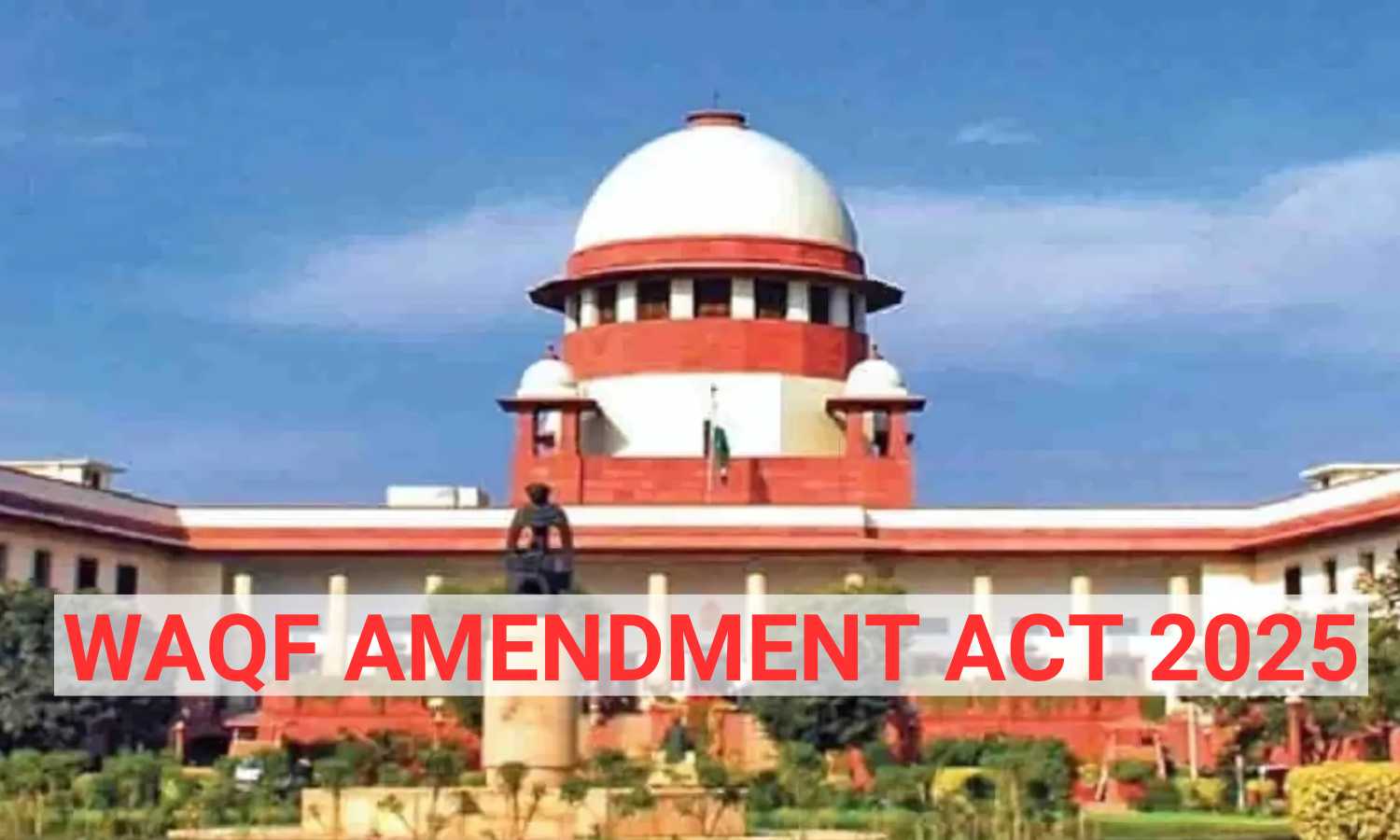
NEW DELHI: The Supreme Court on Thursday continued hearing challenges to the Waqf Amendment Act, with the bench allotting seven days to the Centre to submit its reply.
The hearing, which lasted about an hour, was conducted by a three-judge bench comprising Chief Justice of India Sanjiv Khanna, Justice P. V. Sanjay Kumar, and Justice K. V. Viswanathan.
The bench directed that only five petitions would be treated as lead cases among the 70 filed against the Act. Petitioners are required to identify these five within the set timeline, and all arguments will be heard based on the five principal points of objection. The court noted that reading 110 to 120 separate files was not feasible.
The Centre, represented by Solicitor General Tushar Mehta, assured the court that no appointments would be made to Waqf Boards and Councils under the 2025 Act until the next hearing. He also confirmed that no changes would be made to the status of existing Waqf properties – whether notified or gazetted – until further orders.
Petitioners, represented by senior advocates including Kapil Sibal, Rajeev Dhavan, Abhishek Manu Singhvi, and C. U. Singh, challenged the law on several constitutional grounds, alleging that it violates:
- Article 14 (equality before law)
- Article 15 (non-discrimination)
- Article 25 (freedom of religion)
- Article 26 (freedom to manage religious affairs)
- Article 29 (minority rights), and
- Article 300A (right to property)
A key contention is that the inclusion of non-Muslims in Waqf Boards and granting decision-making authority to district collectors represents excessive state interference in religious matters. They also argued that the Act discriminates against the Muslim community by imposing restrictions not applicable to other religious trusts.
The bench instructed that replies to the Centre’s response must be filed within five days. Additionally, writ petitions challenging the original 1995 Waqf Act and the 2013 amendments will be shown separately from the current batch concerning the 2025 amendment.
The next hearing is scheduled for May 5, 2025, at 2 PM, and will focus on procedural directions and interim reliefs, if any.