

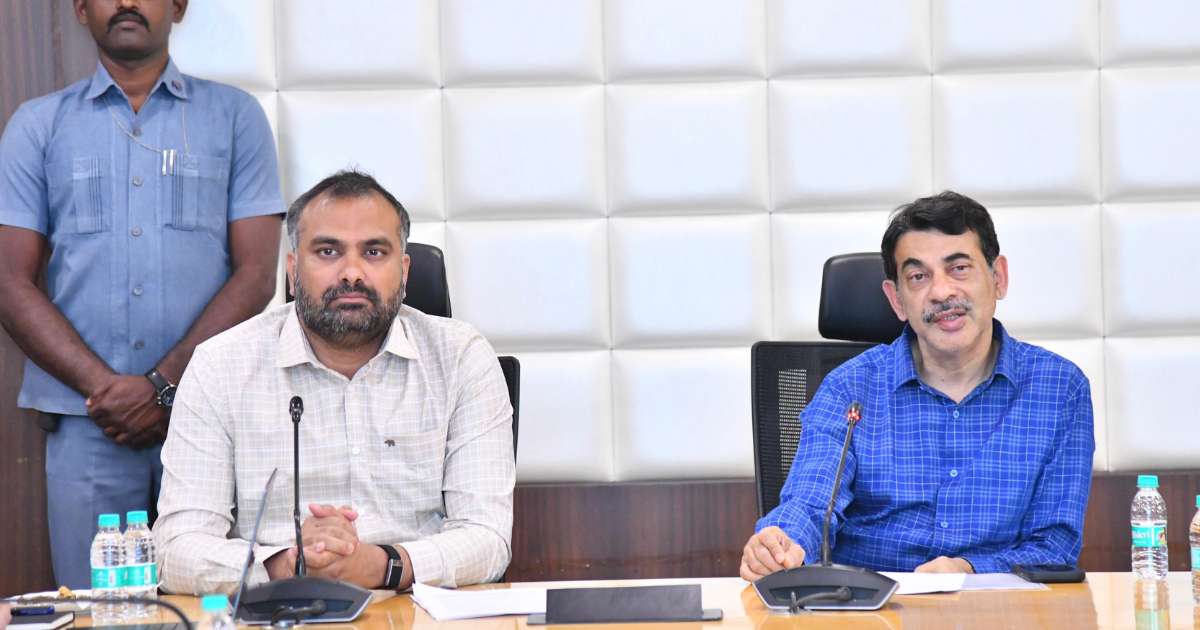
Hyderabad: Special Chief Secretary for Municipal Administration and Urban Development Jayesh Ranjan on Thursday directed the three newly formed municipal corporations under the CURE framework to deliver tri-corporation good governance with responsive civic services.
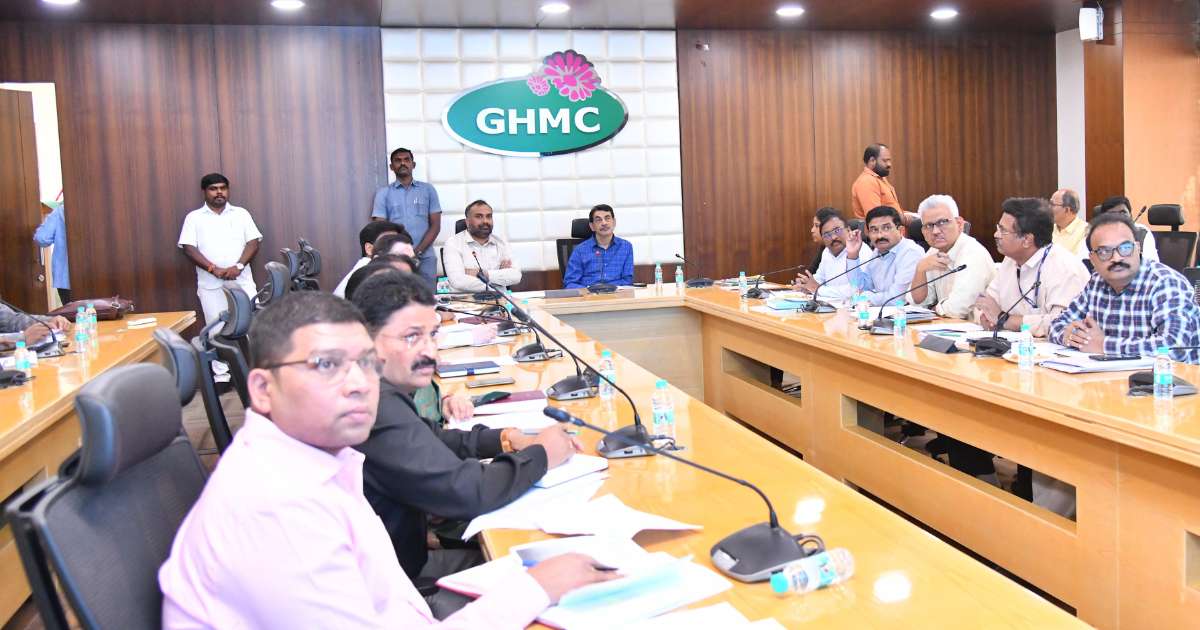
Chairing the first Standing Committee meeting after the reorganisation of the Greater Hyderabad Municipal Corporation, Ranjan urged officials to work with commitment and accountability. He said the restructuring created an opportunity to bring governance closer to citizens.
The committee cleared major proposals under the CURE plan. It constituted Cyberabad, Malkajgiri and Greater Hyderabad Municipal Corporations. It also retained Shamshabad, Rajendranagar, Charminar, Golconda, Khairatabad and Secunderabad zones within GHMC.
In addition, the panel approved staff distribution between Cyberabad and Malkajgiri corporations. It earmarked ₹500 crore each for the two new corporations to strengthen infrastructure and services.
Earlier, GHMC Commissioner R.V. Karnan presented detailed updates on sanitation and solid waste management. He outlined alternatives for dumping yards and measures to tackle waterlogging. He also reviewed infrastructure expansion, staff deployment and progress under SRDP, SNDP and H-City works.
Tri-corporation good governance targets six-month results
Ranjan directed senior officials to fast-track development works and improve service delivery. He insisted on visible improvements at circle and ward levels within six months.
Moreover, he described the next six months as a crucial working season. Therefore, he asked officials to accelerate SRDP, SNDP and H-City projects without delay. He also instructed teams to ensure pothole-free roads and functional street lighting across the city.
Under the trifurcation plan, the government formed a task force within the Centre for Good Governance. The panel will examine assets, liabilities and manpower distribution among the three corporations. It will study agreements and submit recommendations within 10 days.
Ranjan said municipal administration can deliver quick and visible outcomes. However, he noted that IT-enabled reforms may require more time. Still, he maintained that six months were sufficient to demonstrate meaningful progress.
Referring to Chief Minister A. Revanth Reddy’s emphasis on governance in the CURE region, he urged officials to leverage institutional support. He praised Karnan’s administrative experience, including municipal mergers and the current reorganisation.
Sanitation measures under tri-corporation good governance
To raise sanitation standards, the corporations will conduct competitions. Officials who eliminate garbage-vulnerable points in wards and circles will receive commendation certificates and financial incentives.
Additionally, the administration will honour corporators, NGOs and individuals who actively support sanitation drives. Ranjan said these measures will reinforce accountability and strengthen tri-corporation good governance.
Additional Commissioners K.A. Mangatayaru and K. Satyanarayana attended the meeting. Zonal Commissioners Anurag Jayanti, Priyanka Ala, N. Ravi Kiran, S. Srinivasa Reddy and G. Mukunda Reddy also participated. Senior officials from HMWS&SB and other departments joined the session.