

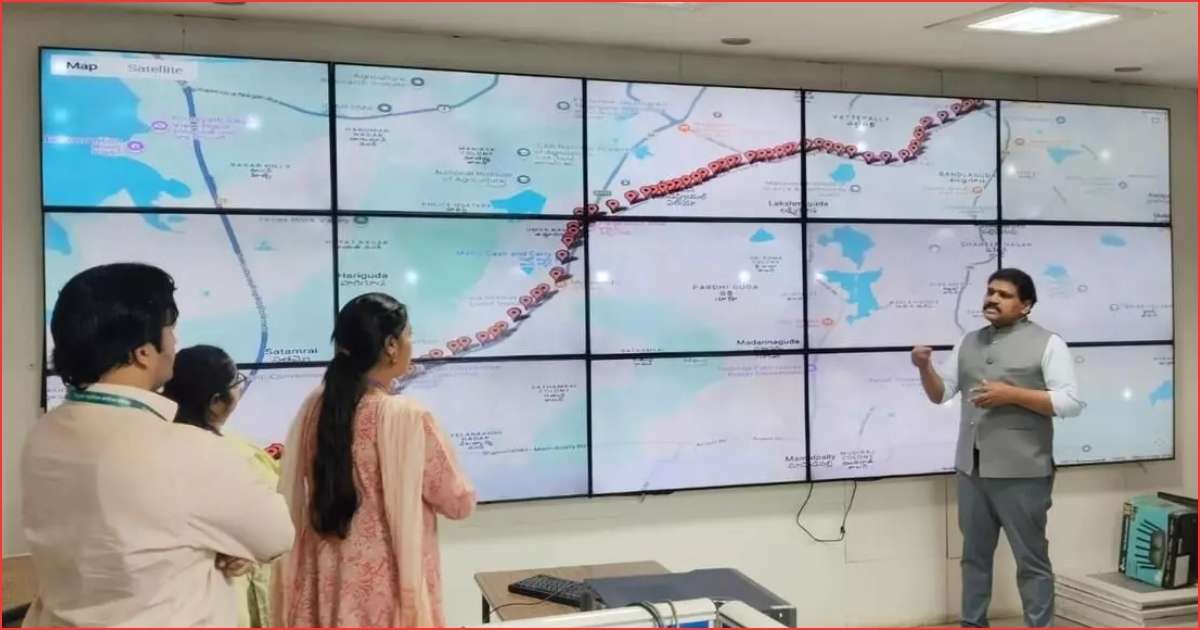
Hyderabad: Telangana set up a 24/7 LPG command centre to track gas supply across the state after global crude oil constraints and LPG disruptions affected distribution.
The Civil Supplies Department launched the facility on Saturday in Hyderabad. It used real-time GPS tracking to monitor LPG transportation, stock levels and district-wise supply. As a result, officials said the centre acted as the main control point for spotting bottlenecks and coordinating quick corrective action.
Civil Supplies Commissioner M. Stephen Raveendra oversaw the operations. Meanwhile, officials maintained continuous contact with district authorities to track logistics and verify stock availability on the ground.
The state government also directed Oil Marketing Companies to give officials immediate access to their fleet GPS tracking systems. Therefore, the department said it could monitor vehicle movement more closely and respond faster to any disruption in supply lines.
LPG command centre linked with oil firms and helpline
Representatives from Indian Oil Corporation Limited, Bharat Petroleum and Hindustan Petroleum were posted at the centre on a rotational basis. In addition, police personnel, industries department officials and distributor representatives were included in the system to support quick decisions and field-level response.
The toll-free helpline 1967 was also integrated with the LPG command centre. Because of that link, complaints and supply alerts could be routed directly to the control room for immediate review.
Officials said the system enabled round-the-clock tracking of LPG movement across Telangana. It also helped prevent diversion and transit delays. Further, they said the LPG command centre allowed faster intervention in districts facing local supply shortages.
The department designed the facility as a multi-agency control room rather than a standalone monitoring desk. Accordingly, it brought together supply officials, oil company representatives, enforcement personnel and distributors in one place. That arrangement was meant to reduce response time when stocks fell, transport slowed or delivery chains were disrupted in any district.
The government announced the move as it sought to keep household LPG supply uninterrupted during a period of pressure on fuel availability. For that reason, the control room focused on transport monitoring, stock verification and district-level coordination throughout the day and night.