
Telangana healthcare budget allocates Rs.13,679 crore to expand public health

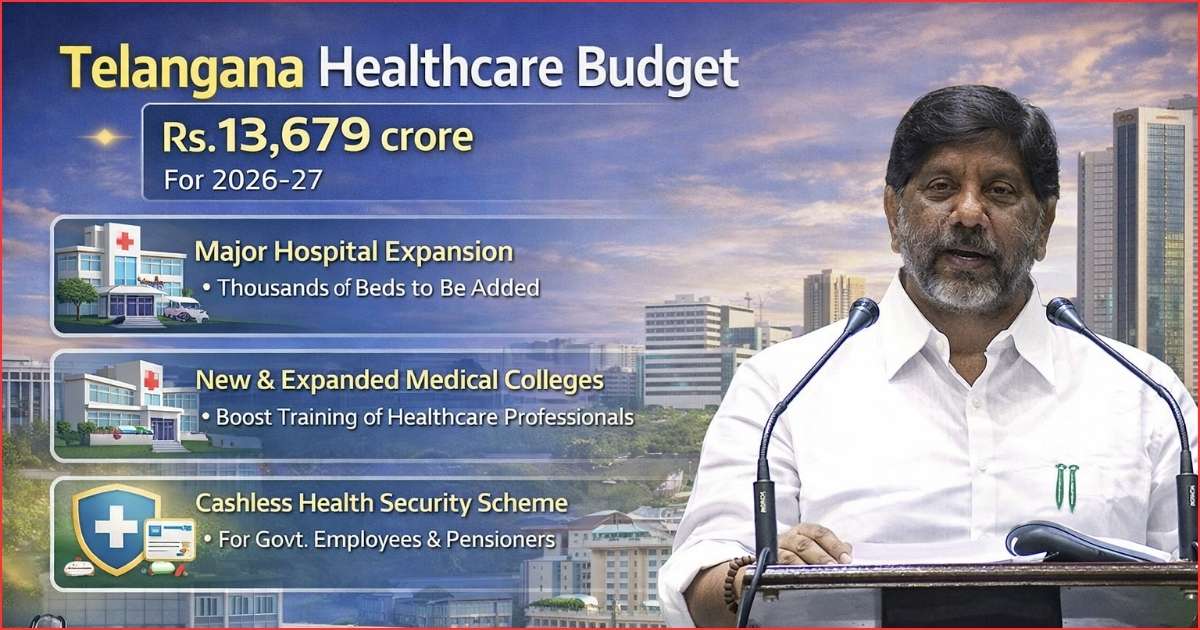
Hyderabad: The Telangana government allocated Rs.13,679 crore under the Telangana healthcare budget for 2026-27, outlining a broad plan to expand public health infrastructure and improve access to services.
Deputy Chief Minister and Finance Minister Bhatti Vikramarka Mallu, while presenting the budget speech in the Legislative Assembly on Friday, said the Telangana healthcare budget aimed to deliver quality healthcare to all sections of society. He stressed a focus on preventive care, maternal and child health, and management of chronic diseases. The government planned to strengthen both primary and tertiary care systems.
A major component of the Telangana healthcare budget was the expansion of hospital infrastructure. Officials said the number of beds in government hospitals would rise significantly by the end of 2026. This increase is expected to surpass national benchmarks for hospital capacity.
The government said new medical colleges and expansion of existing institutions would add thousands of beds. This move will improve access to specialised and tertiary care services across the State.
In addition, several specialised healthcare facilities are being established. These include cancer care centres, clinics for non-communicable diseases, and palliative care centres. Dedicated facilities for senior citizens and transgender persons are also part of the plan.
The Finance Minister also announced a public health profile system for all residents. Under this initiative, digital health records will be created for each individual. This system aims to improve tracking of health conditions and enable timely treatment.
Officials said the system is modelled on global practices. It is expected to strengthen preventive healthcare and improve service delivery. The government assured that strict safeguards would protect patient data and privacy.
Telangana healthcare budget expands insurance and medical education
The Telangana healthcare budget also focused on expanding medical education. The government plans to establish new medical colleges, nursing colleges, and paramedical institutions. This expansion aims to increase the availability of trained healthcare professionals.
At the same time, the budget emphasised a shift from treatment-based care to preventive healthcare. Programmes for early disease detection, health awareness, and nutrition are being strengthened. These efforts aim to reduce long-term health risks.
The government also introduced a cashless health security scheme. This scheme will cover government employees and pensioners. Nearly 23.5 lakh beneficiaries are expected to benefit from it.
The scheme will provide treatment for a wide range of diseases. Services will be available in both government and empanelled private hospitals. The Finance Minister said the move addressed long-standing demands from employees.
In addition, a comprehensive accident insurance scheme was announced. It will provide financial coverage in cases of accidental death or disability among employees and pensioners.
The Telangana healthcare budget also prioritised rural healthcare access. The government is strengthening district hospitals and expanding services in underserved areas. This step aims to ensure equitable healthcare delivery across regions.
Child health and nutrition programmes were also included in the plan. The government will focus on early detection of developmental issues. Treatment support will be provided to prevent long-term disabilities.
Overall, the Telangana healthcare budget outlined a multi-layered strategy. It combined infrastructure growth, service expansion, and preventive care initiatives. The government aims to build a healthcare system that is accessible, affordable, and future-ready.
The Finance Minister said these investments would help the State meet emerging health challenges. He added that the focus remains on improving outcomes and ensuring universal access to care.