

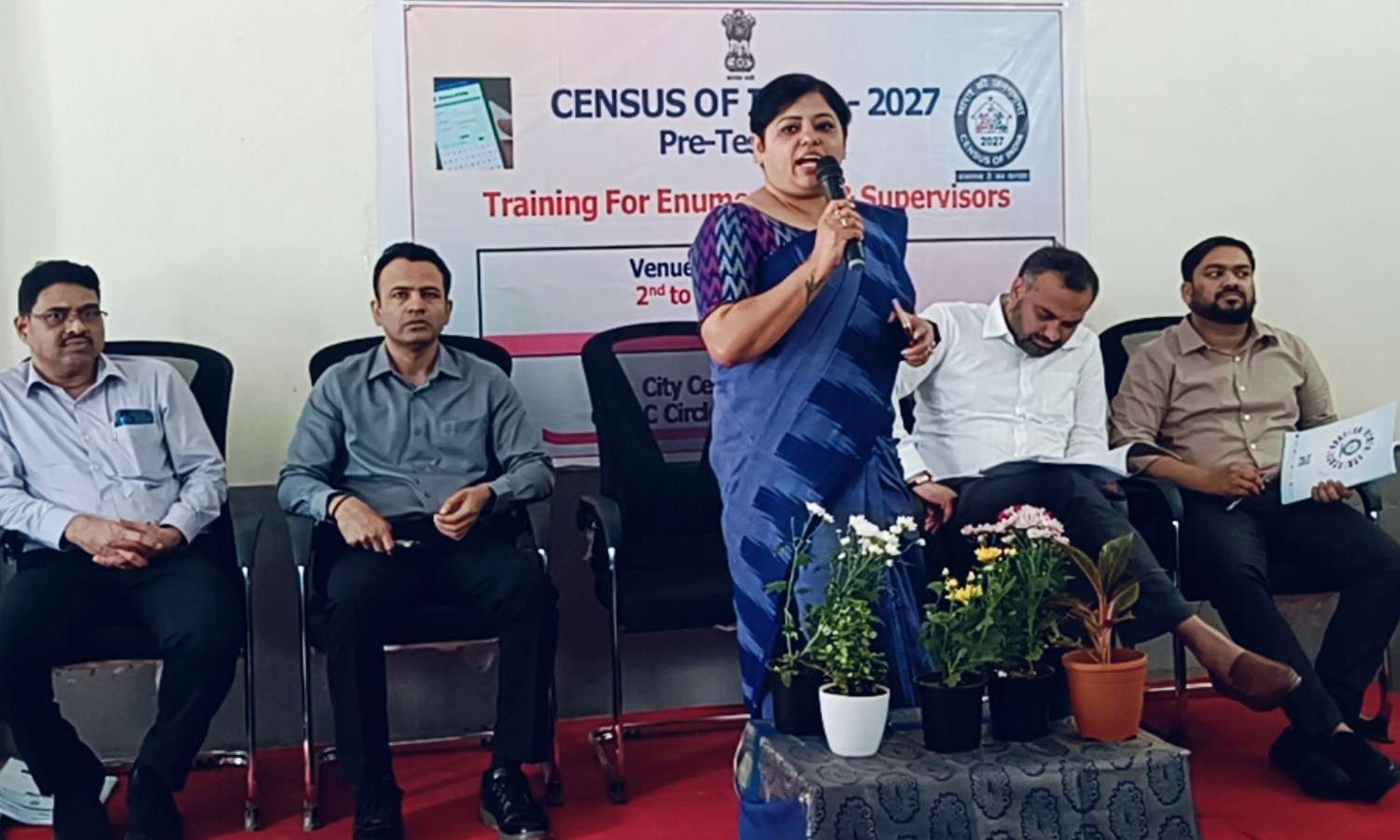
Hyderabad: State Census Director Bharati Holikeri on Sunday stressed that quality census data plays a vital role in shaping development policy. She was addressing field officials at a training session ahead of the Census of India 2027 Pre-Test in Ramachandrapuram Division.
Training begins for Census 2027 Pre-Test in Telangana
The three-day programme, held at Zilla Parishad High School in Patancheru, runs from November 2 to 4. It aims to equip Enumerators and Supervisors with the skills needed to conduct the pre-test scheduled from November 10 to 30.
Holikeri urged officials to maintain accuracy and discipline during data collection. “If Enumerators and Supervisors carry out their duties with commitment and precision, the final census will be accurate, credible, and truly representative,” she stated. She also highlighted that Census 2026–27 would be one of the world’s largest enumeration exercises.
GHMC Commissioner underscores need for realistic data
GHMC Commissioner R.V. Karnan addressed the urban-specific challenges in census operations. He noted that the collected data must reflect the true socio-economic status of households. “Reliable data from the Census will help frame development strategies grounded in local realities,” he said.
Karnan outlined timelines, methodologies, and data quality standards to be followed during the pre-test. GHMC Additional Commissioner Hemant Keshav Patel, Serilingampally Zonal Commissioner A. Hemant Sahadeva Rao, Census Deputy Director Srikanth, and Circle 22 Deputy Commissioner and Charge Officer Suresh were also present.
Pre-Test to cover urban and rural zones in Telangana
The Census of India – 2027 Pre-Test will take place in three selected areas:
- Urban: Ramachandrapuram Division–112 (GHMC limits)
- Rural: Thipparthy in Nalgonda district and Pinapaka in Bhadradri–Kothagudem district
For the urban division, GHMC Commissioner Karnan has been designated as Principal Census Officer. District Collectors will oversee the exercise in the rural areas.
Officials emphasised that this pre-test is crucial for fine-tuning data collection methods. They said the exercise would help deliver accurate and reliable information, supporting inclusive development and better governance.