

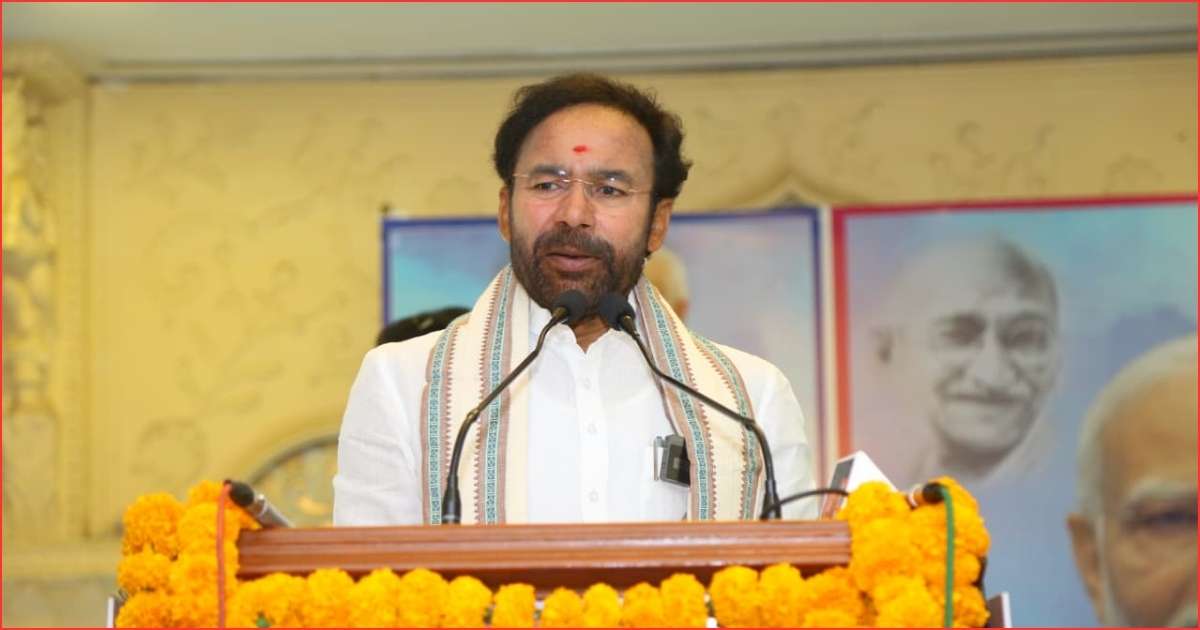
Hyderabad: India witnessed a historic transformation under Prime Minister Narendra Modi, Union Minister G. Kishan Reddy said on Saturday, asserting that the country had emerged as a global powerhouse in science and technology.
Speaking at the Vigyan Vaibhav 2026 Space Convention Project Expo at Gachibowli Indoor Stadium on National Science Day, he said the phrase ‘Vigyan Vaibhav’ symbolised the country’s intellectual strength and prosperity. The India historic transformation, he added, reflected sustained investments and policy reforms over the past decade.
Recalling the discovery of the Raman Effect by C. V. Raman, the minister said India’s scientific excellence had always remained independent of colonial rule. However, he noted that the last 11 years marked a decisive phase in strengthening innovation, research output and space missions.
India historic transformation driven by funding surge
Highlighting financial commitments, Kishan Reddy said allocations for science and technology rose from around Rs.2,700 crore in 2013 to Rs.41,000 crore in 2026. He described this as nearly a 1500% increase. Consequently, he said the India historic transformation gained momentum through enhanced research capacity and infrastructure.
He also stated that India’s bio-economy expanded from $10 billion in 2014 to $140 billion. More than 6,000 deep-tech startups were currently operational across sectors, he added.
Referring to key initiatives, the minister cited the Anusandhan National Research Foundation and the India AI Mission. Over Rs.10,000 crore was being invested under the AI mission, he said. Moreover, India ranked third globally in research publications and startups, fourth in PhDs awarded and sixth in patents.
India historic transformation aligned with Net Zero goal
Kishan Reddy said India aimed to achieve Net Zero emissions by 2070. Deep technology would play a crucial role in that journey, he added. Therefore, he stressed the importance of artificial intelligence, clean energy, green hydrogen and quantum technology in sustaining the India historic transformation.
He further noted that nearly 43% of STEM enrollments in India were women. This figure surpassed the global average, he said, calling it a positive shift in participation.
Emphasising the vision of “Developed India 2047,” the minister urged educational institutions to collaborate closely with industry. He also encouraged youth to pursue research aligned with national priorities to sustain the India historic transformation.