

Hyderabad: Hockey India launched a Hockey India plantation drive in partnership with Adoptrees during the Women’s Hockey World Cup Qualifiers 2026 to promote environmental sustainability through sport.
Under the initiative, key moments during matches will directly contribute to afforestation efforts. Organisers announced that 50 trees will be planted for every penalty corner and 100 trees will be planted for every goal scored during the tournament.
The initiative aims to convert on-field excitement into environmental action while encouraging large-scale plantation activities across India. The programme will cover multiple ecological regions, including Arunachal Pradesh, Nagaland, and Telangana.
On the opening day of the tournament, which featured four matches, the initiative recorded a strong start. Based on match statistics, Adoptrees committed to planting 3,250 trees as part of the first phase of the programme.
Hockey India plantation drive expands across three states
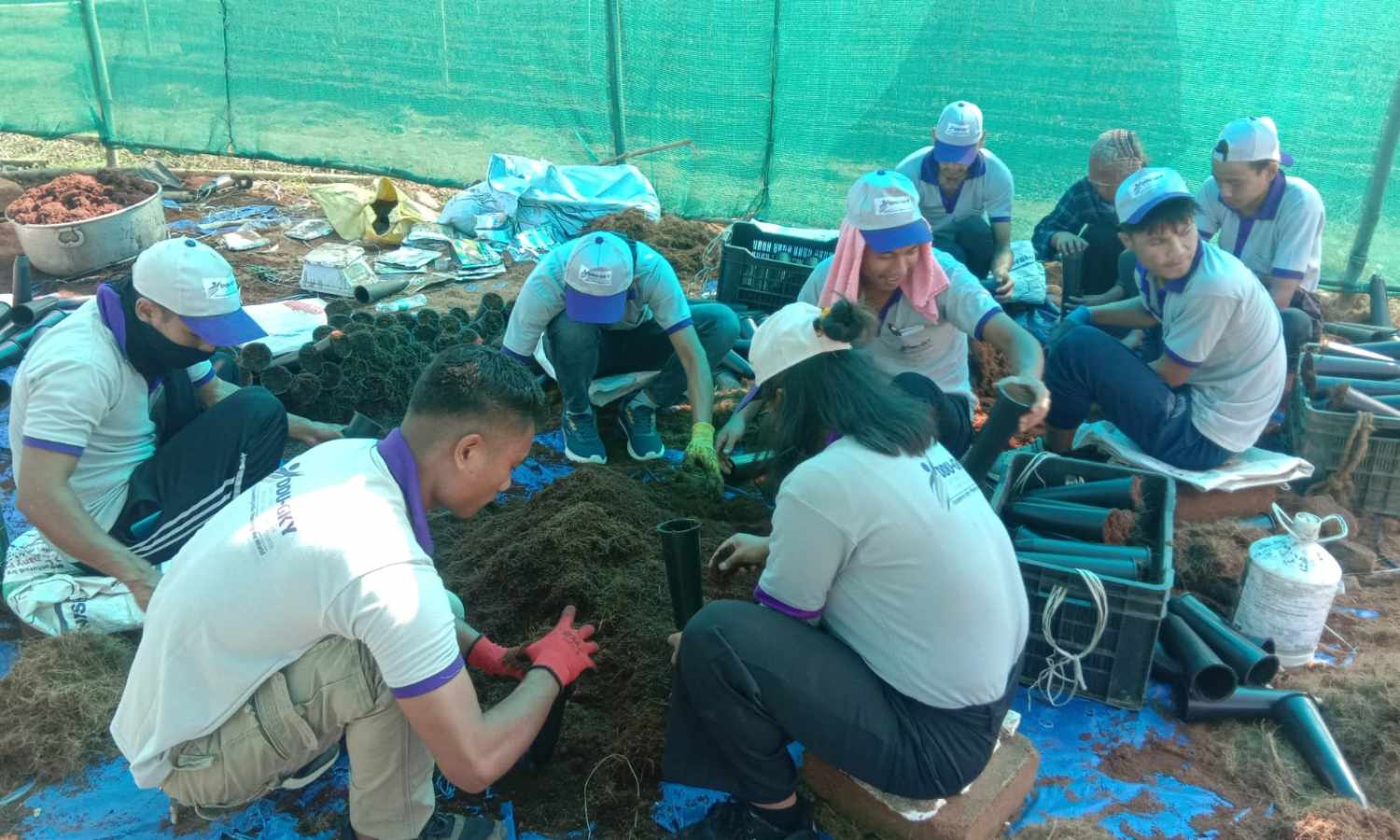
The plantation project is being implemented in three phases to maximise its environmental impact. The first phase has already begun in Nagaland, where plantation activities have started.
The second phase will take place in Arunachal Pradesh, expanding the initiative into another ecologically important region. Meanwhile, preparatory work is currently underway in Telangana. Officials are developing plantation slots and drainage systems before the saplings are planted.
The tree plantation linked to the tournament will continue throughout the event, which runs from March 8 to March 14. Officials said the plantations associated with the matches will be completed during the same period.
The initiative also aligns with the International Hockey Federation’s “Giving Back to Forests” campaign. Through this approach, the hockey community aims to support environmental restoration and climate responsibility.
Hockey India and Adoptrees said the project will focus on long-term sustainability rather than symbolic action. Instead of planting seeds, the programme will use well-grown saplings aged between one and two years to ensure a higher survival rate and stronger ecological impact.