

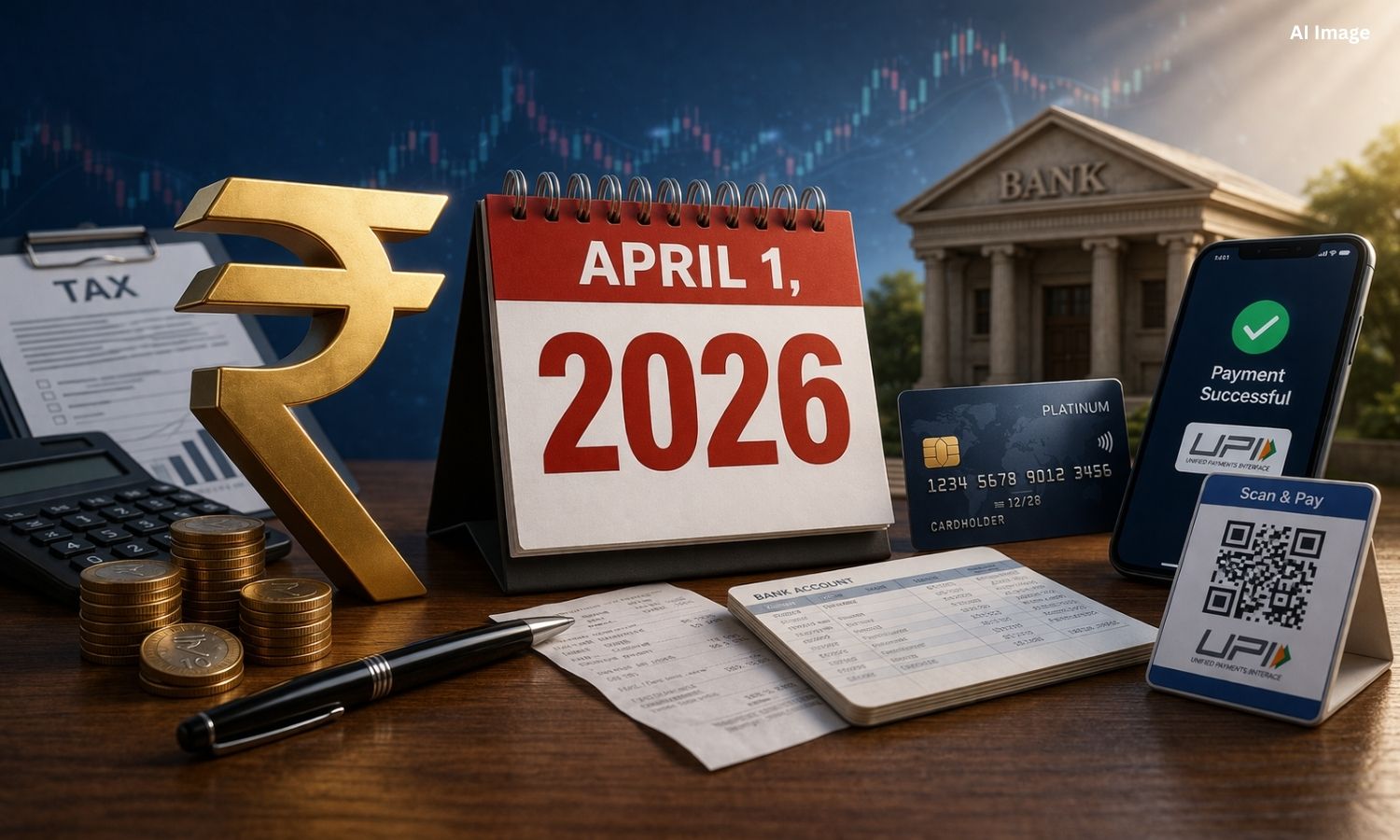
Hyderabad: Financial rule changes will come into effect from April 1, 2026, impacting taxpayers, banking customers and digital payment users across the country.
These Financial rule changes mark the beginning of the new financial year 2026-27. Therefore, individuals may need to review the updates to avoid penalties or additional charges.
Authorities advised taxpayers to file updated Income Tax Returns if they missed reporting income or applied incorrect tax rates. However, delayed filing may attract additional tax, penalties and scrutiny.
Financial rule changes affect tax, banking and payments
PAN card rules will also change from April 1. Applicants will no longer be able to apply using only Aadhaar, and additional documents will be required.
Officials said names on PAN cards will match Aadhaar records. Therefore, applicants should verify Aadhaar details before applying.
SBI Card revised its reward points redemption policy. As a result, customers may see changes in how they convert reward points into statement credit.
HDFC Bank announced updates to lending rates, fixed deposit rates, ATM rules and locker charges. Some changes have already taken effect, while others will begin from April 1.
The National Highways Authority of India increased FASTag annual pass fees from ₹3,000 to ₹3,075 for 2026-27. Consequently, users will incur higher costs for annual passes.
RuPay Platinum debit cardholders will no longer get automatic lounge access. Instead, banks will provide access based on spending criteria.
Banks, including HDFC, PNB and Bandhan Bank, revised ATM withdrawal rules and charges. Therefore, customers may face limits and additional fees.
The RBI also mandated two-factor authentication for digital payments. As a result, transactions will require OTP along with another authentication method.
Officials said these Financial rule changes aimed to strengthen compliance, improve security and promote digital transactions. They advised customers to stay informed to avoid inconvenience.