

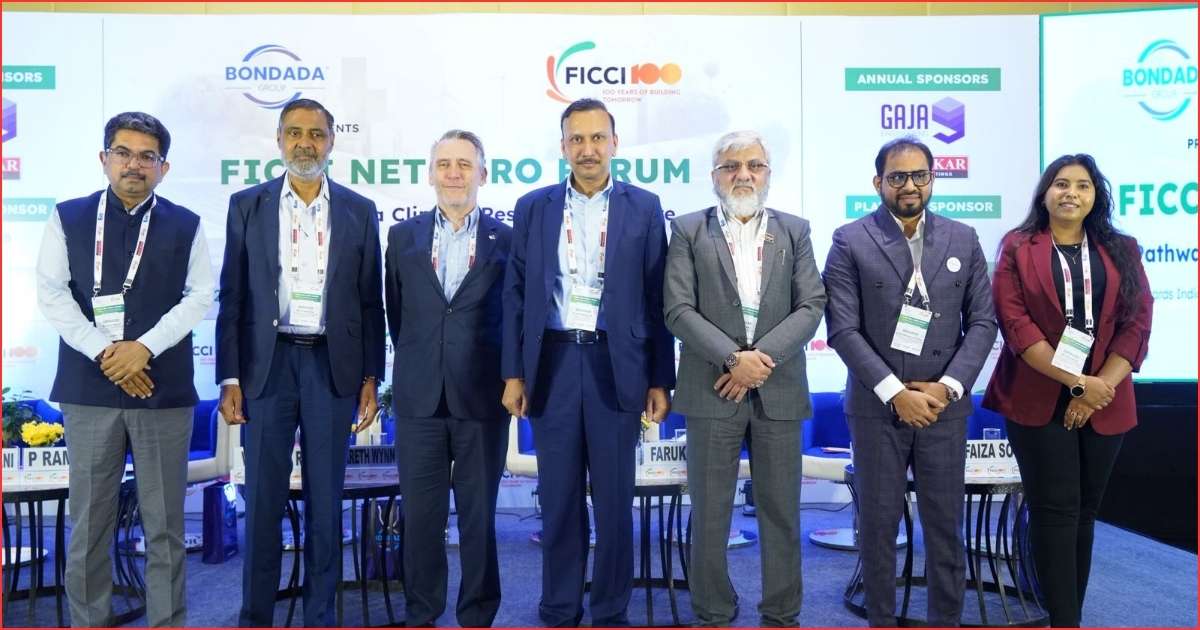
Hyderabad: The FICCI Net Zero Forum brought together policymakers, industry leaders, and experts in Hyderabad to discuss pathways for India’s transition to a climate-responsible future.
The second edition of the FICCI Net Zero Forum took place at The Park on Friday. It focused on accelerating collaboration among stakeholders, including financial institutions and technology innovators. Moreover, participants stressed coordinated action to meet climate targets.
Union Minister Pralhad Venkatesh Joshi said India remained committed to leading the global shift towards net-zero emissions. He added that the transition from fossil fuels to renewable energy had become a necessity rather than a policy option.
India ranked third globally in solar power capacity after China and the United States. In addition, about 50–55% of installed electricity capacity now comes from non-fossil sources, reflecting steady progress.
Global partnerships and energy transition at FICCI Net Zero Forum
Joshi said India achieved around 150 GW of installed solar capacity. Therefore, he noted that the country strengthened its position as a major clean energy player. He added that the net-zero transition could generate about 51 lakh green jobs over the next four years, linking climate action with economic growth.
British Deputy High Commissioner Gareth Wynn Owen inaugurated the conference. He said global partnerships remain essential to achieve climate goals and advance sustainable development. Furthermore, he highlighted the need for collaborative action.
He referred to a UK-backed project in Vijayawada as an example of growing India-UK cooperation in clean energy. Meanwhile, he said both countries share long-term climate goals under their leadership.
Owen highlighted initiatives such as the Green Grid Initiative and bilateral task force efforts. These platforms support cooperation in clean technologies and energy transition. However, he said climate finance remains a major challenge. He expressed confidence that India and the UK can work together to scale funding.
Principal Secretary for Energy Navin Mittal said Telangana remains committed to clean energy transition. He outlined policy priorities to expand renewable energy and reduce industrial emissions. Additionally, he said energy storage would drive the next phase of transformation after solar growth.
Mittal said India consumes nearly 150 billion litres of petrol and diesel annually. Therefore, he stressed the need for cleaner alternatives. He said solar-powered electric mobility could cost as low as ₹0.60 per kilometre. In contrast, fossil fuel transport costs around ₹10 per kilometre, while conventional EVs cost about ₹2.
He added that conventional systems lose nearly 75% of energy. However, electric mobility achieves 80–90% efficiency, making it significantly more sustainable.
Officials said platforms like the FICCI Net Zero Forum will drive innovation and accelerate India’s transition to a low-carbon economy.