

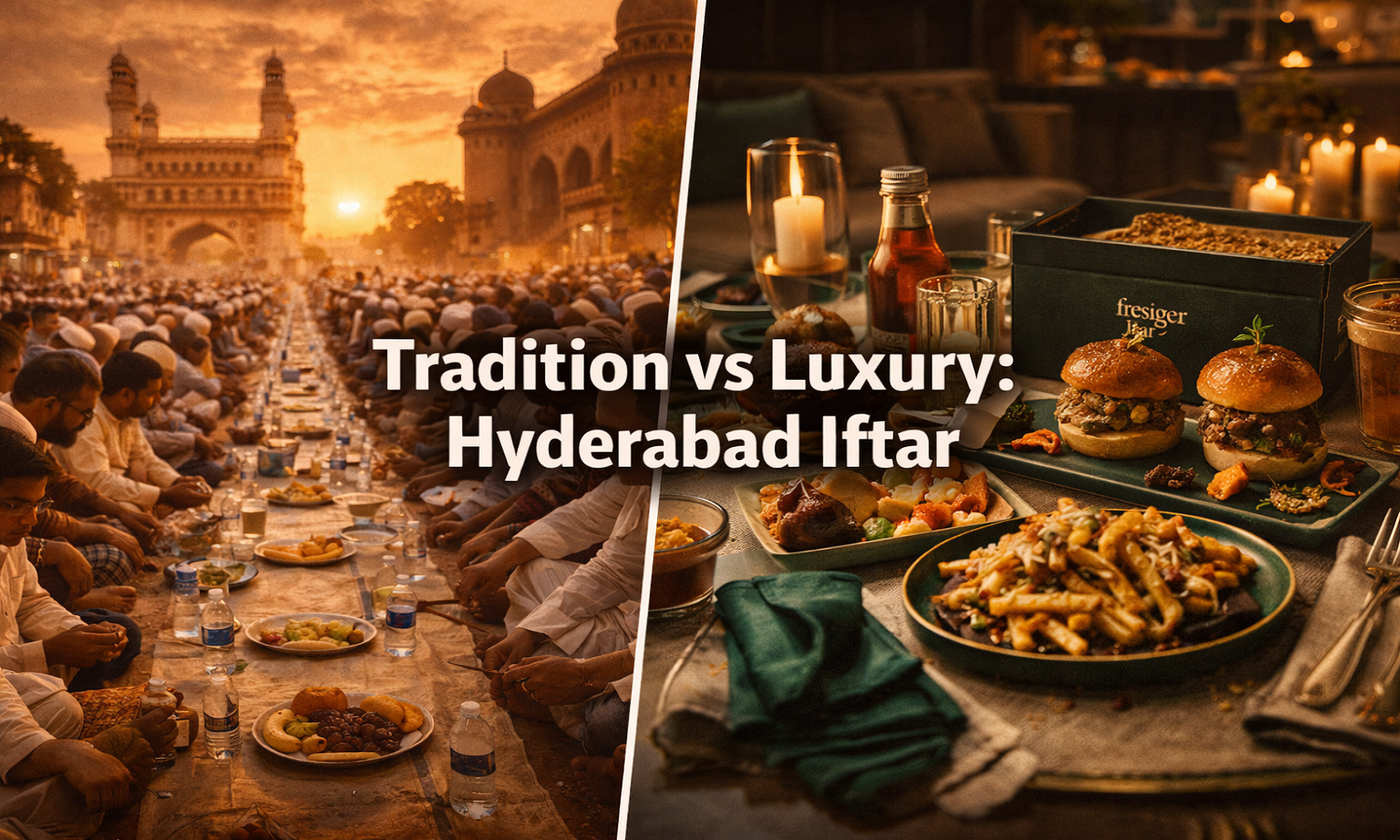
Hyderabad: Hyderabad iftar plates have evolved from simple mosque-based meals to premium gourmet boxes as changing lifestyles, rising incomes and digital culture reshape Ramadan food traditions in the city.
During Ramadan, iftar marks the moment when Muslims break their fast at sunset. Historically in Hyderabad, the iftar plate symbolised simplicity, faith and collective sharing. Mosques and community courtyards often hosted large gatherings where dates, fruits and water were distributed among fasting worshippers.
However, economic growth, urban expansion and digital media gradually transformed the traditional practice. Over time, Hyderabad iftar plates shifted from modest community meals to customised culinary experiences, including gourmet iftar boxes and curated menus offered by restaurants and catering services.
Hyderabad iftar plates rooted in historic traditions
The history of Hyderabad iftar plates traces back to Islamic practices during the Qutb Shahi and Asaf Jahi periods. Following prophetic tradition, Muslims typically opened their fast with dates and water before moving to other foods.
Around Mecca Masjid in the Old City, communal iftar remains a defining feature even today. Thousands of people sit together on the mosque floor and share dates, seasonal fruits and cold drinks or sherbet.
Early iftar meals mainly focused on restoring energy and hydration after a day of fasting. Before the spread of carbonated drinks and deep-fried snacks, households preferred natural and cooling foods.
Traditional dishes included Aab Shola, a raw mango drink, buttermilk flavoured with mint or curry leaves, and Kachalu, a simple guava-based chaat. Other staples included dahi vada and luqmi. These foods emphasised hydration, nutrition and moderation while avoiding excessive consumption.
Hyderabad iftar plates change with urban growth
Economic liberalisation during the 1990s increased the purchasing power of Hyderabad’s middle class. As incomes rose, the composition of Hyderabad iftar plates also expanded.
Gradually, energy-restoring foods were replaced by calorie-rich items, meat dishes and fried snacks. What once began as modest community meals slowly evolved into elaborate home gatherings and restaurant-hosted feasts.
Today many hotels and restaurants present expanded iftar menus featuring biryani, kebabs and fusion cuisine. Some venues also introduce experimental dishes such as pistachio kunafa or cilantro fish, combining global culinary trends with local flavours.
Food experts say this transformation reflects broader shifts in urban consumption patterns and lifestyle choices in Hyderabad.
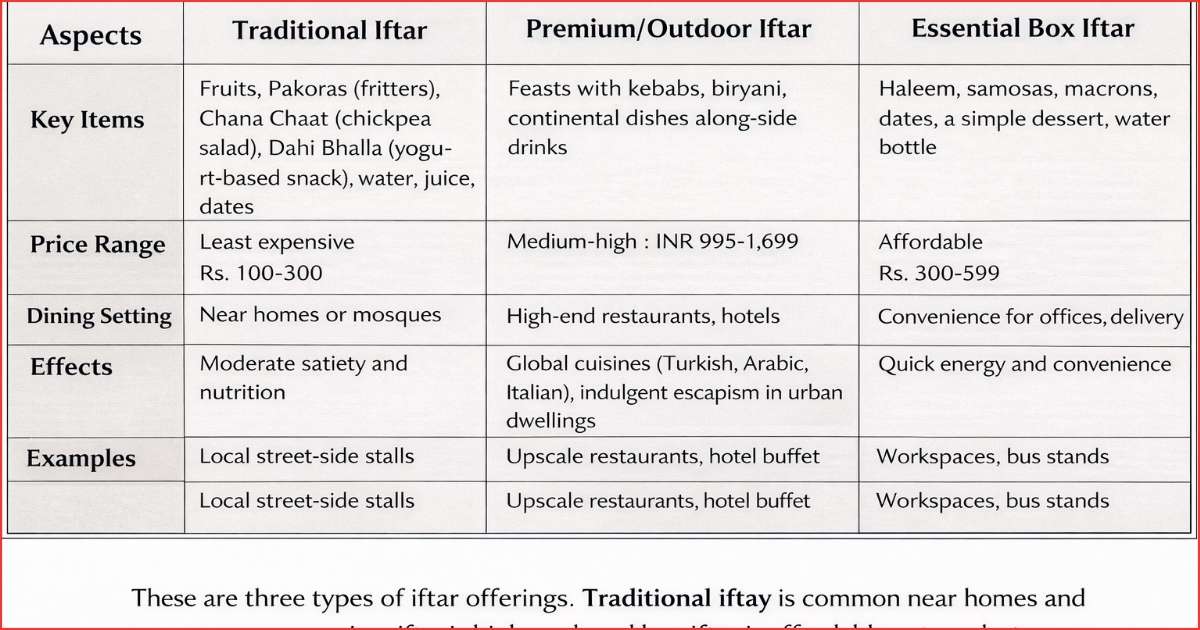
Hyderabad iftar plates inspire gourmet boxes and delivery
In recent years, restaurants, catering companies and cloud kitchens have launched customised iftar boxes. These packages allow customers to enjoy a complete meal conveniently delivered to homes or workplaces.
Typically, an iftar box contains dates, fruits, drinks, desserts and main dishes such as biryani or haleem. Some companies also offer corporate gift boxes or large “big iftar boxes” designed for family gatherings and office events.
In business districts such as Hitec City, Gachibowli and Banjara Hills, these curated meal boxes have become particularly popular among working professionals and affluent families.
The “one-box” concept offers convenience and variety. A single package may include fruits, beverages, barbecue items, biryani and the seasonal favourite haleem.
Hyderabad iftar plates enter luxury hospitality spaces
Luxury hotels in Hyderabad have also transformed iftar into elaborate dining experiences. Ramadan evenings now often feature themed buffets inspired by Nizami heritage and global cuisine.
Such venues emphasise presentation, slow-cooking techniques and premium ingredients. Consequently, iftar dinners at luxury hotels increasingly serve as social gatherings or networking events rather than purely religious meals.
Meanwhile, boutique catering companies have begun organising private iftar parties with live cooking counters and fusion menus.
Hyderabad iftar plates reflect health and lifestyle trends
Health awareness has also influenced modern Hyderabad iftar plates. Rising concerns about diabetes and obesity have encouraged restaurants to introduce healthier alternatives.
Low-carb, keto-friendly, vegetarian, organic and gluten-free iftar options are now common across several eateries. These menus allow individuals to tailor meals according to dietary needs while observing the fast.
Digital media has further accelerated these trends. Social platforms have turned iftar meals into visually appealing experiences, where presentation, colour and packaging attract attention online.
Restaurants now design “Instagram-friendly” plating styles to encourage customers to share images. Influencer collaborations and user-generated content often promote seasonal iftar offerings across the city.
Hyderabad iftar plates balance tradition and modernity
Despite the rise of gourmet dining, traditional iftar practices remain strong in Hyderabad. Many families continue to prepare recipes passed down through generations.
Street food markets and mosque-based gatherings still attract large crowds every evening during Ramadan. These settings preserve the spirit of communal sharing that historically defined Hyderabad iftar plates.
At the same time, gourmet innovations and commercial ventures have expanded the city’s food economy.
The evolution of Hyderabad iftar plates therefore reflects a broader intersection of religion, culture and modern urban life. From the communal simplicity of Mecca Masjid to the curated dining experiences of Jubilee Hills, the city’s iftar traditions continue to adapt while preserving their cultural essence.