

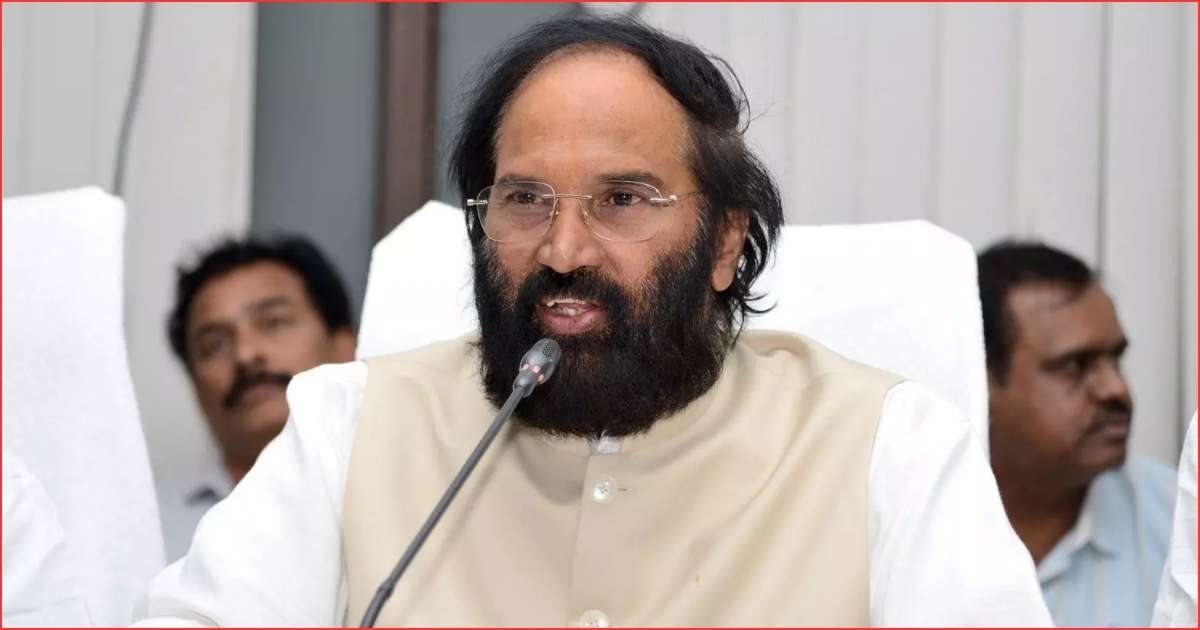
Hyderabad: Minister for Irrigation and Civil Supplies N. Uttam Kumar Reddy said India’s next phase of growth must be anchored in deep technologies, asserting that scientific progress must translate into enterprise, employment and strategic strength.
Addressing policymakers, vice chancellors, industry leaders and researchers at the National Conclave on Research and Deep Technologies for Sustainable Bharat 2047, organised by the Research Heights Foundation as part of National Science Day, he said science must move beyond laboratories and research beyond publications to produce measurable outcomes.
He described the current period as a decisive technological juncture. He said advances in artificial intelligence, semiconductor ecosystems, climate technologies, advanced manufacturing and geospatial intelligence would shape India’s competitiveness and strategic autonomy in the coming decades. Therefore, he stressed that Deep-tech future India would determine the country’s global influence.
Aligning policy around Deep-tech future India
The minister said National Science Day was not only a tribute to scientific achievement but also a reminder of India’s responsibility to lead through knowledge and innovation. He added that economic expansion could not rely solely on consumption. Instead, he said, value creation through deep technologies would define sustained growth.
“Science must move beyond laboratories, research beyond publications, and innovation beyond prototypes,” he said. He maintained that deep technologies were essential for national progress and not optional. He further urged researchers, industry leaders and policymakers to align institutional priorities with the goal of building a Deep-tech future India.
Referring to Telangana’s position in the national innovation landscape, he said Hyderabad had emerged as a centre for defence research, biotechnology, pharmaceuticals, aerospace manufacturing and global capability centres. This convergence of policy support, academic strength and industry participation, he said, had strengthened the state’s knowledge ecosystem.
He said the state government’s focus remained on enabling research-to-enterprise transitions. According to him, innovation-led employment growth required sustained policy backing and institutional coordination. He added that fostering enterprise from laboratory research would remain central to long-term economic resilience.
Uttam Kumar Reddy said India’s trajectory would depend on its capacity to convert scientific depth into economic and strategic advantage. He reiterated that future growth would be powered by creation rather than consumption, and that deep technologies would underpin that transition.