
ACB inspections at NIMS reveal suspected irregularities in billing, tenders and medical supplies

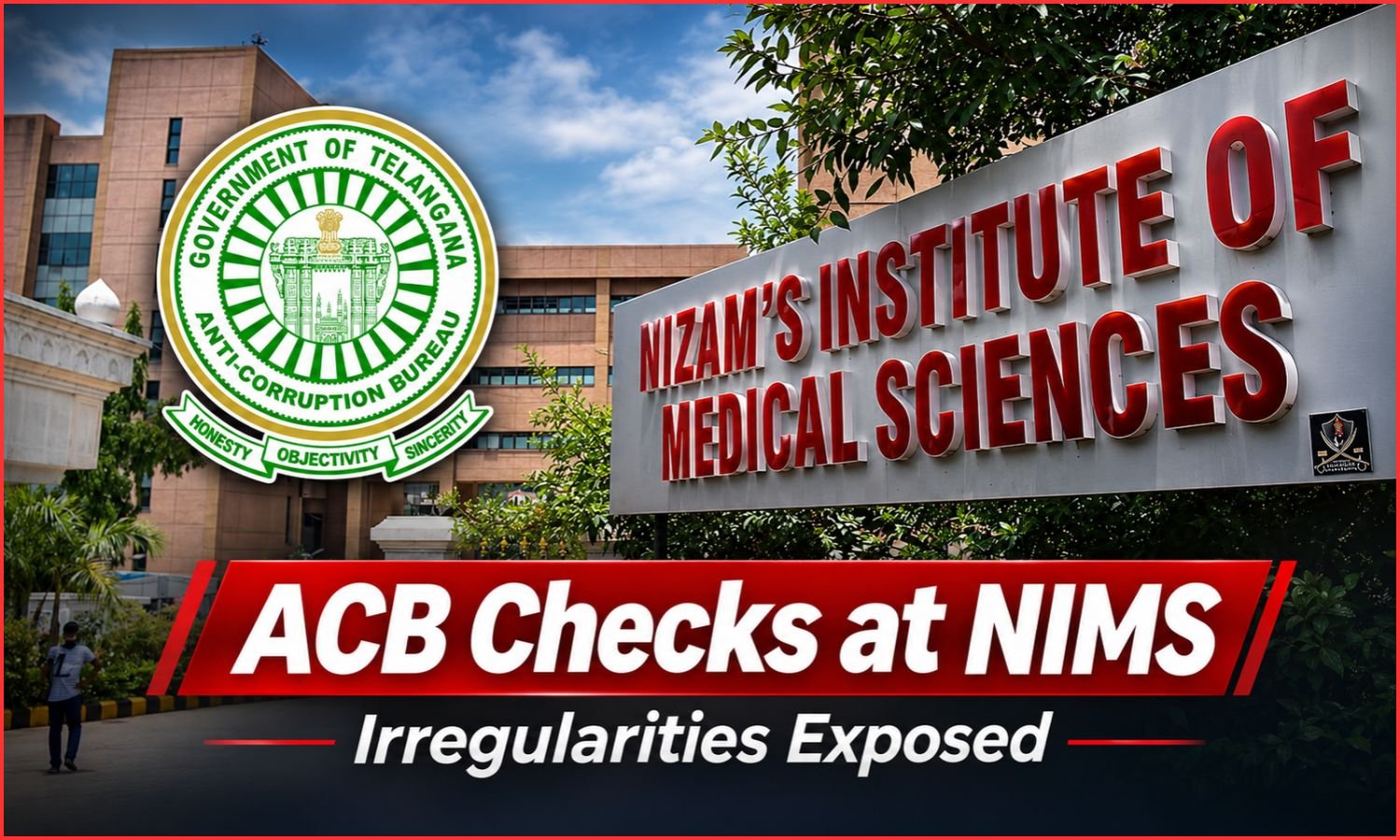
Hyderabad: ACB inspections at NIMS uncovered suspected irregularities involving ₹25 crore in unauthorised implant stocks and ₹2.66 crore in post-discharge billing. The Telangana Anti-Corruption Bureau also flagged lapses in recruitment, tenders, canteen operations, medical shops and security contracts.
The inspections took place at Nizam’s Institute of Medical Sciences (NIMS), Panjagutta, on October 29 and November 2, 2026. Specialised teams from TG Safe (Food Safety), the Drug Control Department and the Labour Department joined the exercise.
Officials identified suspected violations across several hospital operations and seized records for detailed verification. During verification of five operation theatres, inspection teams found vendors storing implants and consignment materials worth approximately ₹25 crore.
The vendors kept these items in almirahs near operation theatres and their sub-stores without the required authorisation. According to the inspection findings, the storage arrangements violated prescribed procedures for maintaining medical supplies.
Doctors and nursing staff reportedly permitted vendors to maintain these stocks. They also obtained implants directly without submitting indents to the hospital’s main store. After using the implants, doctors issued utility certificates and forwarded them with vendors’ invoices for billing.
The ACB flagged this procedure as a violation of established procurement and inventory controls. Furthermore, investigators identified a potential risk of collusion between hospital personnel and suppliers.
The practice could allow false utility certificates for implants that doctors had not actually used, followed by payment claims. However, the inspection findings identified this as a possible risk requiring further verification.
Patient billing irregularities involve ₹2.66 crore
The ACB inspections at NIMS also revealed questionable billing entries after patients had left the hospital. Inspection teams found that hospital authorities had processed several bills after patients’ discharge, particularly under the Aarogyasri scheme.
Under this scheme, the government pays for eligible patients’ treatment. Additionally, investigators identified instances in which billing continued as late as three months after patients had died.
During July, August and September, hospital records showed approximately ₹266 lakh in billing entries after patient discharge. The inspection teams also found unusually high consumption figures for surgical supplies.
In one instance, hospital records reportedly recorded the use of 800 gloves for a single patient within one week. According to the findings, most of the identified irregularities involved patients admitted under the Aarogyasri scheme.
Recruitment and tender procedures come under scrutiny
The inspections also identified suspected violations in manpower recruitment and service contracts. According to the findings, the hospital had not completed the tender process for manpower services during 2019–2025.
Inspectors also noticed irregularities in worker appointments and their subsequent classification as semi-skilled employees. Furthermore, the preliminary findings indicated possible collusion in recruitment-related activities.
The security services tender process also attracted scrutiny because of unusually long delays. Investigators found repeated extensions of existing security contracts without timely finalisation of new tenders.
Additionally, an agency that had defaulted retained a bank guarantee worth ₹228.13 lakh because the hospital had not forfeited it. During the ACB inspections at NIMS, food safety teams identified unhygienic conditions in the hospital’s main canteen.
The canteen reportedly stocked expired food products and operated without mandatory Food Safety and Standards Authority of India (FSSAI) registration. Inspectors also identified labour law violations and irregularities in the canteen tender process.
Preliminary examination suggested possible anti-competitive practices and collusion among bidders. Meanwhile, the inspection teams found that medical shops allegedly failed to maintain mandatory sales records.
They also identified unregistered workers employed at these establishments. The authorities placed the tender process for allotting medical shops under further scrutiny.
ACB seizes files and agreements for verification
Following the inspections, ACB teams seized note files, copies of agreements and other relevant documents. The bureau will examine these records to verify suspected violations involving recruitment, procurement, billing and hospital services.
The seized material will also help investigators establish the facts behind the irregularities identified during the checks. The ACB inspections at NIMS remain subject to further scrutiny, and the reported findings do not establish criminal liability.